







You’ve probably noticed that the word longevity has become a big part of the global conversation. With advances in medicine and technology, and increased focus on healthier lifestyles, we are in a seismic shift that will lead to longer life expectancies that only a generation ago would have seemed improbable. Throughout the world, doctors, technologists, investors, and leaders in academia, business, entertainment, nonprofits, and more are engaged as the architects of this exciting new longevity era.
Their efforts have begun to converge to create a longevity ecosystem of services, products, and ideas to build the new construct for the second half of life. Whether they're designing precision medicine, a new class of longevity drugs, AI robots, new tech-enabled skincare procedures, or more age-friendly cities, they are the longevity innovators of our time. They're creating new workplace models, government policies, and social structures, all to support a world where living to 100 is normalized.
Some people wonder if it is a good thing to live to that age, but if you ask most people if they want to reach 100, assuming they would still have their mobility and cognitive abilities intact, the answer is a resounding yes. We’re well on the way to that being a reality for many people.
Studies around the world suggest that today’s 5-year-old will have a 50 percent chance of reaching 100. There are currently 722,000 centenarians in the world, and that number is projected to grow to 25 million or more by the year 2100, according to United Nations data. That growth will have an enormous impact on countries, healthcare systems, social support structures, businesses, and individuals. The work to make the necessary changes is already underway.
From less than a million centenarians to 25 million in just 75 years seems like a big jump. But it’s not unprecedented. In 1900, the average life expectancy in the United States was 47.3. The idea of everyone living to 80 seemed preposterous at the time, yet that is the average life expectancy today. So why does 100 seem so far-fetched?
The question is, are we ready for the 100-year life?

Many people are. In 2024, the last baby boomers turned 60. For many, even as they reached this milestone, there was a very real awareness that living another thirty or forty years was a real possibility. As the activist generation that challenged many institutions throughout their lives, they have now taken on longevity — living longer, healthier lives — as their new cause.
In my book ROAR: Into the Second Half of Your Life (Before It's Too Late), I identified this group as the Re-Imagineers, the front-runners who are the age innovators among us. Many Generation X individuals are already a part of the movement, and when the first millennials turn 50 in the year 2031, they will join in, swelling the ranks of Americans aged 50 and up to 130 million. These Re-Imagineers are working longer, launching new careers at 60, starting businesses, going back to school, and establishing new relationships. They exclaim that 60 is not the new 40, but rather 60 is the new 60, and 70 is the new 70, and this is what it can look like.
To really get the conversation going, I always suggest that people read Ray Kurzweil, particularly his newest book, The Singularity Is Nearer, which discusses what might happen when we merge with AI. It’s a fascinating journey into what the future might look like with the combination of AI and the nanotechnology revolution that might allow us to redesign and rebuild, molecule by molecule, our bodies and brains and the world in which we interact. Will we be able, as he suggests, to greatly transcend the current human limit of 122 years with nanorobots patrolling our bloodstreams to detect health issues? Will there be lab-grown organs, 3D bioprinting for organ replacement, and AI brain-augmenting techniques that will allow us to go far beyond our current human capabilities? It’s all worth contemplating.
If anyone says that such things are not possible, all we have to do is look at the marvels of technology and where it has already taken us in all aspects of our lives. My opinion is that no one really has the answers. We won’t know until we know.
There's still a lot of work to do to manifest the changes that we will need to realize the longevity nation of the future. We especially need to ensure that what is created is available to everyone. The professional Re-Imagineers who are building the pathways to make it happen are deep into their work. My goal in this book is to celebrate many of them for their ideas and vision. One hundred years from now, those who come after us may find it curious that we were even talking about the possibility of a 100-year life. They may have already moved on, contemplating how they will be preparing for the 150-year-old life.
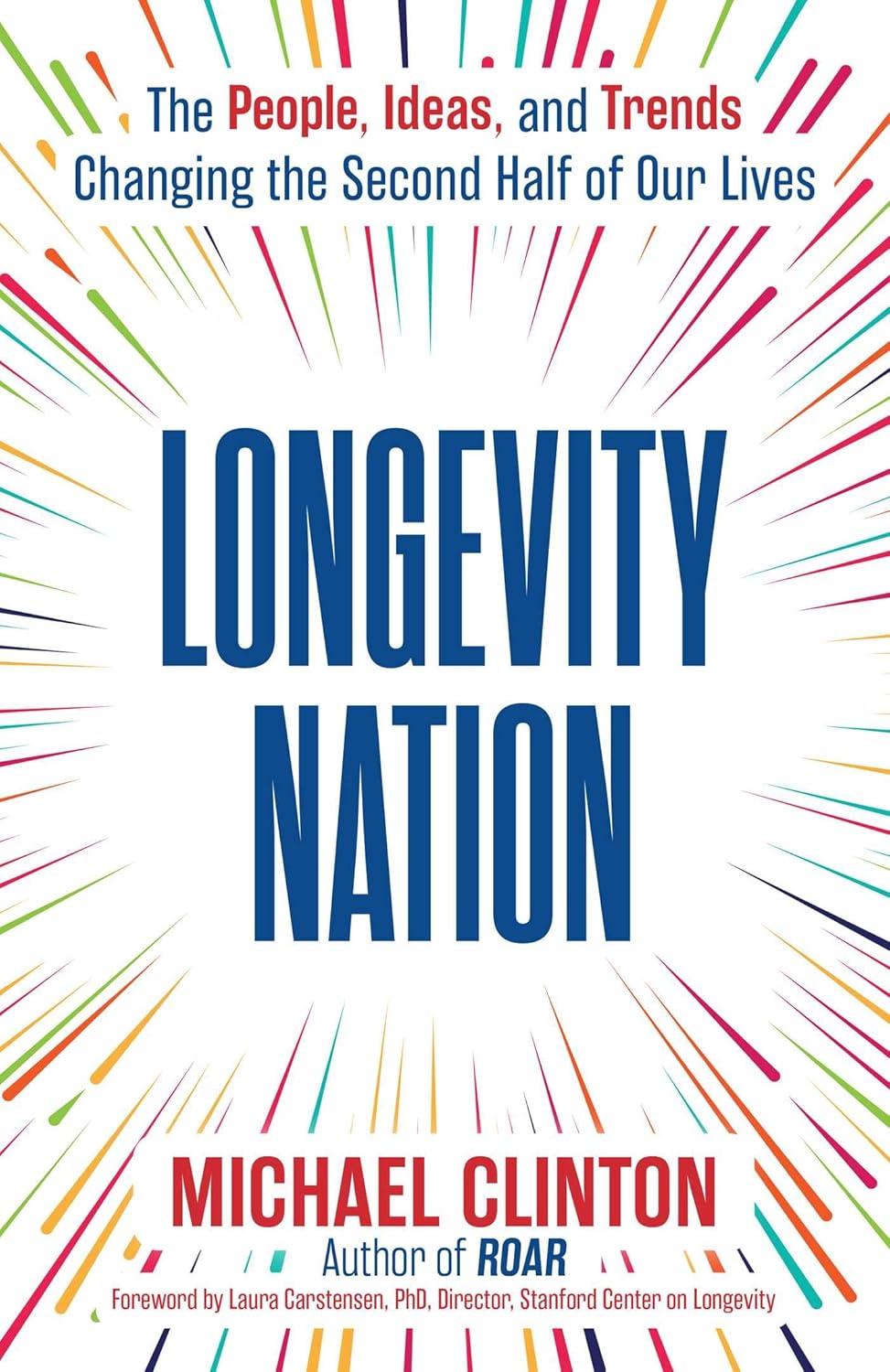
Excerpt from Longevity Nation by Michael Clinton, published by Atria Books/Beyond Words 2026
Michael Clinton is an author, thought leader, and keynote speaker on the evolving personal and business effects of the New Longevity.
