






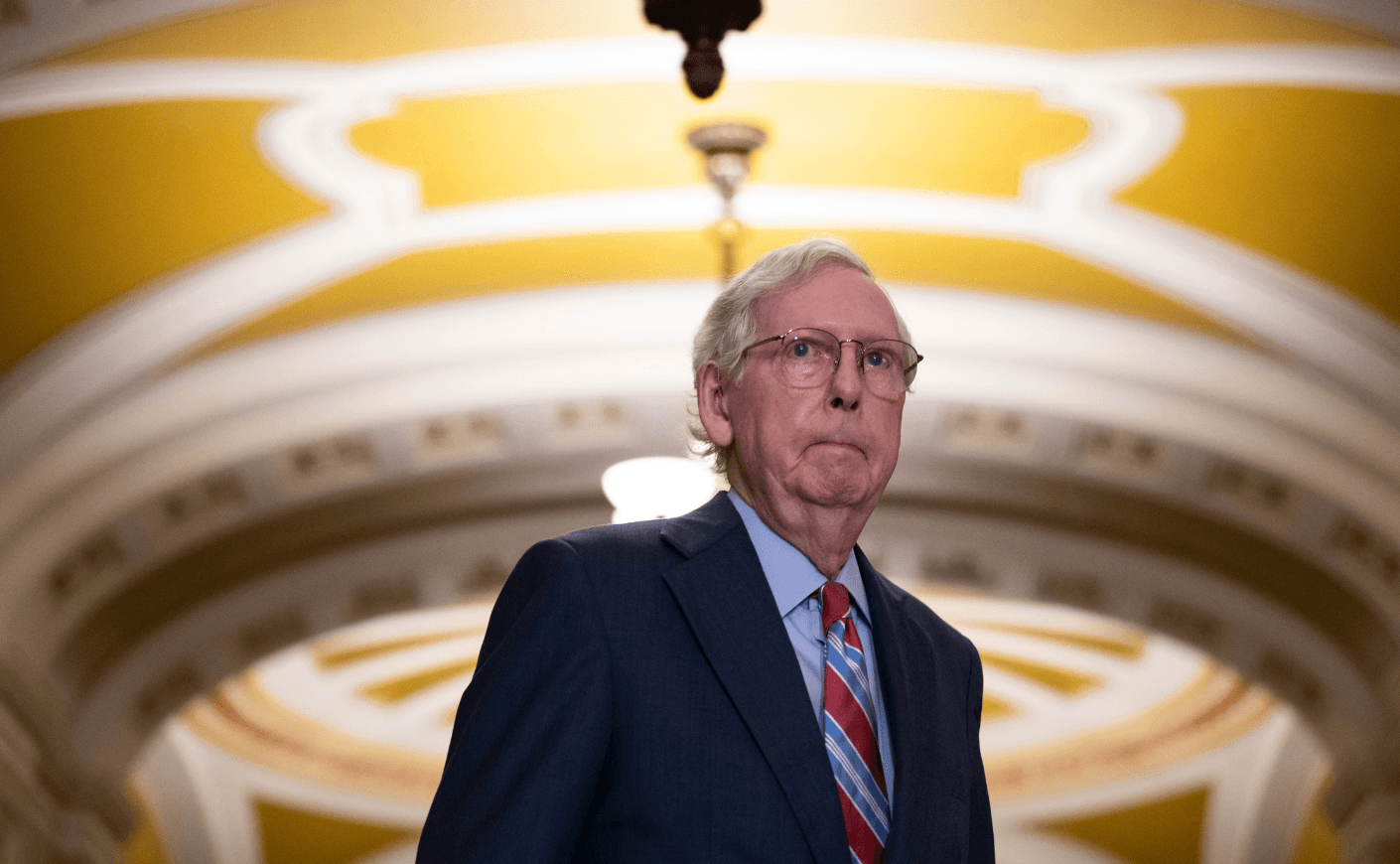
Kentucky Sen. Mitch McConnell says he's headed home after weeks in the hospital, but it's still unclear when he'll be able to return to work at his usual capacity.
McConnell, 84, remains one of the GOP's most influential voices in Congress despite stepping down as Senate Republican leader last year after a record-breaking tenure, but he's been away from Washington since a fall led to a hospitalization and, later, a stay at a rehabilitation facility.
Although McConnell has since been discharged and is continuing his recovery at home, he has not yet returned to the Hill, fueling renewed questions about his health, particularly given his recent medical history. He was hospitalized in February with what his office described as "flu-like symptoms" and has suffered several falls, including one at the Capitol last October, a sprained wrist in 2024, and a concussion in 2023. That same year, he twice froze while speaking during public appearances, prompting widespread scrutiny.
Here's what we know about McConnell's hospitalization, his recovery, and what could come next.
What's the latest health update from Mitch McConnell?
McConnell won't be returning to the Senate just yet.
On Aug. 6, the Kentucky senator announced that he had been discharged from a rehabilitation facility after a nearly eight-week medical absence and would continue recovering at home during the Senate's scheduled August recess.

“On the advice of my doctors, I’ll maintain an intensive regimen of physical therapy from home during the state work period, and I’ll continue to engage with my staff and colleagues on important Senate business,” McConnell said in a statement.
The update came about a week after his office said McConnell was continuing to recover from injuries he sustained in a June fall and had not yet been cleared to return to the Senate. According to the Office of the Attending Physician, he had been participating in an intensive rehabilitation program that included multiple daily physical therapy sessions to rebuild his strength and reduce the risk of future falls. The physician also said the lingering effects of the childhood polio McConnell contracted continue to significantly affect his mobility.
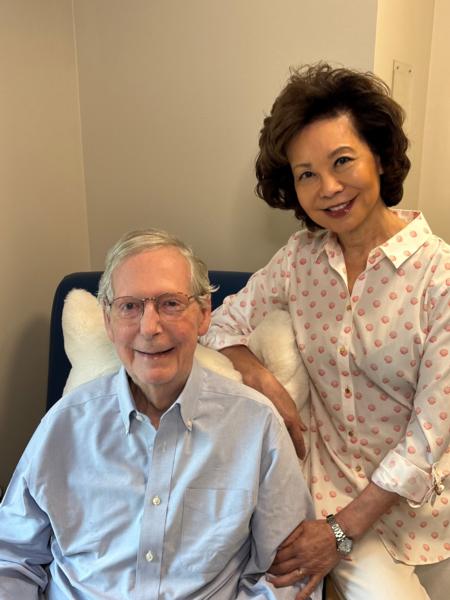
"I'm still working hard to get back to my full schedule of work in the Senate and in Kentucky, keeping up with intense physical therapy per my doctors' orders," McConnell said in the earlier statement. Alongside that update, his office released a new photo of the senator with his wife, Elaine Chao — only the second public image of McConnell since his hospitalization. Like the first photo his office released, it quickly fueled fresh online speculation about his condition.
What happened to him?
Many questions about McConnell's hospitalization remain unanswered.
The 84-year-old Kentucky Republican was admitted to the hospital on June 14 after a fall at his Washington home. His office initially said only that he was "receiving excellent care" and did not disclose the nature of his injuries or provide details about his condition. About a week later, aides announced that he would miss at least a week of Senate votes while recovering.
Then, on July 1, CBS News reported that emergency medical personnel had responded to McConnell's home on the morning of his hospitalization after receiving a dispatch for an unconscious person who appeared to be in cardiac arrest. McConnell's name was not mentioned in the EMS dispatch audio, and his office has never confirmed whether the emergency call was related to the senator.
On July 12, McConnell's office released the first photo of the senator since his hospitalization, showing him smiling alongside his wife, Elaine Chao, while holding that day's Washington Post sports section. The photo did little to quiet speculation online about his condition.
Since then, McConnell's office has repeatedly said he "continues to improve" and remains engaged in Senate work while recovering. However, aides have not disclosed the extent of his injuries or offered a timeline for when he might return to the Capitol.
Kentucky Gov. Andy Beshear's ultimatum
Kentucky Gov. Andy Beshear wrote to McConnell on July 27, after McConnell said he was not yet cleared for work and was continuing his recovery, to say that he must either offer a proper explanation for his absence and the state of his health, or resign.
“I am addressing this letter to Senator McConnell under the assumption that he is capable of reading and responding verbally, and not incapacitated by means of consciousness or cognition. If the Senator is unable to respond for either of those or other conditions, consider this letter a demand for his Senate staff to be honest and transparent with the people of Kentucky,” Beshear wrote in the letter obtained by CNN.
What are other lawmakers saying?
Republicans have continued to try to show that McConnell is still working behind the scenes despite his prolonged absence from the Senate.
Earlier this month, Senate Majority Leader John Thune said he had a "lengthy and substantive conversation" with McConnell that covered a range of issues, including national security. Senate Majority Whip John Barrasso also said the pair spoke for about 20 minutes, discussing Senate races, the Graham Platner scandal and a recent Supreme Court ruling on campaign spending.
Scott Jennings, a longtime McConnell adviser and conservative political commentator, also said he had recently spoken with the senator. In a post on X, Jennings said they discussed politics, foreign policy and "even a little bit of Senate history."
But questions have persisted despite those public displays of confidence. Kentucky Gov. Andy Beshear had previously urged McConnell's office to provide an update, saying Kentuckians had grown "increasingly concerned" about the senator's health and well-being. As governor, Beshear said he was asking McConnell to share his current health status, calling it part of the commitment elected officials make to the people they serve. (Watch Katie's full interview with Beshear about this and other political matters right here.)
The lack of details has also done little to quiet the rumor mill among some MAGA influencers. Trump ally and far-right activist Laura Loomer has claimed, without evidence, that McConnell is "brain dead" and accused Republican leaders of covering up his condition. Conservative commentator Glenn Beck has also called for more transparency, writing on X, "We need the truth about Mitch McConnell NOW. It is unacceptable that the party who spent four years criticizing Joe Biden's health is now silent on McConnell's."
Why did Elaine Chao's trip draw attention?
McConnell's wife, former Transportation Secretary Elaine Chao, also became part of the story after new details emerged about her overseas travel during his hospitalization.
Chao left for China on June 12 for what her spokesperson described as a long-planned trip to support her family's philanthropic work, which has included funding scholarships and educational programs in China and elsewhere through the Chao Family Foundation. McConnell was hospitalized two days later, but Chao remained overseas, meeting with several officials, including Chinese Vice President Han Zheng.
After questions surfaced about why she did not immediately return to the U.S., a spokesperson said McConnell's condition "did not warrant an immediate return to the US." Chao has since returned home.
What happens if Mitch McConnell can't finish his term?
If McConnell is unable to finish his term, Kentucky law would require a special election rather than allowing the governor to appoint a replacement. If the seat became vacant before Aug. 3, the election would be held on an expedited timeline. After that date, voters would choose a new senator during the regularly scheduled November election.
But the process has never been tested. Legal experts say it could face a constitutional challenge because the Kentucky Constitution appears to give the governor the power to fill statewide vacancies, while the state's 2024 changes removed that role for U.S. Senate seats. If challenged, the dispute could wind up in court, potentially delaying a replacement.
For now, McConnell remains a sitting senator, but his prolonged absence is increasingly affecting the Senate's work.
Last month, McConnell's absence forced Republicans to postpone work on several government funding bills. GOP leaders had planned to move the legislation through the Senate Appropriations Committee, but because Republicans hold only a slim majority on the panel, they couldn't afford to lose McConnell's vote if Democrats united against the bills over proposed increases in military spending.
McConnell has also missed votes on judicial and executive nominations, as well as a housing bill, during his hospitalization. If he remains sidelined, Republicans' narrow Senate majority could make it more difficult to advance other closely divided legislation in the weeks ahead.
Since returning from its July Fourth recess, the Senate has continued considering judicial and executive nominations, government funding measures and other legislation while McConnell remains sidelined. The senator has also missed votes on judicial and executive nominations, as well as a housing bill, during his hospitalization. With Republicans holding a narrow majority, his continued absence could complicate efforts to advance closely divided legislation in the weeks ahead.
