






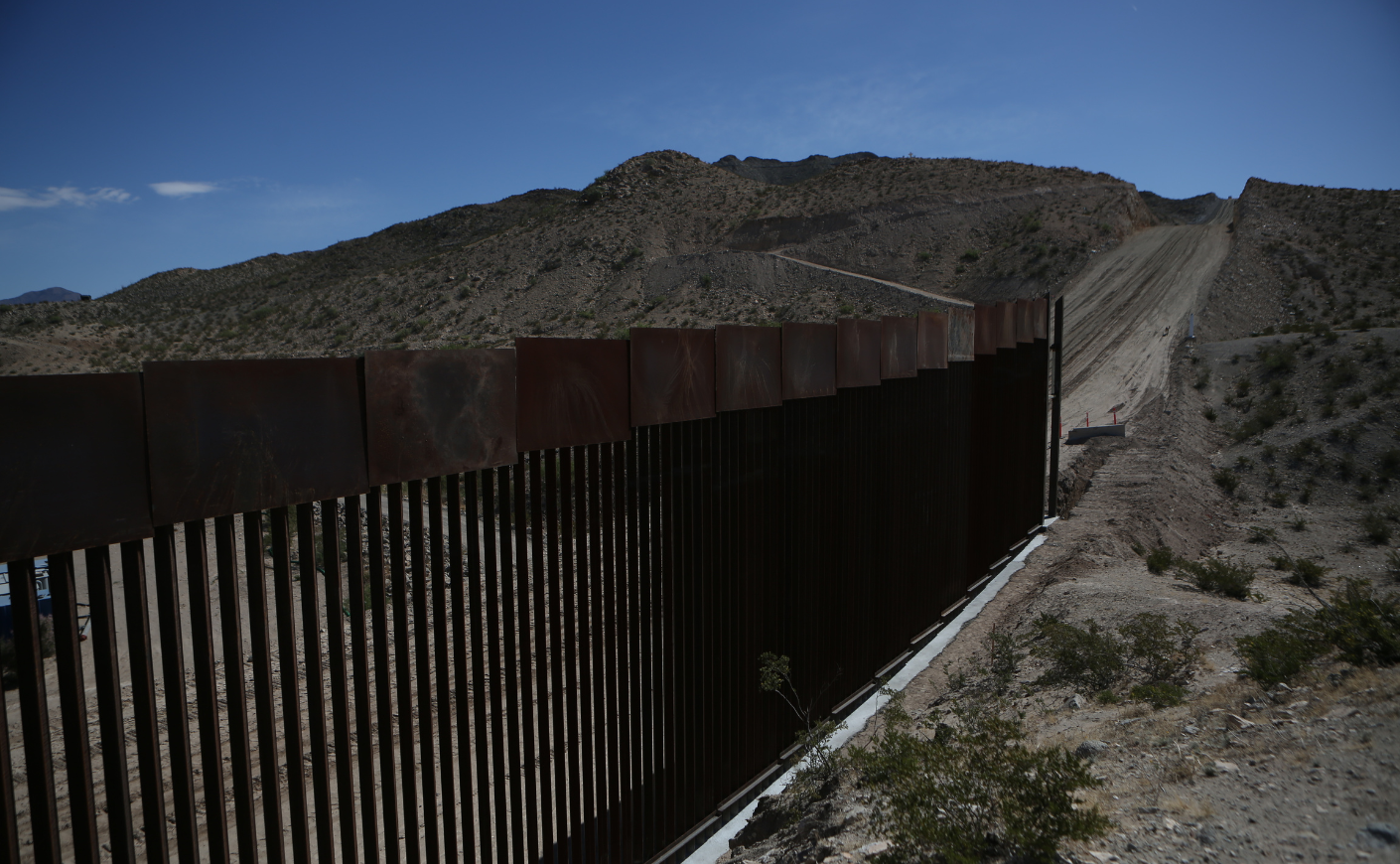
When the country emerges from the ever-divided Trump era, we’ll face a harder task than simply turning the page: coming together to solve the problems politicians have spent years avoiding, beginning with our broken border and immigration system. These twin issues have become the third rail of American politics — touch them, and you might kill your career — but they represent security and economic imperatives that the United States must confront.
Many younger Americans may not be aware that as recently as 20 years ago our two political parties worked together in an attempt to address our border and immigration problems — something that feels impossible in today’s hyperpartisan era.
In 2006, President George W. Bush, a Republican, was committed to signing an immigration reform bill. At the time, I was the junior Democratic senator from Colorado. Since entering that hallowed chamber in January 2005, I had been deeply involved in negotiating the Comprehensive Immigration and Reform Act with a bipartisan team led by Republican Senator John McCain of Arizona and Democratic Senator Ted Kennedy of Massachusetts.
The bill was designed to strengthen our borders, enforce existing laws, and provide a path to legal status for the approximately 12 million undocumented people then living in the United States. It did not offer amnesty, insisting that any undocumented applicants move to the end of the immigration line, submit to criminal background checks, pay owed taxes, and learn English, among other requirements.
That bill passed the Senate with 62 bipartisan votes in May of 2006. But it died in the House when Republican Speaker Dennis Hastert, perhaps sensing that Republicans might benefit politically from a broken border and immigration system, refused to move the bill into conference.
A few months later, Democrats took control of both chambers of Congress in the 2006 midterm elections. My mentor Harry Reid would become Senate majority leader, and Nancy Pelosi would become our nation’s first female Speaker of the House.

Following this, we redoubled our efforts on immigration reform. President Bush was still on board. In early 2007, he even came to Capitol Hill to twist Republicans’ arms, and I asked if he would be willing to do the same for Senate Democrats. “I will if I’m invited to, Ken,” he told me.
Congress has passed laws that address law enforcement and border security, but bills seeking comprehensive immigration reform have continued to be thwarted by politics.
Sensing an opportunity, I immediately found Harry Reid in his office. “Harry, I think this is what we need to get this legislation past the finish line.”
Harry, who was always to the point, responded with uncharacteristic anger. “Hell no. I will not have that man, that evil man, come and address our caucus.”
I was deeply dismayed by these words, but I couldn't move him. When the bill came up for a vote on June 28 — essentially the same bill that had passed overwhelmingly just a year earlier — it failed by a tally of 46 to 53, with 14 Democrats joining 39 Republicans in opposition.
The next day, I got a call from Air Force One. It was President Bush. “Thank you, Senator, for all your work on immigration. We’ve done everything we can. There is nothing more we could have done.”
“But Mr. President,” I said, “we can’t give up. We have to keep fighting.”
“I’m sorry, Ken,” he said, clearly hurt. “It won’t happen on my watch. It’ll have to wait for the next president.”
Since then, Congress has passed laws that address law enforcement and border security, but bills seeking comprehensive immigration reform have continued to be thwarted by politics.
This occurred most recently in early 2024, when migrants were pouring over the U.S.-Mexico border in record numbers. Probably understanding that a broken border could help him regain the presidency, Donald Trump instructed his Senate allies to vote against a bill they otherwise supported, thereby depriving President Biden of a political win. This sabotage was the height of cynicism: Trump was content to see tens of thousands of migrants suffer, and to subject U.S. law enforcement to unworkable conditions, all so he could have a better shot at becoming president once more.
Under Trump 2.0, these issues have grown geometrically worse. Yes, our borders are effectively closed and migrant flows are historically low. But this isn't because we have a modern border, or because we're working constructively with the Mexican government, or because we have increased the number of immigration judges. It's because President Trump has undertaken a project of erasure, wielding deportation, detention, deprivation of rights, and fear to bring things “under control.” He has taken our “nation of immigrants,” as John F. Kennedy called us, and our “shining city on a hill,” as President Reagan envisioned America, and turned those ideas into a tragic farce.
America is celebrating its 250th birthday this year. Despite what people like Vice President Vance believe, ours is a country founded on creed, on an idea. There is no one type of American — we are diverse, and our diversity is our superpower. This diversity is not merely racial or national; it is economic, philosophical, political, religious, culinary, musical. The foundation of our diversity is our shared commitment to equality and to our unalienable rights. An American naturalized today is as American, and enjoys the exact same rights, as one whose ancestors helped establish Santa Fe in the late 1500s, or as one whose ancestors landed on Plymouth Rock in 1620.
When I go down to our borderlands today, I don’t see a wall — I see a mirror. It is time that we look into that mirror to observe not just what we have become, but who we really are: a nation of 350 million diverse and decent people who are proud Americans. To paraphrase what I said to President Bush when he called me from Air Force One that day, I believe this is an America for which we must keep fighting.
Ken Salazar grew up on the remote Salazar homestead in Colorado's San Luis Valley, where his family has farmed and ranched the same land since before Colorado was a state. He has served as U.S. Ambassador to Mexico (2021-2025), U.S. Secretary of the Interior under President Obama, U.S. Senator, and Colorado Attorney General. A lifelong champion for conservation, civil rights, and an inclusive America, he continues to ranch in the San Luis Valley. His book, Borderlands: My Fight for an Inclusive America, is available for presale now.
