






I can usually tell which of my undocumented patients are afraid before they say anything. It's in their shoulders, in the way the eyes track the door, in the careful distance they keep between themselves and the clipboard. Two weeks ago, I had a man about my age on the table for a workplace hand injury — cut tendons, the kind of case that takes hours to repair.
I watched him talk to the anesthesiologist through a hospital interpreter who was using formal medical Spanish he clearly did not follow. He was polite, reserved, and a little cold. When I came up to introduce myself I said, “Hola señor, soy el cirujano plástico,” and he lit up and, in Spanish, said, "Oh thank God, one of us." The rest of the conversation was different. He asked me what the consent forms had actually said. He asked me what the words on the anesthesia paperwork meant. He had signed them without understanding them, nodding along because the forms were moving faster than the conversation.
I learned Spanish before I learned English. The woman who helped raise me while my parents worked was Peruvian, and the Spanish I grew up with was the Spanish of her kitchen, of arroz con pollo on Sunday afternoons, of the park where she took me to be with her family on weekends. It is the colloquial register, not the textbook one, and when I use it with a patient, something visibly loosens in them.
I have been seeing that fear on patients' faces for years. What I have started noticing, in the last year, is that I am seeing it less often. That's because the patients who carry it have largely stopped coming in.
A few weeks ago, I was with a friend from residency, one of the surgeons I trained alongside at a county hospital that serves a predominantly Spanish-speaking patient population in Los Angeles. He mentioned, almost in passing, that the hand-surgery clinic we used to staff together was nearly empty. He said it with a kind of disbelief, like he was still trying to make the numbers add up in his own head.
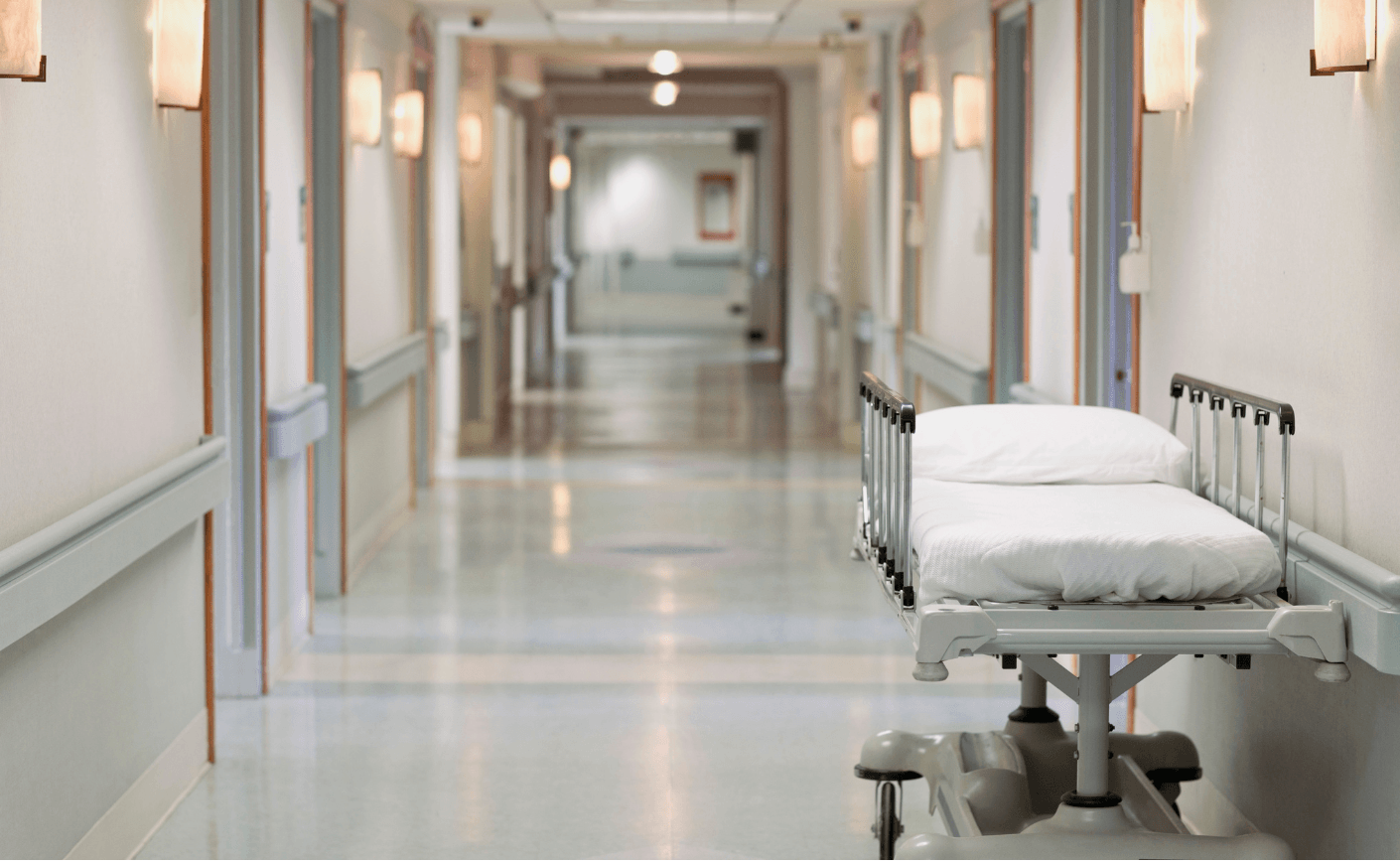
Then he said what we both knew and suspected: that a lot of the patients who used to fill that clinic were undocumented, and that they were not coming in anymore because they were afraid of ICE. The clinic that used to run 100 patients deep on a normal day was down to 20 or 30. Hand and wrist fractures were not arriving at the rate they used to. Those are construction injuries, kitchen injuries, crushed fingers, wrists broken in falls off ladders, the normal accidents of people working physical jobs. The injuries are still happening: We're just not seeing the patients anymore.

I've heard versions of this from colleagues across the city, in the trauma bays and the orthopedic clinics and the urgent cares that serve the neighborhoods where people are now afraid to leave their homes for anything that's not strictly necessary. If someone is afraid they could be detained, a broken wrist starts to feel survivable. So does a worsening infection, or a hernia, or the chest pain that has been waking them up at night. They wait. Whether the fear reflects actual enforcement risk or simply the perception of it almost stops mattering, once patients stop seeking care.
I keep thinking about what happens when people wait too long to come in for treatment. A wrist fracture that would have been a clean reduction and a cast in week one comes back three months later, with the injury already healed crooked. Now it requires an operation to rebreak the bone and plate it, sometimes with a bone graft and almost always with months of rehabilitation that a patient cannot afford to take off work.
I see the same pattern with soft tissue infections that should have been antibiotics and end up as abscesses requiring drainage, with hernias that should have been outpatient repairs and come back strangulated, requiring emergency surgery. The pathology does not disappear because someone is afraid to come to the hospital. It just gets more expensive, and harder to fix.
Right now it can seem like the cost of care is lower. But that bill will come due eventually.
The waitlists are shorter right now. The clinics are quieter. If you walked through a Los Angeles trauma bay this month you might think the system had finally caught its breath. That reading misses what is actually happening. A KFF and New York Times survey of immigrants released late last year found that nearly half of likely undocumented immigrants had avoided seeking medical care because of immigration-related concerns, and 3 in 10 immigrant parents said their children had delayed or skipped care for the same reason.
I see this issue echoed in Los Angeles because that is where I work, but colleagues in other cities describe the same patterns — in Houston and Philadelphia and Chicago and in the small towns along the agricultural spine of the country. If this is what the problem looks like in California, a state with one of the strongest healthcare safety nets for immigrants in the country, it's reasonable to assume it looks worse almost everywhere else.
Right now it can seem like the patients are gone, and that the cost of care looks lower. But that bill will come due eventually, and usually at a much higher human and financial cost. Any trauma surgeon will tell you what it costs to rebreak a fracture you should have set earlier, or to debride a diabetic foot that should have been dressed with simple wound care months ago.
The moment that finally made me write this piece happened at my sister's house. She has had a housekeeper for 10 years, an El Salvadorian woman. During that decade, she has spoken to me in careful, timid English, and I never thought to correct her assumption about my language abilities. But on my last visit, I greeted her in Spanish, casually, the way I speak with patients at work. She stopped mid-sentence and asked, "Wait, you are fluent?" I told her how I had learned it, that I was a plastic surgeon in Los Angeles that I did a lot of trauma work on undocumented patients and used Spanish constantly. She put her hand on my arm and said thank you — that Latinos right now are very afraid to seek care, and that to have someone in a hospital they could trust was a kind of luck not many are privileged to receive.
I have been turning that conversation over in my head ever since. The patient on my table two weeks ago who said, "Oh thank god, one of us." The clinic that used to be full. The El Salvadorian woman at my sister's house who, for 10 years, had decided it was safer to talk to me in broken English than to risk being herself.
A lot of people right now are deciding it's safer to stay home than to walk into a hospital for treatment they desperately need. I don't know how long it will take for medical professionals to earn their trust back, but I do know that delayed care is rarely cheaper once patients finally come in. The waiting rooms are quieter now, but they won't stay that way.
Sean Saadat, MD is a board-certified plastic and reconstructive surgeon in Beverly Hills, California. He is of Iranian descent and writes about medicine, culture, and the world at the intersection of both. Follow him on Instagram @drsean and learn more at drseanplasticsurgery.com.
