


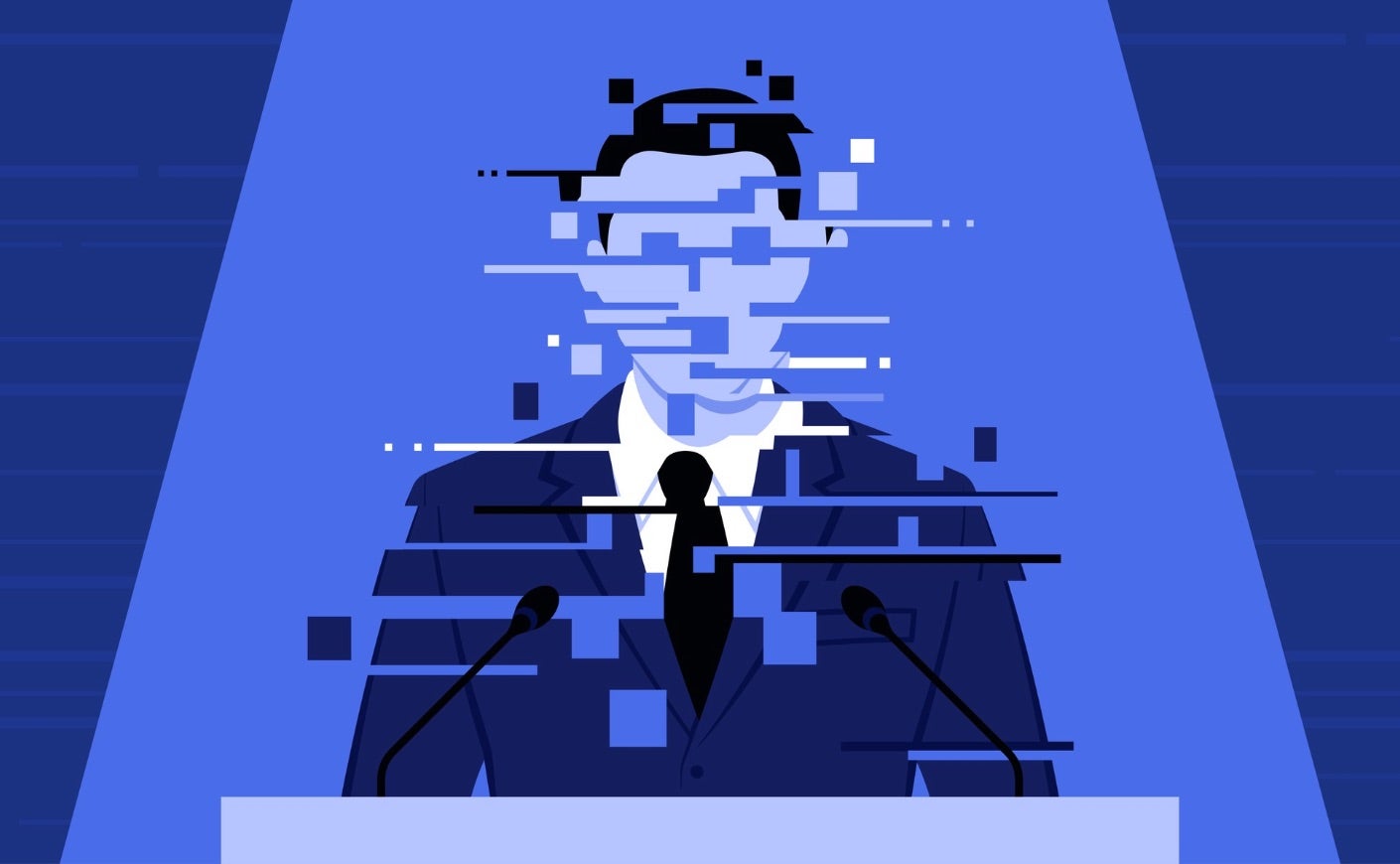
- AI lets campaigns create realistic fabricated images and videos that make candidates appear to say or do things they never did.
- AI political ads surged in 2026: over 220 identified, more than $137 million spent, appearing across 34 states.
- Only 27 percent disclosed AI use, and many alterations are nearly impossible to detect without labels, so counts likely understate prevalence.
- No comprehensive federal rules exist; state laws are patchwork, with just four states banning certain deepfakes and 27 requiring disclosures.
- AI lowers costs, speeds production, enables hypertargeting via data and connected TV, and Republicans sponsored most AI-generated ads and spending.
Political ads have never exactly been known for subtlety. For decades, campaigns have relied on dramatic imagery, ominous music, and carefully chosen attacks to shape how voters see their opponents. But this election cycle, some are even more over-the-top.
Thanks to AI, candidates can now appear to say things they never said, show up in places they've never been, or do things that never happened — sometimes so realistically that you might not immediately realize.
AI-generated political ads aren't new, but they've become much harder to ignore during the 2026 midterms. They’re cheaper and easier to make, increasingly sophisticated, and it’s not always obvious when AI was used. As campaigns experiment with how far the technology can go, the rules governing it are still struggling to keep up.
So we took a closer look at just how common these ads have become and how they're changing the way campaigns try to reach voters.
How widespread are AI-generated political ads?
AI-generated political ads have moved from a relative novelty to the political mainstream. In an interview with The New York Times, veteran campaign advertising executive Fred N. Davis III even declared 2026 “the year of the A.I. election.”
The Wesleyan Media Project, which tracks advertising in federal elections, identified at least 220 political ads created or enhanced using AI so far this election cycle, including ads featuring fabricated images or video. Spending on those ads has topped $137 million — up from less than $50,000 across the entire 2024 election cycle.
These ads appeared in 34 states, and you might even have seen one flash across your screen. But since only 27 percent included a disclaimer, you might not have realized AI was involved at all.
Those numbers almost certainly undercount. Wesleyan tracks AI use through disclosures, news reports, AdImpact data, and its own analysis, but some uses are nearly impossible to detect. Erika Franklin Fowler, co-director of the Wesleyan Media Project, tells Katie Couric Media that researchers have found ads that made it into their database “solely because there's a label at the end” disclosing AI use. Otherwise, she says, “we would not be able to detect” what had been altered.
So how is that legal? No federal law specifically regulates AI-generated political ads, and state-level rules are a patchwork. According to the National Conference of State Legislatures’ tracker, just four states — California, Maryland, Minnesota, and Texas — prohibit certain uses of AI-generated deepfakes in political messaging, while 27 others require some form of disclosure.
What do these ads actually look like?
Some of these ads are designed to appear relatively realistic. For instance, Pennsylvania Republican gubernatorial candidate Stacy Garrity uses an AI-generated version of Democratic Gov. Josh Shapiro to portray him boasting about fast-tracking data centers while taking millions in campaign contributions from people with ties to the industry.
But the reality is more complicated: While Shapiro did fast-track data center projects before reversing course this summer and received millions from donors with industry ties, several aren't actually data center developers, and there’s no evidence the contributions influenced the policy.
Others take more creative liberties. In Michigan, an AI-generated ad showed Democratic Senate candidate Abdul El-Sayed playing a board game featuring a “Death to America” card, while a Republican-aligned super PAC in Georgia portrayed Democratic Sen. Jon Ossoff getting beauty treatments. In New York, Republican gubernatorial candidate Bruce Blakeman’s campaign created an AI video depicting Gov. Kathy Hochul and New York City Mayor Zohran Mamdani strolling through a park in a pharmaceutical-style ad for a fictional “political delusion pill.”
But some campaigns aren't even trying to follow the laws of physics. One example: North Carolina Republican state Sen. Michael Lee ran an ad showing opponent Jessica Bichler, a yoga instructor, contorting into impossible positions as a narrator declared her “totally bonkers.”
“I struggle for an adjective beyond just weird,” Fowler says of AI ads that depict people doing or saying things they never did, but are meant as satire or parody.
How is AI changing political advertising?
For campaigns, one of the technology's biggest attractions isn't necessarily what it can create — it's how cheaply and quickly that creation can happen. That could make it particularly appealing to campaigns without massive advertising budgets.
“The financial incentives of using AI are clear,” Fowler says. “You can produce content in a much quicker and cheaper way than you could without AI.”
But AI isn't just changing how campaigns create ads — it's also changing who sees them. Mike Ford, CEO of Skydeo, an audience data and targeting company, says AI, combined with voter and consumer data, lets campaigns target increasingly narrow groups, including through connected TVs.
He saw that firsthand while watching a football game with friends. “I had a LG TV and a Samsung TV going in the same room...and we were getting different ads,” Ford tells Katie Couric Media. The TVs were in the same house and tuned to the same channel.
And the targeting capabilities have apparently come a long way.
“With AI, that makes Cambridge Analytica look like a joke,” Ford says, referring to the political consulting firm that became infamous for harvesting Facebook data to build detailed voter profiles and target political messages. He adds that AI lets campaigns go even further, creating highly specific audiences and reaching small groups through connected TV at a fraction of what traditional local television advertising once cost.
For Ford, though, AI isn't necessarily changing the instincts behind political advertising so much as giving campaigns more powerful tools to act on them — whether that means creating a bizarre attack ad or tailoring a message to a tiny slice of voters.
“People want to make AI the bad guy, but it just amplifies the character of the people making the ads,” he says.
Are they being used more by Democrats or Republicans?
So far, Republicans use AI-generated ads far more. According to the Wesleyan Media Project, Republican candidates and groups sponsored 81 percent of the AI-generated ads and 88 percent of the spending this midterm cycle. Democrats sponsored just 12 percent of the ads, while the remaining 7 percent came from independent candidates or groups running issue ads that weren't clearly partisan.
Why the big divide? Part of the answer may come down to how each party has positioned itself on AI.
“We certainly didn't expect there to be such lopsidedness,” Fowler tells Katie Couric Media. While researchers can only hypothesize about what's driving the divide, she says one possible explanation is that Democrats “may face more hypocritical backlash to using AI when they have a more pro-regulatory stance on the technology itself.”
Others have echoed a similar sentiment. “Democratic candidates and groups face more reputational risk when using a tool that they are arguing should be regulated,” Wesleyan professor Travis Ridout told The New York Times.
Some Democrats are even turning their reluctance to use AI into a selling point. In Texas, Democratic Senate candidate James Talarico ended one campaign ad with the message: “Made by humans. Not AI.”
But regardless of which party uses it more, AI is quickly becoming another tool in the campaign arsenal. And as the technology gets better, spotting it may only get harder.
Whether AI makes those ads any more persuasive is still very much a question. Fowler says researchers are only beginning to study their effects, and it’s not yet clear whether voters are responding to the technology itself or simply the message behind it.
“Political advertising matters at the margin,” she says. “It doesn't mean the margin doesn't matter. In a really competitive context, each fraction of a percentage point really matters.”
