






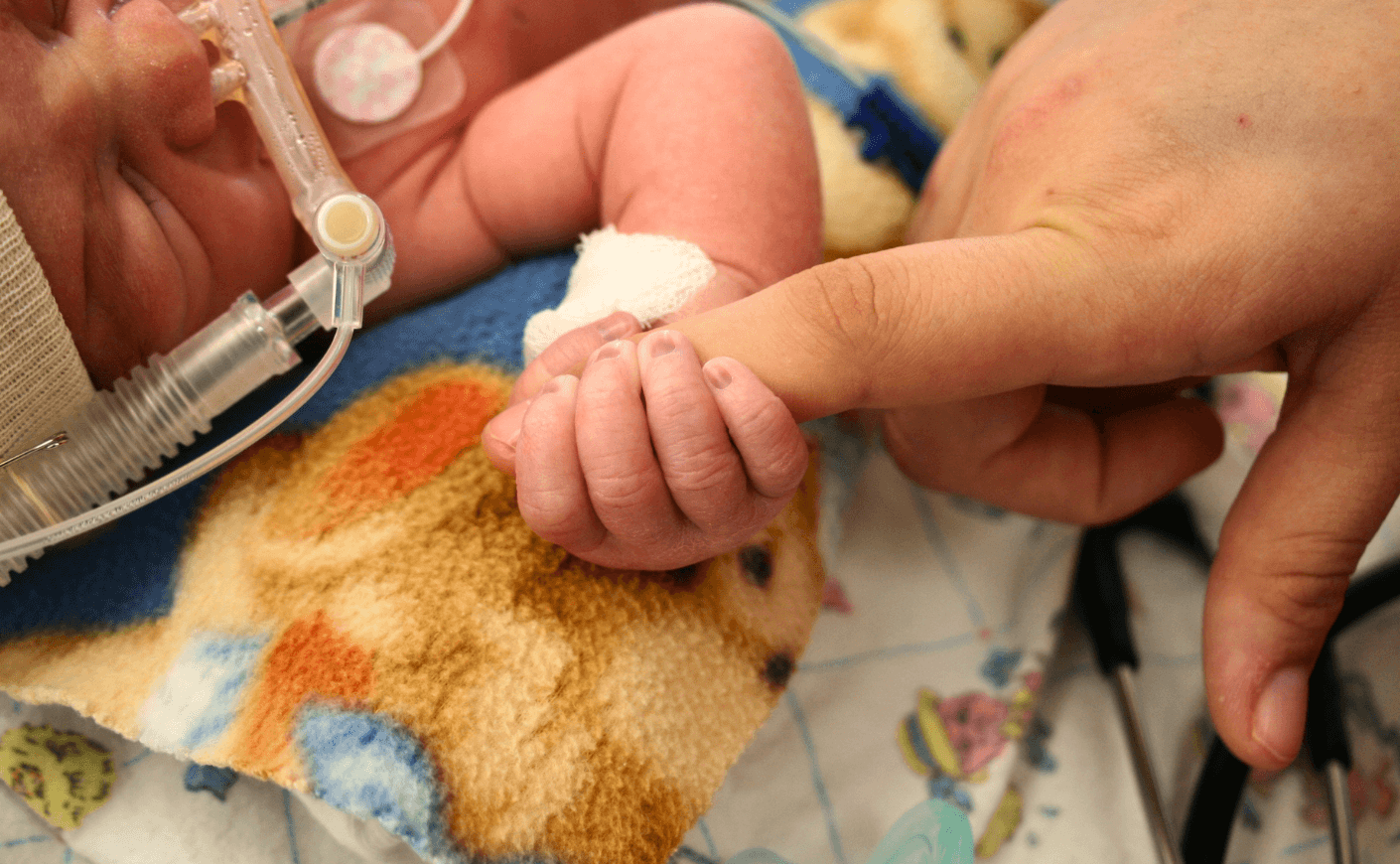
For a country that spends more on healthcare than almost any other nation, America's record on maternal health is surprisingly bleak. The U.S. has the highest maternal mortality rate in the developed world, and according to the CDC, most pregnancy-related deaths are preventable. Yet many new mothers still struggle to access basic prenatal care, postpartum support, and the specialists who could help catch complications before they become life-threatening.
Olivia Walton wants to change that. The philanthropist and founder of Healthy Moms, Healthy Babies America has launched a bipartisan campaign aimed at cutting the nation's maternal death rate in half within five years. In this conversation with Katie, Walton explains why the crisis has become so severe, what states like Arkansas and New Jersey are doing differently, and why investing in mothers isn't just a healthcare issue — it's an economic one.
Katie Couric: Tell me about Healthy Moms, Healthy Babies. What is it and why did you decide to create it?
Oliva Walton: Healthy Moms, Healthy Babies America is a bipartisan national campaign with one clear goal: to cut the US maternal death rate in half, in five years. We know we can do it. The CDC says 87% of maternal mortality is preventable. As you know, we have the highest maternal death rate in the developed world. Worse still, it has more than doubled since the 1980s. How is that possible? How is it more dangerous for me to have given birth to my three babies during the last eight years than it was for my mom to give birth to me in the '80s?
Why is the U.S. maternal mortality rate so high?
It's really multifactorial, but I think it comes down to the fact that we just haven't said, “Taking care of moms and babies is important enough to us as a country that we understand that it's such a critical investment in the future of American prosperity — that we're willing to put a stop to it.”
What we have at Healthy Moms, Healthy Babies America is a state-led playbook for change. It very much builds on the maternal health playbook that the National Governors Association put out two years ago. It builds on the work that we're already doing here at Heartland Forward, which is an economic development organization in Bentonville, Arkansas. We do economic research, and we do state policy advisory. We were actually already doing this work; two years ago, I started something called the “Maternal and Child Health Center for Policy and Practice.” We work with eight states in our region, including Arkansas, to improve their maternal and infant outcomes.
At the beginning of the year, we started noticing how much the administration was talking about the birth rate. We talked to federal and state leaders on both sides of the aisle who were recognizing how this needs to stop. We realized that things could get a lot worse when the Medicaid cuts kick in. And so the time is now.

You say that there hasn't been a national commitment to really prioritize mothers and babies, but I'm curious about the maternal mortality landscape, and how we came to have this embarrassing standing in relation to the rest of the world. What factors have made maternal mortality rates increase?
We need to fix prenatal care. We need to start doing postpartum care, and we need to make this good for business so it's actually sustainable because, like it or not, we have a for-profit healthcare industry in America. Let's start with prenatal care: We need to expand access to the type of providers you can see, access to insurance, and access to virtual and telehealth. We have a model in America that is in many ways over-medicalized. You're not actually sick when you're pregnant; you're just having a baby. But we built a model, driven by the American Medical Association, that said you have to see an OB regardless. Katie, there are not going to be OBs in every county in the country. There's a shortage now, and it's going to get a lot worse.
So when people say there are maternity-care deserts, that's what they mean. There are communities where there are no OBs, no labor and delivery hospitals. But guess what? A lot of poorer countries that have less money and are more rural are having much safer births, because they have a model that says there's a ladder of care. You don't just have to drive hours to get to an OB over and over again, which is expensive and time-consuming. You can actually see the family practice doctor in your neighborhood who has an expanded scope of practice. You can see nurses or midwives, and you can have a doula. We need to really think about that ladder of maternal health workforce and the state needs to invest in it.
Then let's really, as a country, start talking about postpartum: No other developed country provides no immediate postpartum care. The standard is, "See you in six weeks." That's a bad idea. Think of how many things happen in those early weeks: Infections, hemorrhage, the baby's skin turns yellow, your blood pressure is spiking, there's cardiac issues, mood swings, and postpartum depression. This stuff is so treatable.
And in this postpartum window, America does nothing. 40% of American moms don't go for any postpartum follow-up visit, and among mothers covered by Medicaid, that number goes up to approximately 60%. The gold standard here is home visits, like the ones done through an organization called Family Connects: A nurse comes into your home within the first two weeks. New Jersey does it and has incredible outcomes: Apparently 17% of the moms and babies they saw were referred back for immediate care. North Carolina does something similar and found that for the moms and babies, they saw emergency room visits come down 50% during the first year of the baby’s life. They said for every dollar they spend on this program, they're saving $3 and 17 cents downstream. These home visits catch the families that fall through the cracks.
Why do we have no national system for home visits? A large reason is that the coding system that the American Medical Association wrote in the '90s doesn't provide payment for them. So you can actually track, and there's a great article on this, where they wrote these codes, and there's subsequent steady uptick in the maternal mortality rate. They had a payment system called a bundled global payment, which means only the person or group who delivers the baby gets paid. So there wasn't actually a financial incentive for the family practice doctor to see the mother two weeks later. The American College of Obstetricians and Gynecologists has been telling the AMA that the system is broken. They're finally listening, and they're changing it this year. We don't know what's in the bill yet, but it is high time.
What are the circumstances that result in maternal mortality in a hospital setting?
The maternal mortality rate for black and brown women is three times as high as it is for white women. It also doesn't discriminate by income for black and brown women. So we really do have women like Serena Williams in world-class healthcare settings not being taken seriously. Their pain is being discounted, and it has to stop. Some of the solutions look like racial bias training, having doulas with you, and finding the providers where there's real trust. This is an urgent national crisis.
How does your program address implicit bias?
We're helping elevate state-led solutions. New Jersey's maternal mortality rate has gone from 47th to 25th in the country. They've had great success with very distinct DEI policies, bias training, et cetera. We are bringing governors’ solutions that have worked in other states. Some of the DEI language doesn't work for some conservative governors in 2026. We're going to focus on where there's alignment.
In some conservative states, because DEI has been turned into three dirty initials, they're not embracing that. But they are embracing other, hopefully effective, things about the program.
The conservative governors I've spoken to are clear-eyed about the racial disparities. They care about them, and they want to address them. They understand that things like access to doulas are a powerful intervention that saves lives, improves outcomes for both mom and baby, and, by the way, also saves money. And they're working fast and furiously to get more doulas out there.
Some data shows that, particularly in minority populations where there's systemic distrust in the healthcare system, doulas are effective. So what Governor Sanders has done is to say, "Medicaid is now actually gonna pay for doulas." Again, there was no previous payment mechanism. And then guess what? There was nowhere to train to actually become a doula. So we helped set up the Arkansas Doula Alliance with a grant, along with other funders.
I want to credit Arkansas Governor Sarah Huckabee Sanders, because she has been very committed to this issue and has been at your side on it. Tell me what's happening in your state that you think will change the outcomes for moms and babies.
With her own Healthy Moms, Healthy Babies America bill, Governor Sanders made critical payment reform, unbundling the Medicaid reimbursement rate (which covers what doctors get paid for providing birth service), raising it by 70%, and expanding what it would actually cover. So now, we're covering things like doulas and midwives here in Arkansas. We're also now, thanks to state leadership, training doulas and midwives in Arkansas. She's also helped set up the Proactive Postpartum Call Center, an initiative from the UAMS Arkansas Center for Women and Infants Health. More than 20% of the moms who the call center speaks with are referred back for medical care. We really are catching preventable stuff.
Are there any other changes regarding the postpartum stage that you guys are trying to implement?
We believe in paid leave: 25% of moms are still back to work after two weeks. Do I think that we are gonna get paid leave nationwide as a result of our campaign? No. Do I think we'll help expand it? Yes.
An essential element of your program is prenatal care: Can you get more specific about what you were recommending to states?
We want expanded insurance coverage, including presumptive eligibility. We want to expand telehealth and virtual care access. We want to promote team-based care — a lot of the time, particularly in a low-risk pregnancy, it's fine to just see a nurse or a midwife.
Get some care that refers you higher up the ladder, instead of getting no care. We promote a whole-health approach, which might involve an hour with a nutritionist, or some time with a therapist. We need to look at the whole person and not just what's going on in the uterus.
Is there a willingness at the governor's level to commit the funding needed to implement all these programs? And to train a workforce that is so desperately needed?
I really believe there is. Again, the NGA put this out three years ago. There's an understanding that this will cost some money in the short term, but it's going to save a whole lot more money in the long term. If you want to change the trajectory of a woman's or a family's health, this is your highest window of opportunity to get it done. At no other point in your life do you have this many consistent interactions with health officials. At no other point in your life are you this motivated to change your behavior. This is a moment of high opportunity and leverage for providers to get in there to make women and their families healthier.
I think that sometimes initiatives for maternal mortality get lumped in with the conservative agenda to encourage women to have more babies. But this is a completely separate effort in terms of keeping moms and babies healthy and safe. It's not a part of Project 2025 in any way, right?
No, we are not part of Project 2025 in any way, shape or form. I think of the statistic from the bipartisan policy center that says women want 2.7 children, but they're having 1.6. When I think about the birth rate, I think if you want women to have more children, you need to make childbirth safer and more supported. And that's what we're trying to help with.
I know you believe that this isn't just a woman's issue.
No — investing in maternal health is the single most strategic investment we can make in the future of American prosperity. Healthy moms, healthy communities, healthy economies, healthy country. This is not just about women: It's about dads, about kids, about families. This is about our collective future.
