






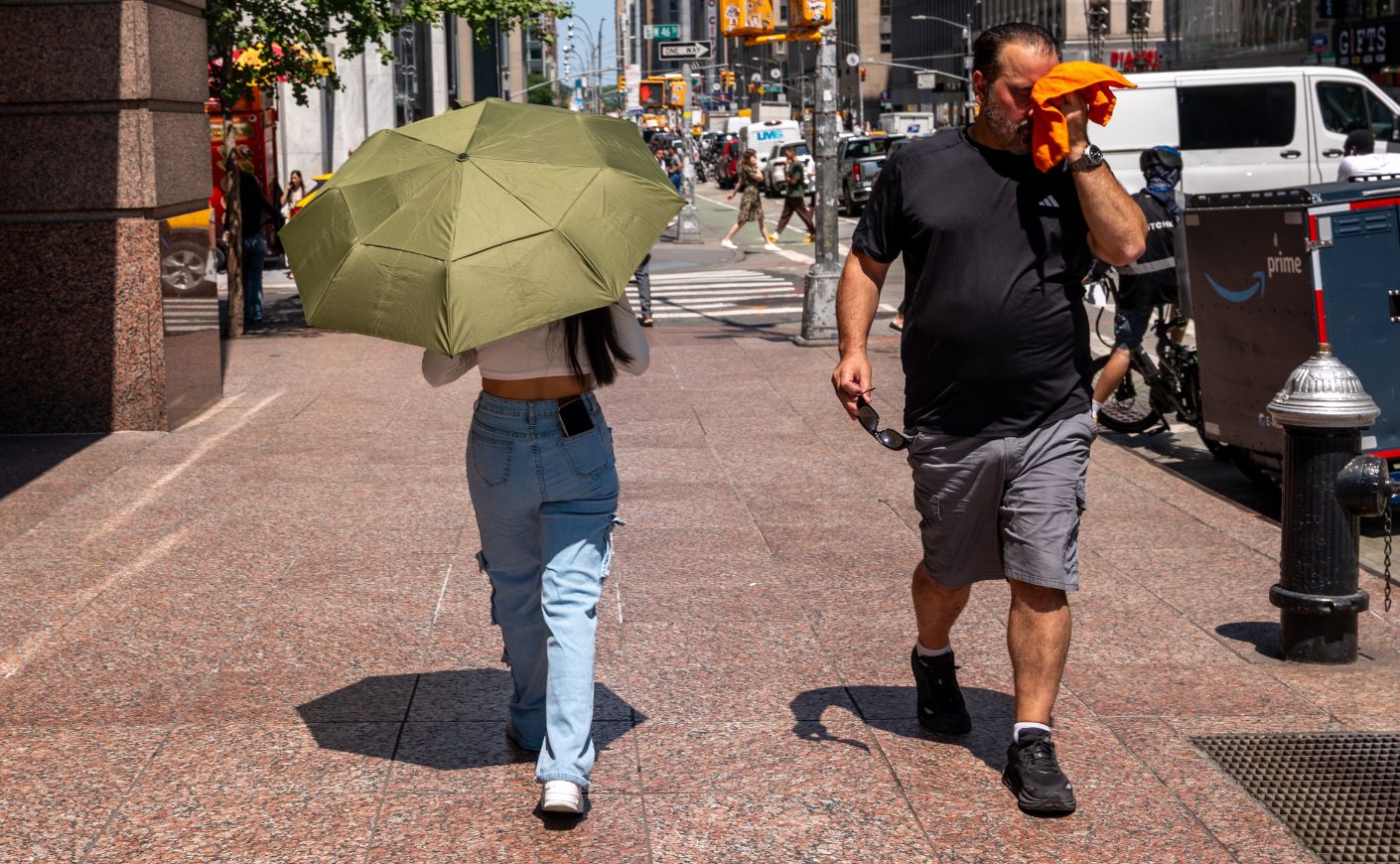
- Know heat illness signs: cramps, rash, dizziness, nausea, excessive sweating, weakness; stopped sweating, confusion, or seizures signal heat stroke and need emergency care.
- Check the heat index, not just temperature; humidity raises risk and direct sunlight can increase apparent heat by up to 15°F.
- Avoid strenuous outdoor activities during high heat; rest in shade, hydrate, and use cool damp cloths to lower body temperature.
- Fans can help at moderate temperatures but may be dangerous at or above 95°F; seek air-conditioned spaces or cooling centers.
- Older adults, people with disabilities, and those without AC are most at risk; check on neighbors and provide water or access to cooling.
Millions of Americans faced dangerous heat and humidity over the July Fourth holiday as a major heat wave spread across large parts of the central and eastern United States.
For many people, this is the time of year for cookouts, beach trips, and other outdoor activities. Soccer fans are packing into stadiums for World Cup matches. But summer also brings the risk of dangerously high temperatures in many parts of America.
Cities as far north as Chicago and Detroit experienced a heat index over 100 degrees Fahrenheit (37.8 Celsius) in early July, and large parts of the East Coast, including New York and Washington, D.C., were bracing for similar conditions on Independence Day. Washington, D.C., and Philadelphia both canceled Independence Day parades and shortened or delayed outdoor gatherings, including the Great American State Fair on the National Mall, because of the extraordinary heat risk.
I study health risks in a warming climate as a professor of public health, and I’ve seen heat become a growing concern. In the U.S., hundreds of people succumb to heat-related illnesses each year. Older adults and people in areas that historically haven’t needed air conditioning tend to see the highest rates of illnesses during heat waves, as Chicago saw in 1995 when at least 700 people died in a heat wave.
Here are some key warning signs to watch for as temperatures rise — and ways to keep cool when the heat and humidity get too high.
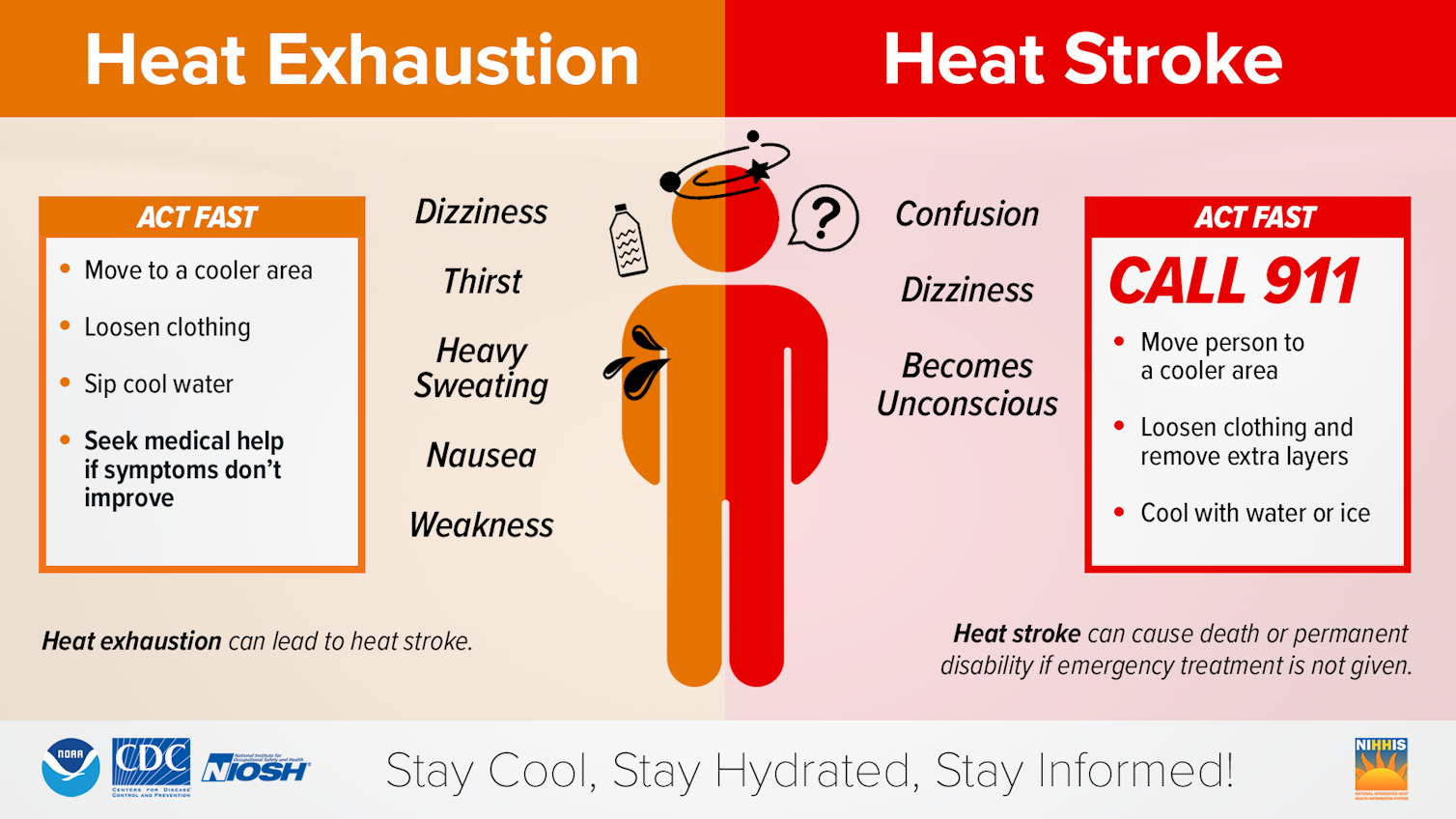
Heat exhaustion vs. heat stroke: warning signs to know
Heat-related illnesses occur across a spectrum, and mild heat stress can quickly progress to life-threatening heat stroke if a person is exposed to dangerous conditions for too long.

Mild forms of heat-related illness include heat cramps and heat rash, both of which can be caused by extensive sweating during hot conditions. Cooling the body and drinking cool fluids can help.
When heat-related illnesses progress into heat exhaustion, the situation is more serious. Heat exhaustion includes symptoms such as dizziness, nausea, excessive sweating, weakness, thirst, and headache.
Heat exhaustion is a signal that the body is losing its ability to maintain a stable core temperature. Immediate action such as moving to a cool, ideally air-conditioned space, drinking liquids, loosening clothes, and applying wet cloths are some of the recommended steps that can help keep heat exhaustion from progressing to the most dangerous form of heat-related illness, heat stroke.
Heat stroke is a medical emergency. At this point, the body can no longer maintain a stable core temperature. A body with heat stroke can reach 106 degrees Fahrenheit or higher rapidly, and that heat can quickly damage the brain, heart, and kidneys.
Typically, someone suffering heat stroke has exhausted their reserves of sweat and salt to stay cool, so sweating eventually stops during heat stroke. Their cognitive ability fails, and they cannot remove themselves from danger. Heat stroke can cause seizures or put someone into a coma as their core temperature rises. If the condition is not treated immediately, and the core temperature continues to rise, heat stroke becomes fatal.
Because heat exhaustion can lead to heat stroke, addressing heat-related illnesses before they progress is vital.
When is it too hot to be outside? Check the Heat Index
Heat risk isn’t just about temperature — humidity also increases the risk of heat-related illnesses because it affects how effectively sweating cools the body when it gets hot.
Instead of just looking at temperature when planning outdoor activities, check the heat index, which accounts for heat illness risk associated with temperature and relative humidity.
It doesn’t take very high temperatures or very high humidity for the heat index to enter dangerous territory.
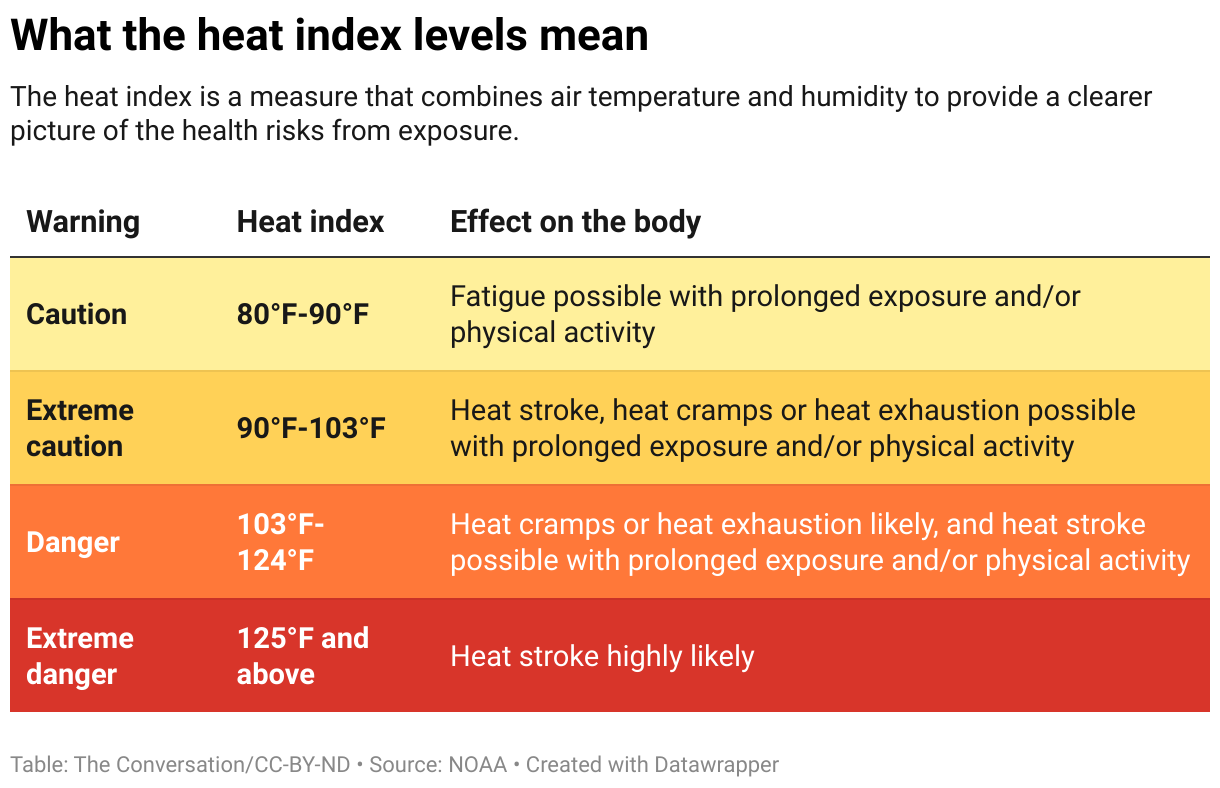
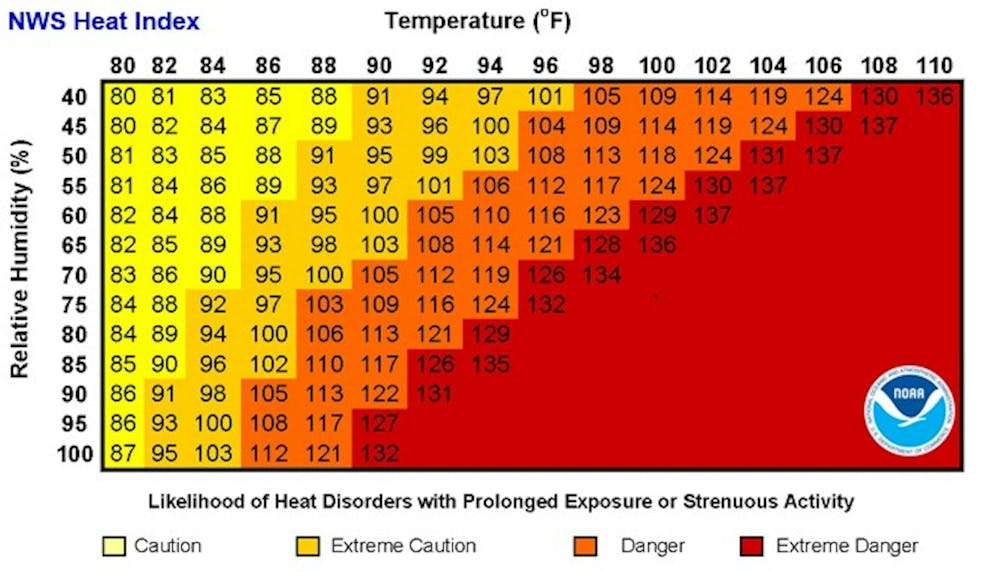
However, the heat index remains a conservative measure of heat's impact on humans, particularly for outdoor workers and athletes during summer practices. This is because temperature measurements used in weather forecasting are taken in the shade, not in direct sunlight. If someone is outside and exposed to direct sunlight, the actual heat index can be as much as 15°F higher than the chart indicates.
A more sophisticated measure of heat effects on human health is the wet-bulb globe temperature, which accounts for other variables, such as wind speed and cloud cover. Neither takes into account a person’s physical exertion, which also raises their body temperature, whether working at a construction site or playing soccer.
How to stay safe during a heat wave
How can you stay cool when heat waves set in? The answer depends in part on where you are, but the main points are the same:
- Avoid strenuous outdoor activities in high temperatures if possible. If you start to feel symptoms of heat-related illnesses, drink fluids that will hydrate you. Find shade, rest, and use cool, damp cloths to lower your body temperature. If you see signs of heat stroke in someone else, call for medical help.
- Be careful with fans. Fans can be useful if the temperature isn’t too high because they wick sweat away from the body and induce evaporative cooling. But at very high temperatures, they can accelerate heat buildup in the body and lead to dangerous conditions. If indoor temperatures reach 95 degrees or higher, using fans can actually be dangerous and raise the risk of heat-related illnesses.
- Find a cooling center, library, or community center where you can get inside and rest in an air-conditioned space during the hottest hours. In places such as Phoenix, where high temperatures are a regular hazard, cooling centers are typically opened in summer. Northern cities are also opening cooling centers as heat waves occur there more frequently than they did in the past. Urban areas with a lot of pavement and buildings — known as heat islands — can have temperatures well above the city’s average.
- Hydrate, hydrate, hydrate! Drink plenty of fluids, and don’t forget about the importance of electrolytes. Heat-related dehydration can occur when people sweat excessively, losing water and necessary salts from the body. Some sports drinks and rehydration fluids help restore electrolyte and hydration levels.
Who is most at risk during extreme heat?
Older adults and people with disabilities often face higher risks from heat waves, particularly if they can’t easily move to a cooler environment. Communities and neighbors can help protect vulnerable populations by providing cooling centers and bottled water, and by making regular wellness checks during periods of high heat.
Summer can be a season of fun. Just remember the risks, keep an eye on your friends and neighbors as temperatures rise, and plan ahead to beat the heat.
Brian Bossak is a professor of public health who has a background in Environmental Health and Medical Geography. His research interests include climate change and human health, vector-borne diseases, natural hazards, historical pandemics, AI and health, and Blue Zones (environmental influences on aging).
This article is republished from The Conversation under a Creative Commons license. Read the original article.
