






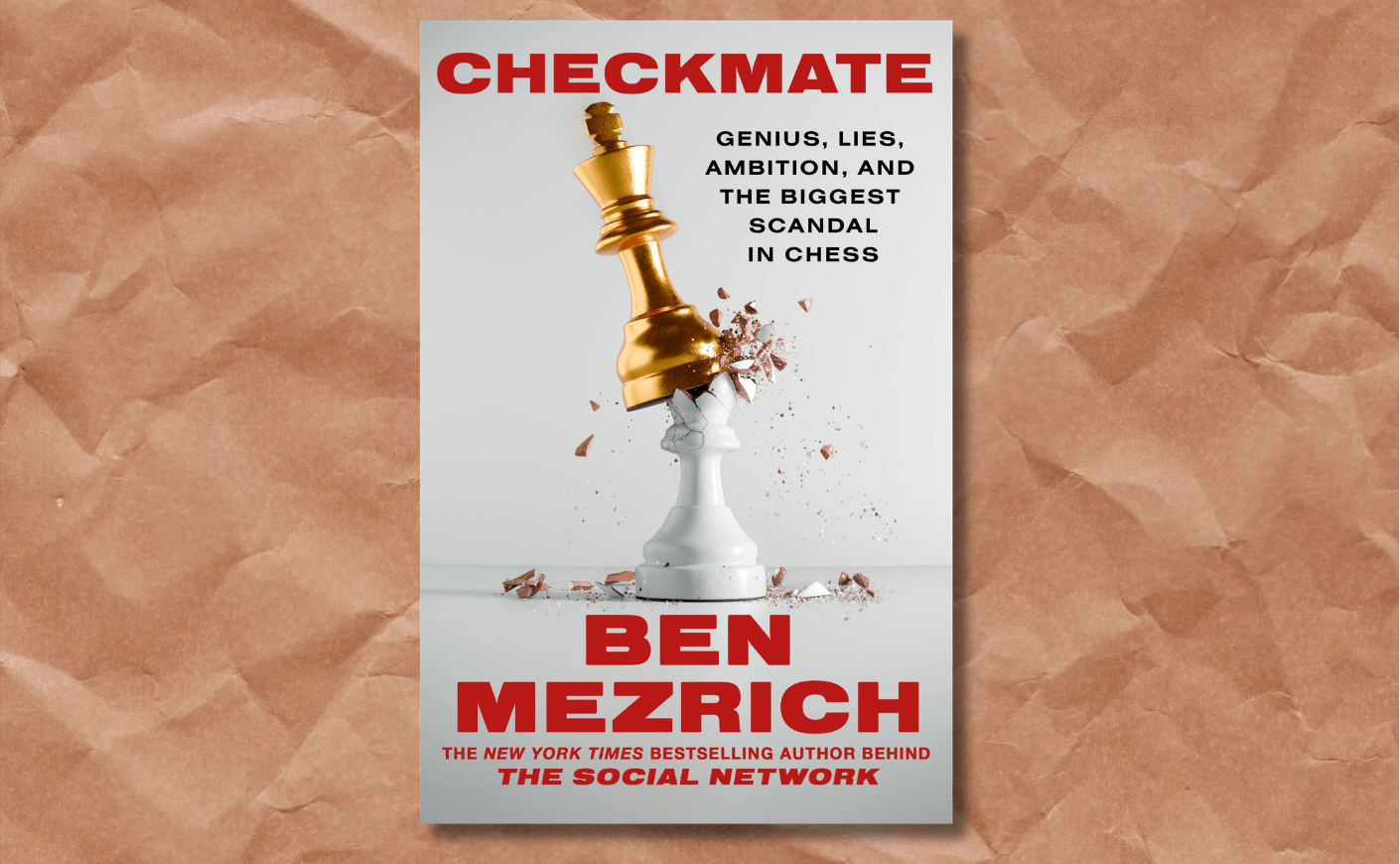
Author Ben Mezrich has built a career out of stumbling into seemingly impossible stories — including the Harvard kids who broke Vegas, the roommates who built Facebook (which became the movie The Social Network), and the Reddit mob that upended Wall Street. His latest book, Checkmate, out now, began a similar way: a random Google search on a Wednesday morning that led him to a chess tournament in St. Louis, a stunning upset, and an accusation of cheating that sent shockwaves through a sport many people had forgotten existed. Below, he tells the story of how he found it — and why he couldn't let it go.
It was a Wednesday morning, a little after 10, and I was Googling. It’s something I do, periodically, between books; maybe I was trying to quell the desperate feeling that always seemed to take over when one project ended and another hadn’t yet found its way to my front door. Or maybe I was just chasing the writer’s equivalent of a runner’s high. The movie version of my most recent book, Dumb Money — about the crazy Reddit mob that turned GameStop, the absurd brick and mortar company that sold used Nintendo cartridges and t-shirts emblazoned with characters that hadn’t been seen on the Cartoon Network in decades, into the most valuable company on the stock exchange — still had my heart racing.
So I was Googling, and I’d typed in the words “scam” and “hustle” and “scandal.” Most of what came back were stories I’d heard before. But about four pages into my search, I saw something that made me pause. It was a small article, about something odd that had taken place at a chess event called The Sinquefield Cup in St. Louis, Missouri, September of 2022.
I didn’t know very much about chess, and even less about St. Louis, but something made me read more. And as I did, I felt that feeling I get when I know I’ve stumbled into a story that’s going to swallow up the next year of my life.
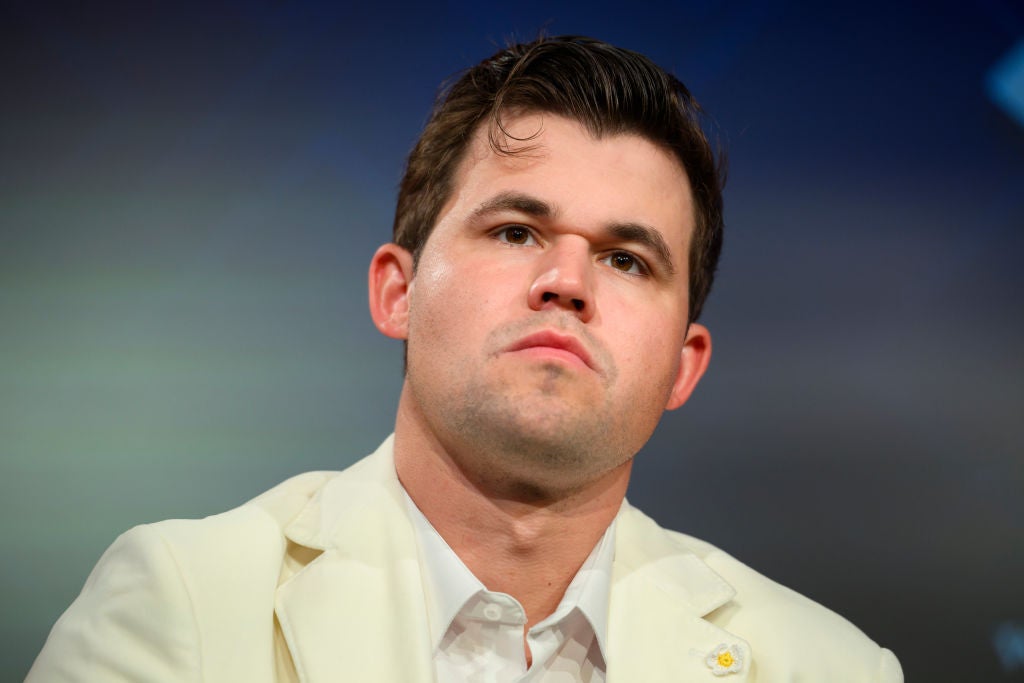
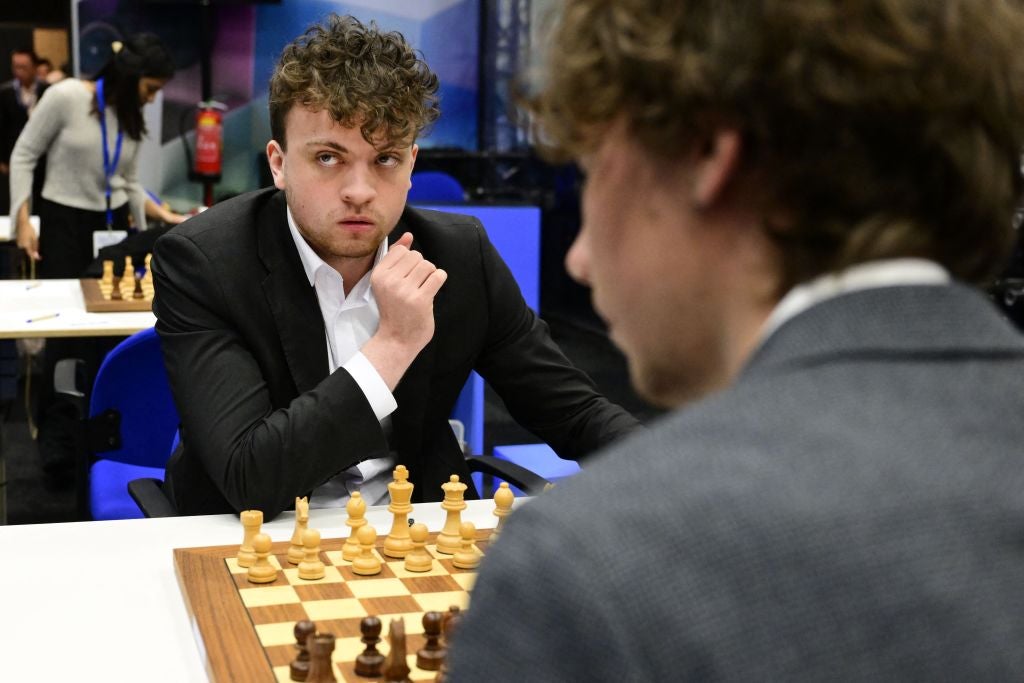
The stakes seemed immediately dramatic to me: Magnus Carlsen, the greatest player in the history of chess, a virtuoso more often compared to Mozart than to Kasparov, had sat down to play in the most prestigious American tournament — The Sinquefield — against a young opponent named Hans Neimann, a brash, foul-mouthed, hotel-trashing, mostly unknown, nineteen-year-old American.
Going into the Sinquefield, Magnus hadn’t lost a match in more than two years. And yet, somehow not only did Hans beat him, he did so without even seeming to be paying attention. He was barely looking at the pieces, yawning as if bored, and actually chewing gum. Magnus had never been beaten like that before; a day later, instead of showing up for his next match in the tournament, he withdrew. And two weeks later, he officially accused Hans of cheating.
There was more: Chess.com, the billion-dollar behemoth at the center of the chess industry, had been about to turn Magnus into the face of their company, and began an investigation to try and “prove” Hans had cheated — leading Hans to sue them for $100 million. But I had already been hooked. The story had everything: drama, prodigies, cheating, and billion-dollar stakes.
The truth is, I often accidentally stumble into the stories I write. Usually, they don’t start with Google, but with a random interaction with a stranger — maybe a text from an unknown number, an email from an address I don’t recognize, or a phone call in the middle of the night. That’s basically how I found the story behind my book The Accidental Billionaires, which became the movie The Social Network. I was sitting at home when an email dove into my inbox at around 2 a.m., from a total stranger. "My best friend founded Facebook, and nobody’s ever heard of him," the first line of the email read, and I quickly set up a meeting at a local bar for the next night. In walked Eduardo Saverin, who, after a couple beers, explained, “Mark Zuckerberg fucked me.”
Journalist that I am, I responded, “Tell me more," and that conversation became the spine of my book, which Aaron Sorkin and David Fincher adapted. Bringing Down The House was also a story I fell into, after a college friend introduced me to her boyfriend. He happened to have way too much money, and all of it in hundred-dollar bills. I followed him to Vegas, where I discovered that he and his classmates at MIT had figured out a system to beat the game of blackjack. That story turned into my first bestseller, and a movie called 21.

But this was different; nobody was pitching me this story set in the world of chess, I’d just stumbled into it on a random Wednesday morning. That meant I had to be an actual journalist and dig my way inside; in this modern moment, that meant sliding into a bunch of Instagram DMs. I found Hans Niemann first, and surprisingly, he was open to hanging out.
Tracking down Magnus was more difficult. He wasn’t just “the Mozart of chess” he was also a true celebrity, featured in modeling campaigns and credit card commercials. People like that are harder to crack; think letters to agents, managers, and publicists, all of which went nowhere. I had to get creative, tracking down his dad, who was also his one-time manager, via Facebook.
Ironically, it was also through Facebook that I once hunted down and befriended the Winklevii twins, my biggest — and certainly tallest — sources for The Social Network. Henrik Carlsen turned out to be just as generous with his time and insight as they were. From there, it was a short hop to the CEOs of Chess.com, who were eager to try to prove that there was no evil "Chess Mafia" behind Hans’s persecution.
The story took a year to write, partially because it was difficult to track down the rest of the characters involved in the scandal. That included the photographer, who, during the match, inadvertently spooked Magnus by trying to get a photograph of Hans’ blowing a bubble while he decimated his rival; and the internet troll in Liverpool, England, who originated the viral rumor explaining how Hans may have cheated (via "anal beads" — yes, really, anal beads).
But it was also tough because exactly two years after the Sinquefield Cup, Magnus and Hans faced each other in a rematch — in Paris, of all places — right across the street from the Louvre. Not only were my two main characters in the same room, playing high-stakes chess, but the event was sponsored by Chess.com. Everyone I was writing about, gathered together in an arena just a stone’s throw from the Mona Lisa. You couldn’t beg for a better Hollywood ending.
Hollywood, fortuitously, agreed. Right after Paris, I whipped up a 12-page book/movie treatment, and sent it to every producer, actor, director, and studio exec in my agent’s rolodex. For 20 books, this has been my process: I try to sell the movie first, and if I can’t sell the movie, I don’t bother writing the book. My goal has never been to win a Pulitzer or a National Book Award. I’ve always aimed for that glossy book cover with the little sticker on it that reads: “Now a Major Motion Picture.” I write books, I love books, but I’ve always wanted my stories to live beyond the pages — to come alive on a screen.
That’s exactly how it had gone with The Social Network. After I’d met Eduardo in that bar, I’d written a 10-page proposal which leaked onto the Internet, leading to Sorkin and Fincher signing on — after which I frantically wrote the book. My Checkmate proposal, thankfully, sparked similar excitement; by the end of the week, I’d sold the story to Nathan Fielder, Emma Stone, and A24 — brilliant and quirky filmmakers who understood that this was much bigger than a thriller about cheating in chess. I had stumbled into a story that was really about a clash of generations; a treatise on how technology had turned a quiet, backroom boardgame into a billion-dollar business; and most of all, an almost Shakespearean battle between an aging prodigy who was still the best in the world, and a young troublemaker modeling himself after Bobby Fischer — an ambitious kid who wanted the world, and was willing to do almost anything to get it.
Ben Mezrich is the New York Times bestselling author of The Accidental Billionaires (adapted by Aaron Sorkin into the David Fincher film The Social Network), Bringing Down the House (adapted into the #1 box office hit film 21), The Antisocial Network (adapted into the 2023 film Dumb Money), and many other bestselling books. His books have sold over six million copies worldwide.
His latest book, Checkmate, is out now — buy a copy here.
