




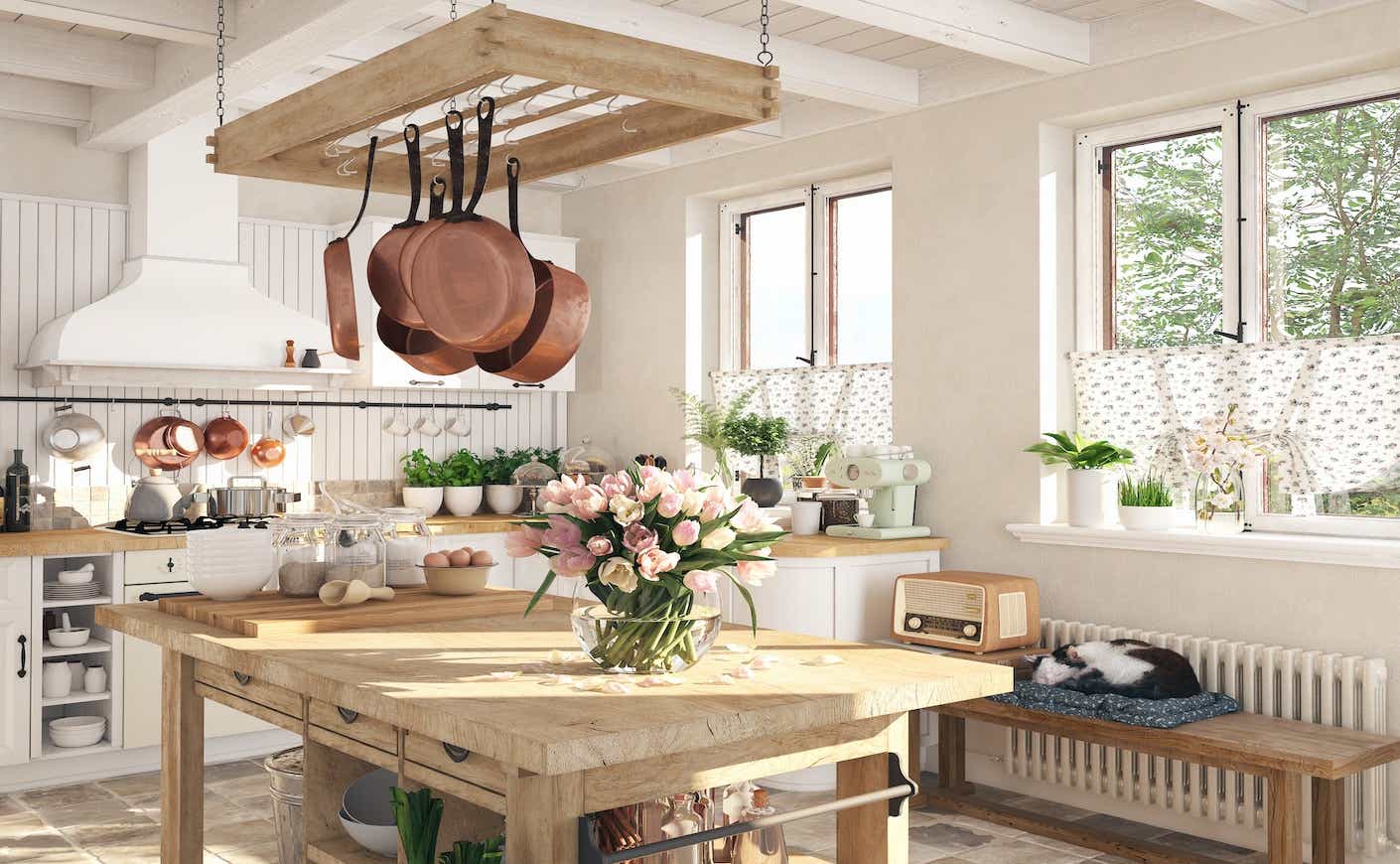
Shea McGee was perfectly cozy in her career as an esteemed interior designer — you may have seen her McGee & Co. collection at your local Target — when she decided to make a major leap to the kitchen. Her cookbook, Around the Table, is a celebration of effortless elegance and homegrown simplicity.
"So much of my career has been about creating environments where people feel welcome, and the kitchen has always been at the center of that," McGee told us recently. "The way you set a table, the way you approach a meal — to me, that's just another form of design."
If you always feel like your dining space is a cluttered, harried zone where you're flustered and frustrated, you're not alone. The dopamine decor trend — vibrant spaces that boost mental well-being by triggering dopamine release — has reached the kitchen for good reason. We should feel safe in a space meant for nourishment. But if you find cooking or cleaning stressful (who doesn't?), it can easily become the room you want to avoid most.
To turn your dining or cooking area into a welcoming habitat, we turned to a master of these arts. McGee shared doable, affordable tips and tricks to elevate your table with ease.
She dished on how to apply her welcoming, friendly philosophy to your own space, the kitchen tool she couldn't live without, and more.
When it comes to elevating a dining room or kitchen without a full renovation, what are your go-to DIY upgrades that make the biggest visual impact?
Shea McGee: Lighting, always. Swap out a builder-grade fixture and the entire feel of a room shifts instantly. From there, paint cabinetry, walls, or whatever you've been tolerating for too long — it's the highest-impact, lowest-cost move in design. Styling can also help: Think less permanent items so that you can continue to view your space with fresh eyes. Swap in new objects, a different arrangement, or a tablecloth you actually love. These can make a room feel like yours again.
For people working with smaller budgets, what styling tricks can instantly make a dining space feel more high-end and intentional?
Fresh flowers will do more for a table than almost anything else. They can be from the market or your own backyard. I keep it to one type of flower rather than a formal arrangement for everyday. Let them be a little loose, a little asymmetrical. Nature isn't perfect, and trying to make it so only makes things feel stiff. A single stem in a small vessel or a big bunch in a found jar does the trick.
How do you approach layering textures, lighting, and decor in kitchens and dining areas to create warmth without clutter?
Lighting is the focal point — everything else layers from there. With texture, it's about contrast: You don't want every surface to be slick, but you don't want everything matte and rough either. The mix is what makes a space feel considered. And in the kitchen and dining room, especially, I lean toward less. These are hardworking spaces, so everything in them needs to earn its place. It should be beautiful, yes, but also useful. Clutter in a kitchen doesn't just look messy; it feels messy. When you edit down to only what you love and actually use, the whole room breathes.
What are some of your favorite go-to stores or brands for sourcing stylish, accessible decor pieces for these spaces?
McGee & Co. is obviously close to my heart — we design everything with exactly this in mind: quality at the core, pieces that feel elevated but work across a wide range of styles. I also have a collection with Target that delivers on the budget side without sacrificing the look.
Some of my most-used pieces came from a Saturday morning at an antique shop or a trip where I found something I couldn't leave behind. There's a warmth that comes with a piece that has a little history — or even just a story attached to it.
Are there any common design mistakes you see people make in kitchens or dining rooms — and how can they easily fix them on their own?
The biggest one I see is too much symmetry — it can make a space feel staged rather than lived-in. When everything is perfectly centered and matched, it almost feels a little rigid. An easy fix is to loosen it up: shift your centerpiece slightly off-center, vary the heights of your candles, or mix in a few different shapes. It doesn’t have to be exact to feel right.
The second is lighting that’s too harsh. One overhead fixture can flatten a room if it’s too bright. Put it on a dimmer, and layer in softer light — candles or a small lamp nearby can completely change the mood.
What's your favorite healthy breakfast of all time?
I love yogurt, granola, and berries. I eat that combination most days of the week.
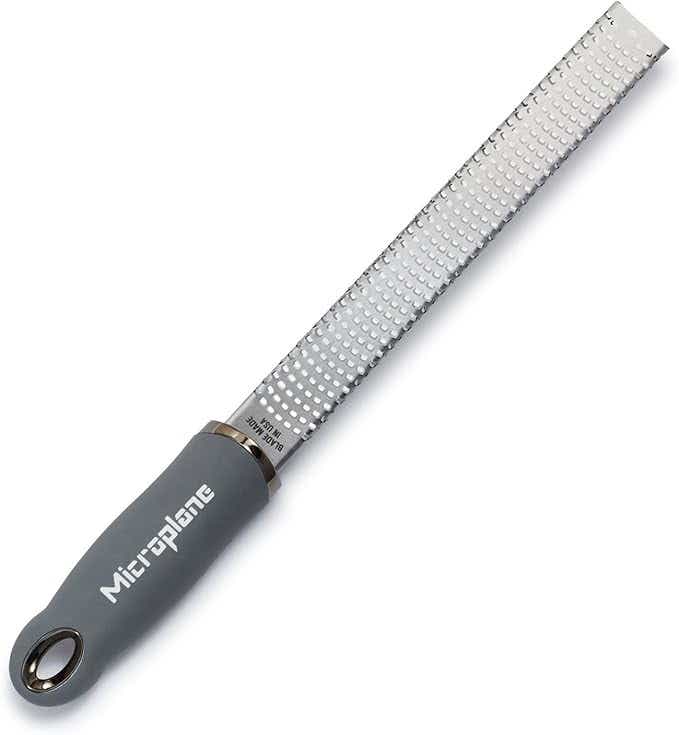
What is a kitchen tool you couldn't live without?
I love my microplane for zesting citrus and finely grating cheese.
What dish would you fly across the world for tomorrow?
My husband, Syd [McGee], and I had caramelle pasta in Lake Como — caramelle means candy in Italian. Picture homemade pasta stuffed with cheese and herbs, twisted at both ends just like a wrapped piece of candy, with a simple buttery sauce. I'd fly back for it tomorrow.