






- Nearly half of Afghans need humanitarian aid; 21.9 million are in need, and 17 million face acute food insecurity, with millions of malnourished children.
- Aid funding has collapsed; Afghanistan's 2026 appeal is 25 percent funded, and many health and nutrition services have been cut or suspended.
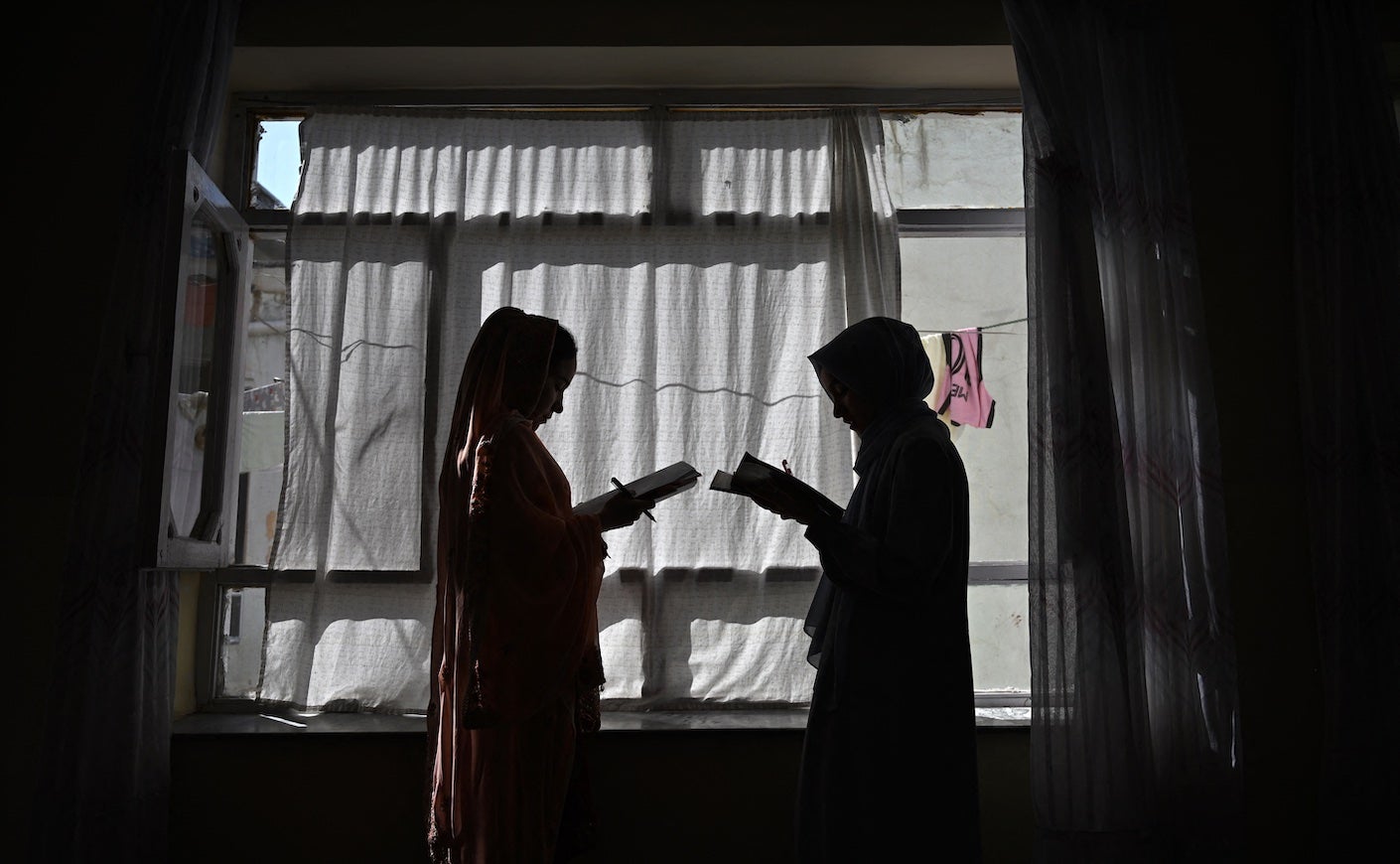
- Women and girls face harsh restrictions: 3.8 million out of school, facing limits on work and long-term damage to health and economy.
- Climate shocks and drought persist; sixth consecutive drought year, rising water scarcity, and millions in emergency food insecurity.
- Mass returns and displacement strain communities: millions deported or internally displaced, most are women and children arriving with urgent health needs.
Five years ago, the last U.S. troops left Afghanistan, officially bringing America’s longest war to an end. And in the years since, the country has largely disappeared from U.S. headlines.
But the crisis there is far from over. Nearly half of Afghanistan’s population now needs humanitarian assistance, as a devastating mix of hunger, drought, mass displacement, and cuts to international aid pushes millions of people deeper into crisis. Women and girls have been hit particularly hard, with millions of girls shut out of school and severe restrictions limiting women’s ability to work and access essential services.
We spoke with Bostan Fahim, the International Rescue Committee’s Afghanistan Deputy Director for Programmes, about what else his teams are seeing on the ground, how aid cuts are affecting ordinary families, and why Americans should still be paying attention.
Katie Couric Media: Five years after the U.S. withdrawal, what does daily life in Afghanistan look like today?
Bostan Fahim: Day-to-day life is bleak for the Afghan people. Markets are selling fruits and vegetables at inflated prices. The majority of people are on the poverty line, surviving off limited salaries, if they have a job at all. Families struggle to put food on the table, with parents skipping meals to ensure their children have enough to eat. In rural areas, such as remote parts of Herat, communities are reeling from five years of drought and rely on aid organizations to provide treatment to children suffering from severe and moderate acute malnutrition. Meanwhile, millions of Afghan refugees are returning at crossing points from Pakistan and Iran; two-thirds are estimated to be women and children. Many people have been walking for days and arrive with significant health needs. We are facing devastating needs under strenuous circumstances.
Our client, Mahzada, 23, who lives in Herat, an area that has faced three years of drought and rising prices, told us, “If there is a harvest, we eat from it; otherwise, we have nothing to eat.” Her youngest son, Younus, became severely malnourished as he was unable to breastfeed, and powdered milk was far beyond what they could buy regularly, leaving her to give him boiled water, small spoonfuls of milk or thin mixtures that did not meet his needs. The IRC mobile health clinic, a health center on wheels near her village, became the one place Mahzada could take Younus and her other children for help and to receive life-saving treatment, including ready-to-use therapeutic foods.
What’s changed the most since 2021?
Five years since the Taliban took control of Afghanistan, nearly half the population is now living in crisis. Hunger, climate shocks, mass returns, and a collapsing aid system are converging on the same communities at the same time, and each one is making the others worse.

The number of people in need has risen to 21.9 million, nearly half the population, and 3.5 million more than in 2021. On top of these challenges, the climate crisis is taking an increasing toll. Afghanistan is entering its sixth consecutive year of drought, with 4.7 million people at emergency levels of food insecurity. We are tragically one step away from famine. Kabul itself could become the first modern capital to run out of water, possibly by 2030.
What are the biggest challenges Afghans are facing right now, and who is being hit the hardest?
Ranked by the United Nations as the sixth most climate-affected nation globally, the country continues to endure droughts, floods, and earthquakes that devastate lives and livelihoods, affecting 12 provinces and 3.4 million people.
Afghanistan is facing one of the worst hunger crises on earth, with over 17 million people experiencing acute food insecurity, including nearly 5 million at emergency (pre-famine) levels. Nearly 4 million children require life-saving malnutrition treatment, but only 1 in 4 are currently being reached.
The nation faces Asia’s largest displacement crisis, with 3 million refugees and 4.4 million internally displaced people.
The authorities' restrictions on women and girls are slowing Afghanistan's ability to bolster its economy. 3.8 million girls in Afghanistan are currently out of school. Restrictions on women's education and employment are costing Afghanistan an estimated $84 million annually, with losses accelerating each year. Every cohort of girls denied education is a cohort that will never enter the workforce, compounding critical shortages in the teachers and healthcare workers Afghanistan desperately needs. The erosion of these systems will drive up maternal and child mortality for generations, and block Afghanistan from recovering from a deep humanitarian crisis.
How have recent cuts to international aid affected people on the ground? Are there specific services or programs that have already disappeared as a result?
IRC staff on the ground have been witnessing the unfolding crisis, and the stark reality is that sweeping global aid cuts have forced us to scale back nutrition treatment and maternal health services in communities where few other options exist. Afghanistan's humanitarian response has long depended on a small group of major donors, and that funding base is now collapsing across the board. The country once relied on the United States for more than 40 percent of its humanitarian funding, and losing that lifeline has driven aid to its lowest level on record. Traditional Western actors also made significant cuts, such as the UK, whose aid to Afghanistan has fallen 60 percent since 2021. Nations like Germany have seen global humanitarian aid cut by 67 percent, and others have echoed similar cuts. These compounding cuts are crippling organizations like the IRC and limiting their ability to meet soaring needs. With lifesaving health, nutrition, water, and protection services now cut, families throughout the country are being pushed into a vicious cycle of malnutrition, disease, and economic collapse.
Afghanistan's 2026 humanitarian appeal is only a quarter funded, against a total need of $1.71 billion. Over a single year, the IRC's own work has faced catastrophic impact. The number of health facilities the IRC runs has fallen from a peak of 46 in 2023 to just 16 today — a collapse of nearly two-thirds, with the sharpest drop following the global funding cuts in 2025. This is just a small fraction of what the WHO estimates, as 445 clinics were forced to suspend services. First antenatal visits, often a woman's only contact with a health worker during pregnancy, have dropped 24 percent from their peak, despite the rising demand.
We launched our life-saving maternal health and nutrition services in 2022, starting from no supported clinics and building a network that now reaches tens of thousands of people a year. Between 2022 and 2025, IRC teams provided first antenatal care to more than 53,000 women and treated over 8,000 children for the most severe form of malnutrition.
However, that progress is now unraveling.
What’s driving the refugee return from Iran and Pakistan, and how is the country handling the influx?
Afghanistan is absorbing one of the world's fastest-growing displacement crises, which is having a profound effect on the humanitarian crisis gripping the country.
In 2025 alone, almost 3.2 million Afghans were deported or forced back from the nation’s neighboring countries. Many arrive without money, assets, or documentation into communities where food, water, and services are already scarce. Afghanistan received 922,000 returnees from Iran and Pakistan in the first half of 2026 alone, with daily arrivals averaging over 4,000 people from Pakistan and 2,350 from Iran.
Nearly two-thirds of those returning are women and girls, many of whom have experienced gender-based violence during the return journey and face severe restrictions on movement upon arrival. These new arrivals are against a $529.2 million funding requirement by the UN’s humanitarian response plan.
Afghanistan has largely faded from U.S. headlines since the withdrawal. What are Americans unaware of?
It’s true that after heartbreaking headlines five years ago, other world events have grabbed headlines both in the United States and around the globe; however, the needs in Afghanistan remain significant and growing. Although Afghanistan has fallen out of the headlines, our teams on the ground continue to provide tireless, impactful work under some of the most strenuous circumstances. From delivering babies at the Islam Qala border crossing with Iran to providing mothers with nutrition support to feed their children, while not every story makes the headlines, Afghanistan is still five years on from a story of adaptation and resilience. There’s hope beyond the headlines.
For Americans who are concerned about the situation, what can they realistically do to help?
Conversations like these are essential to fostering vital awareness. Speaking out on behalf of the humanitarians and the Afghan people is essential to making a difference. Humanitarian assistance has long enjoyed historic bipartisan support, and preserving this tradition is paramount. Whether that’s writing a letter to your member of Congress or donating to support humanitarian aid, that support is needed now more than ever, given the extent of global aid cuts and the level of need. The public can visit rescue.org to learn ut the latest on Afghanistan and take action.
