






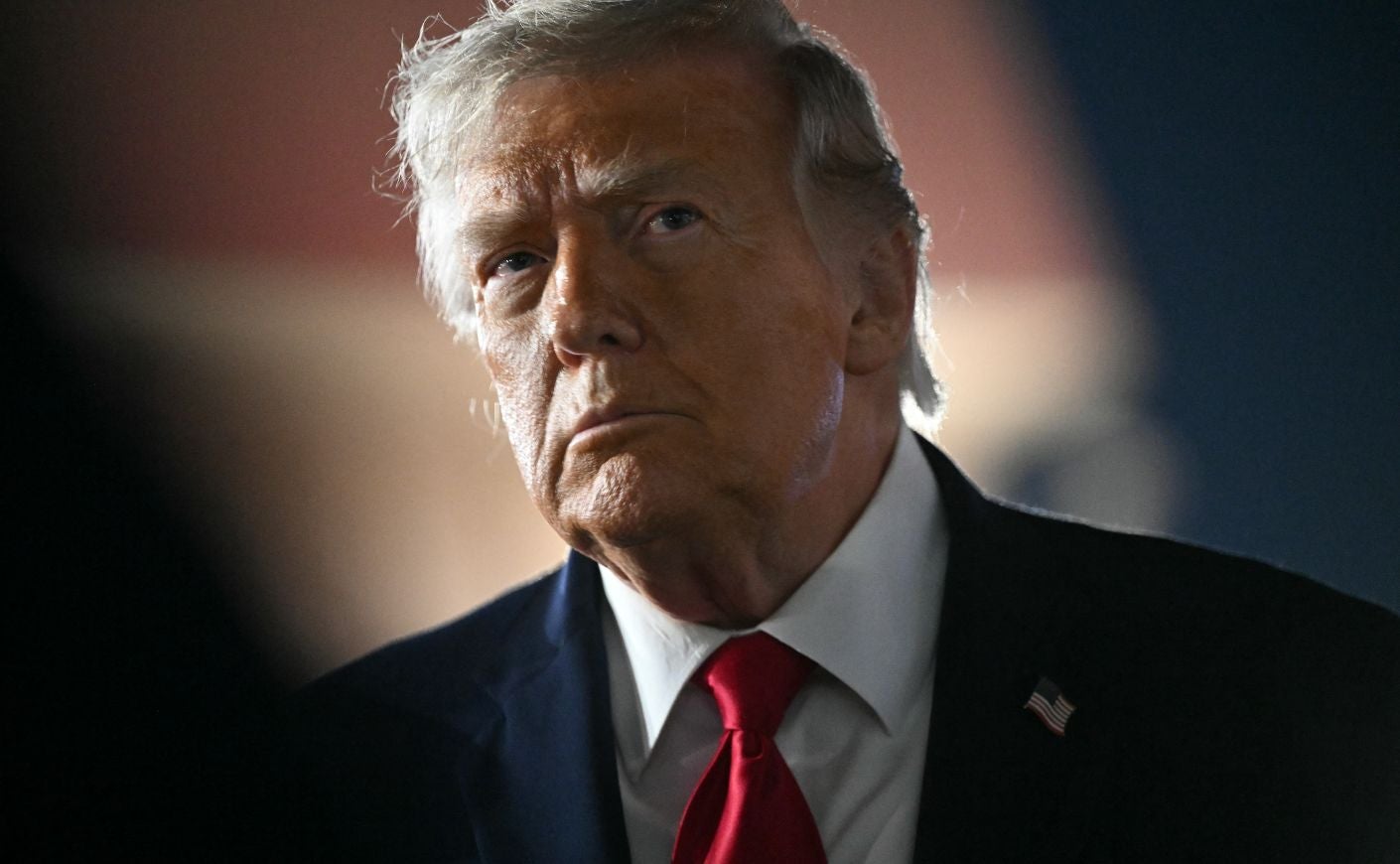
President Trump just turned the big 8-0, and it was hard to miss. As part of his administration's kickoff for the nation's 250th anniversary, the South Lawn was transformed into a UFC arena, complete with a temporary octagon, thousands of spectators, and a towering metal structure known as "The Claw" outfitted with lights, sound equipment, and giant video screens.
The event, which also coincided with Flag Day, featured seven fights scheduled to run past midnight and drew a crowd of Republican lawmakers, Trump allies, and UFC fans. The president has sought to make the spectacle part of a broader, months-long observance of the country's founding. But it has drawn criticism from opponents who questioned the use of White House grounds and federal resources, even as the administration maintained that UFC was covering the costs.
The weekend also faced a more immediate challenge: the weather. Forecasters warned of thunderstorms, heavy downpours, strong wind gusts, and oppressive humidity across the Washington area.
The rain wasn't the only thing threatening to spoil the occasion. Beyond the lights, fireworks, and cage fights, the milestone arrives at a complicated moment for the president. From questions about his age and fitness to legal battles at the Kennedy Center and uncertainty surrounding efforts to secure a broader peace agreement in the Middle East, Trump's birthday weekend comes with a series of political and policy challenges.
Here's what else is clouding the celebration.

The birthday milestone
For all the spectacle surrounding his birthday weekend, Trump didn’t seem particularly excited about turning 80.
"You don't have to wish me happy birthday because I'm not happy about that birthday that I'm having," Trump reportedly told Centers for Medicare and Medicaid Services Administrator Mehmet Oz during an Oval Office meeting on June 11. "That's a number that I never thought really too much about. It's not a number I like, but I'm here, nevertheless."
For Trump, the milestone is especially notable because he made age a defining issue in the last presidential election. During the 2024 campaign, Trump repeatedly questioned Biden's age and ability to lead, portraying himself as the more energetic and capable candidate. His allies frequently pointed to Biden's verbal missteps and public stumbles as evidence that he was no longer fit to serve.
President Trump is now the oldest person ever elected president, surpassing former president Joe Biden. As Trump enters his ninth decade, those same questions about experience, stamina, and generational change are increasingly being directed at him. An April Washington Post/ABC News/Ipsos poll found that fewer than half of Americans believe he has the mental sharpness or physical health needed to serve effectively as president.
The White House has pushed back forcefully on those concerns. In a statement released earlier this year, former White House physician and Texas GOP Rep. Ronny Jackson said Trump's "stamina, focus, and strength are exceptional and on display every day," dismissing concerns about the president's fitness as "pure fiction."
The Kennedy Center backlash
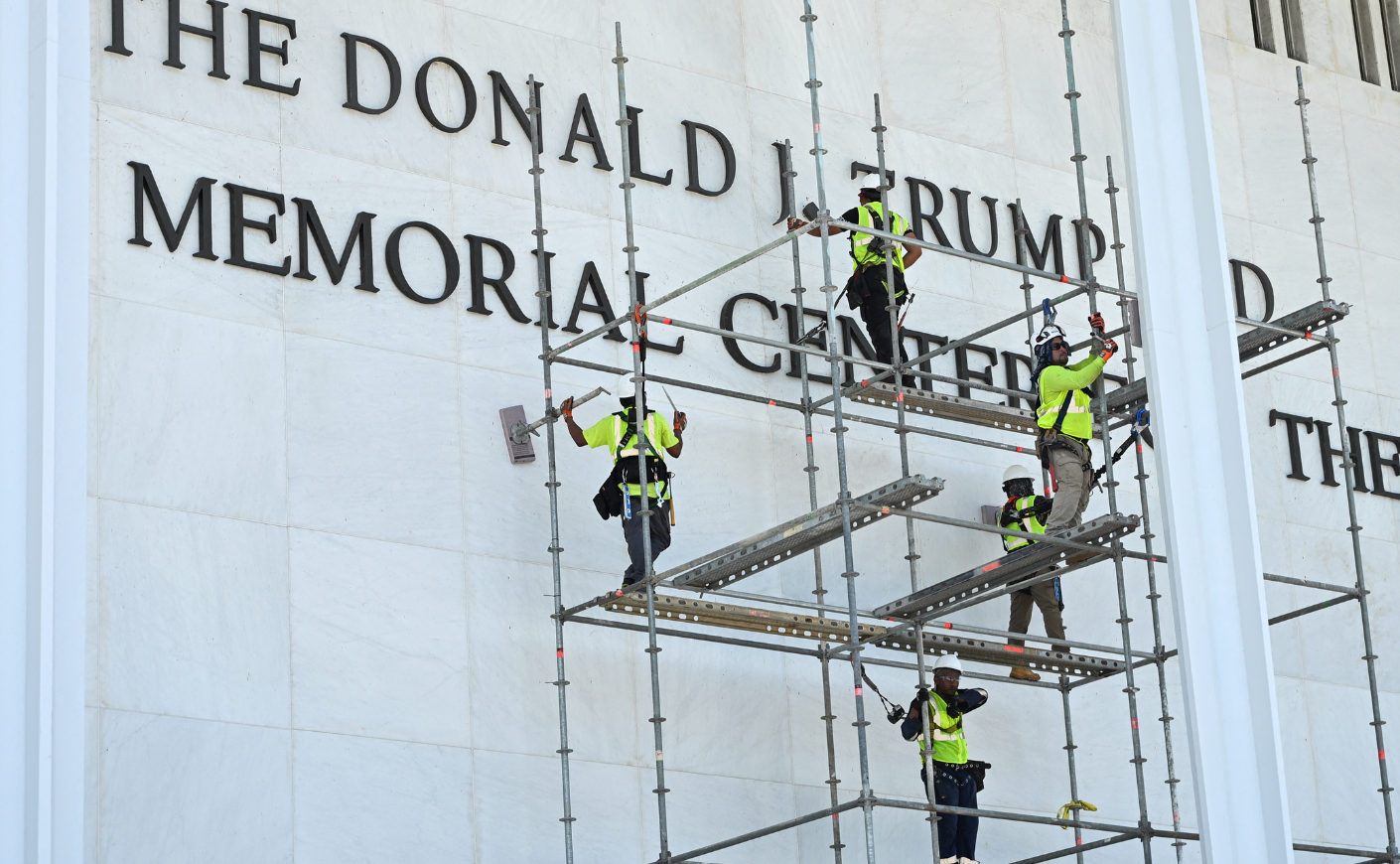
About a mile from Trump's birthday celebration, workers spent the early hours of Saturday removing the president's name from the Kennedy Center after a federal judge concluded that it had been added illegally.
The work began shortly after the performing arts venue missed a court-ordered Friday deadline to remove the words "The Donald J. Trump and" from its exterior. U.S. District Judge Christopher Cooper had given the center two weeks to comply after ruling that renaming the venue required congressional approval.
The Kennedy Center has become one of the most visible flashpoints of Trump's second term since he moved to overhaul its leadership earlier this year, replacing board members and installing allies in their place. While supporters praised the effort as a challenge to what they view as a left-leaning cultural establishment, others accused Trump of politicizing an institution created by Congress in 1964 as a living memorial to President John F. Kennedy.
The backlash was swift. A number of artists, performers, and cultural figures severed ties with the center or canceled appearances after Trump's takeover, including producer Shonda Rhimes, actor and comedian Issa Rae, and musician Ben Folds. Productions and performances were also scrapped, and reports pointed to declining ticket sales and growing uncertainty about the center's future direction.
The Kennedy Center ruling may have erased Trump's name from one landmark, but it hasn't slowed his efforts to remake others.
He demolished the East Wing of the White House in October to make way for a controversial ballroom. In April, he ordered a renovation of the Lincoln Memorial Reflecting Pool, a project that wrapped up this month. He also plans extensive renovations to a golf course in East Potomac Park — moves that could significantly reduce public access to running and biking paths. He's even moving forward with a triumphal arch near Arlington National Cemetery across the Potomac River in Virginia.
The anti-weaponization fund fight
Another headache for Trump this weekend involves the fate of the administration's controversial "anti-weaponization fund."
The proposal, which would set aside nearly $1.8 billion to compensate people who claim they were harmed by politically motivated investigations and prosecutions, grew out of Trump's longstanding argument that federal agencies have been used against him and his supporters. Backers view the fund as a way to address alleged government abuses, while critics argue it would create an unprecedented, taxpayer-funded compensation program for people aligned with the president's political grievances.
The initiative suffered a setback Friday when U.S. District Judge Leonie Brinkema extended an order blocking the program indefinitely. The ruling came despite Acting Attorney General Todd Blanche's recent statement to Congress that the fund was "not moving forward."
Brinkema repeatedly pressed Justice Department attorneys on whether the administration had truly abandoned the proposal, noting that Trump himself recently described the fund as "a great idea" and said he would be disappointed if it never came to fruition. The judge suggested those comments raised doubts about whether the administration was genuinely walking away from the plan or simply leaving the door open for its eventual revival.
The judge said she would likely dismiss the lawsuit if Blanche and Treasury Secretary Scott Bessent submit sworn declarations formally abandoning the initiative. Until then, however, the freeze will remain in place.
The clash underscores one of the defining themes of Trump's second term: His effort to transform claims of government "weaponization" from a campaign message into federal policy. While the issue resonates with his supporters, the legal battle surrounding the fund highlights the challenges of turning those grievances into action.
The Iran question
Trump spent part of his birthday pushing for a peace plan with Iran. On Sunday evening, he and Pakistani Prime Minister Shehbaz Sharif declared that an agreement had effectively been reached.
"The Deal with the Islamic Republic of Iran is now complete," Trump wrote on Truth Social, announcing that he was authorizing the removal of the U.S. naval blockade and that Iran was expected to reopen the Strait of Hormuz. Sharif similarly declared that a peace agreement between the U.S. and Iran had been reached and said a formal signing ceremony was expected on Friday in Switzerland.
If finalized, the memorandum of understanding would mark the most significant diplomatic breakthrough since the conflict began more than 100 days ago. The agreement is expected to extend the ceasefire for 60 days, reopen the strait, and launch negotiations over Iran's nuclear program, including the future of its uranium enrichment activities and stockpile of highly enriched uranium.
The plan would also open discussions on sanctions relief and access to frozen Iranian assets, with any relief expected to be tied to Iran's compliance with future nuclear commitments.
The announcement came after a volatile final stretch. Israel resumed strikes against Hezbollah targets in Beirut on Sunday, prompting concerns that the violence could derail the emerging framework. Earlier in the day, Trump urged all sides to exercise restraint, warning that additional fighting could jeopardize efforts to secure a broader regional agreement.
Even if the ceasefire holds, major questions remain. Reopening the Strait of Hormuz could prove more complicated than announcing it. Clearing mines, securing shipping lanes, and restoring commercial traffic may take considerable time before trade returns to business as usual.
Negotiators then face the even tougher challenge of turning a broad framework into a detailed nuclear agreement over the next 60 days.
The UFC spectacle
Trump's birthday weekend was marked by an event unlike anything previously staged on the White House grounds: a UFC fight card on the South Lawn.
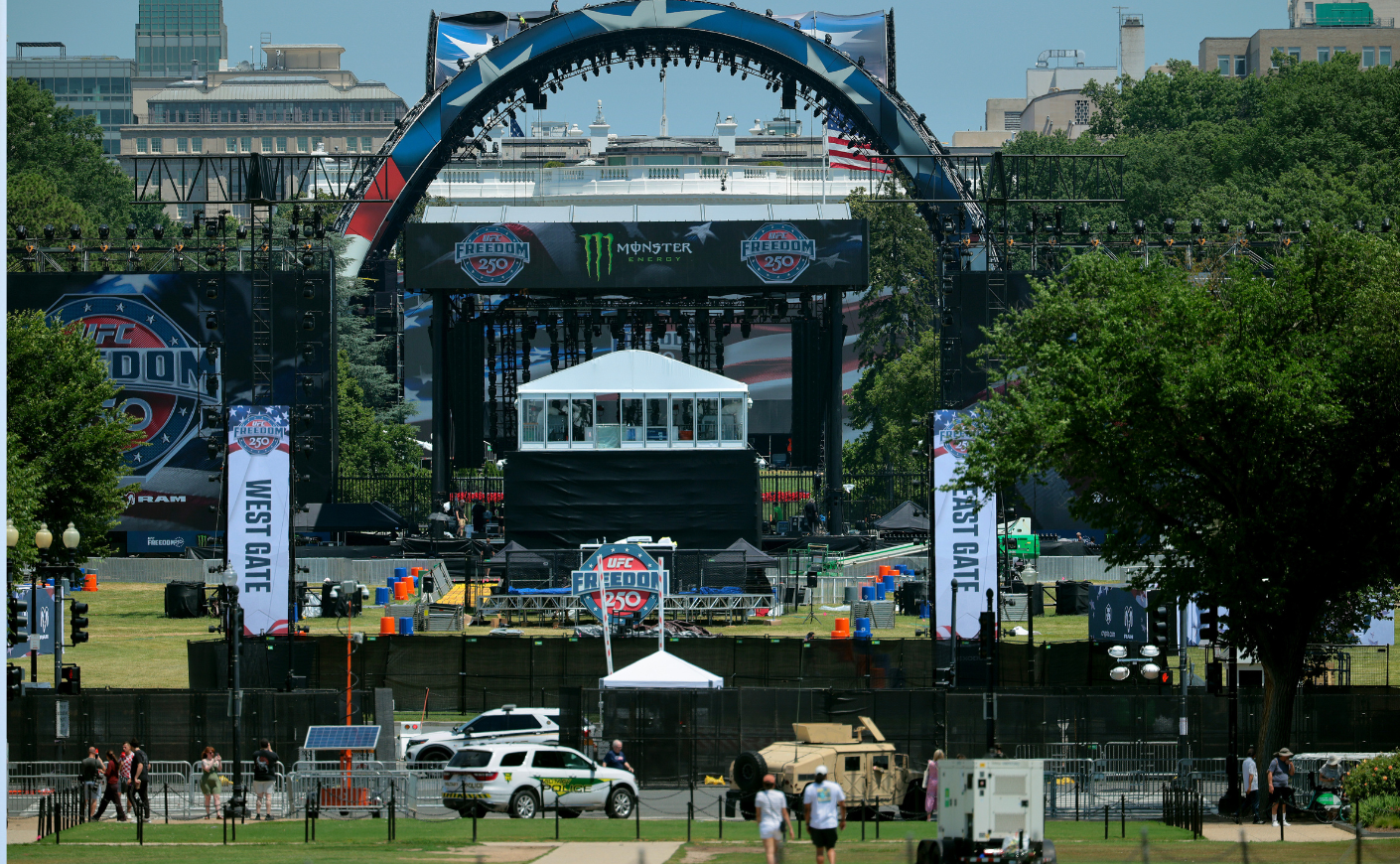
The president embraced the event as part of the administration's kickoff for the nation's yearlong celebration of America's 250th birthday, and he has said UFC is covering the costs. But the festivities have also attracted scrutiny. While the full cost of the event has not been disclosed, the National Park Service said in a court filing that more than $60 million and tens of thousands of hours of labor have gone into the broader celebration effort, with seven federal agencies allocating significant resources and manpower. The White House maintains that UFC is paying for the event and that no taxpayer dollars are being used beyond employees' normal duties.
The event faced a last-minute legal challenge as well. Attorneys for the nonprofit Public Integrity Project sued on behalf of two plaintiffs seeking to block the UFC showcase, arguing that federal officials lacked the authority to host a commercial sporting event at the White House and objecting to the construction of the massive steel structure known as "The Claw" on the South Lawn. On Friday, U.S. District Judge Amit Mehta declined to halt the proceedings, allowing them to move forward as planned.
Questions have extended beyond the fights themselves. On Friday, UFC announced that World Liberty Financial, a cryptocurrency company co-owned by the Trump family, would serve as an official partner and create a $250,000 bonus pool for the night's winning fighters. The company was founded alongside Trump's special diplomatic envoy, Steve Witkoff, and is run by his son, Zach Witkoff (an arrangement critics say further blurs the lines between the Trump family's private business interests and high-profile events supported by government resources).
In many ways, the spectacle reflects a hallmark of Trump's personal brand. Long before entering politics, he cultivated ties to professional sports and entertainment, and throughout both of his presidencies has embraced celebrity, showmanship, and made-for-television moments as a way to connect with supporters.
But not everyone is convinced. Speaking to the Associated Press, Cornell University classics professor Mike Fontaine compared the event to the gladiatorial games of Imperial Rome, arguing that public spectacles have historically been used to boost rulers' popularity and divert attention from broader political tensions. "This is all distraction," Fontaine said.
