






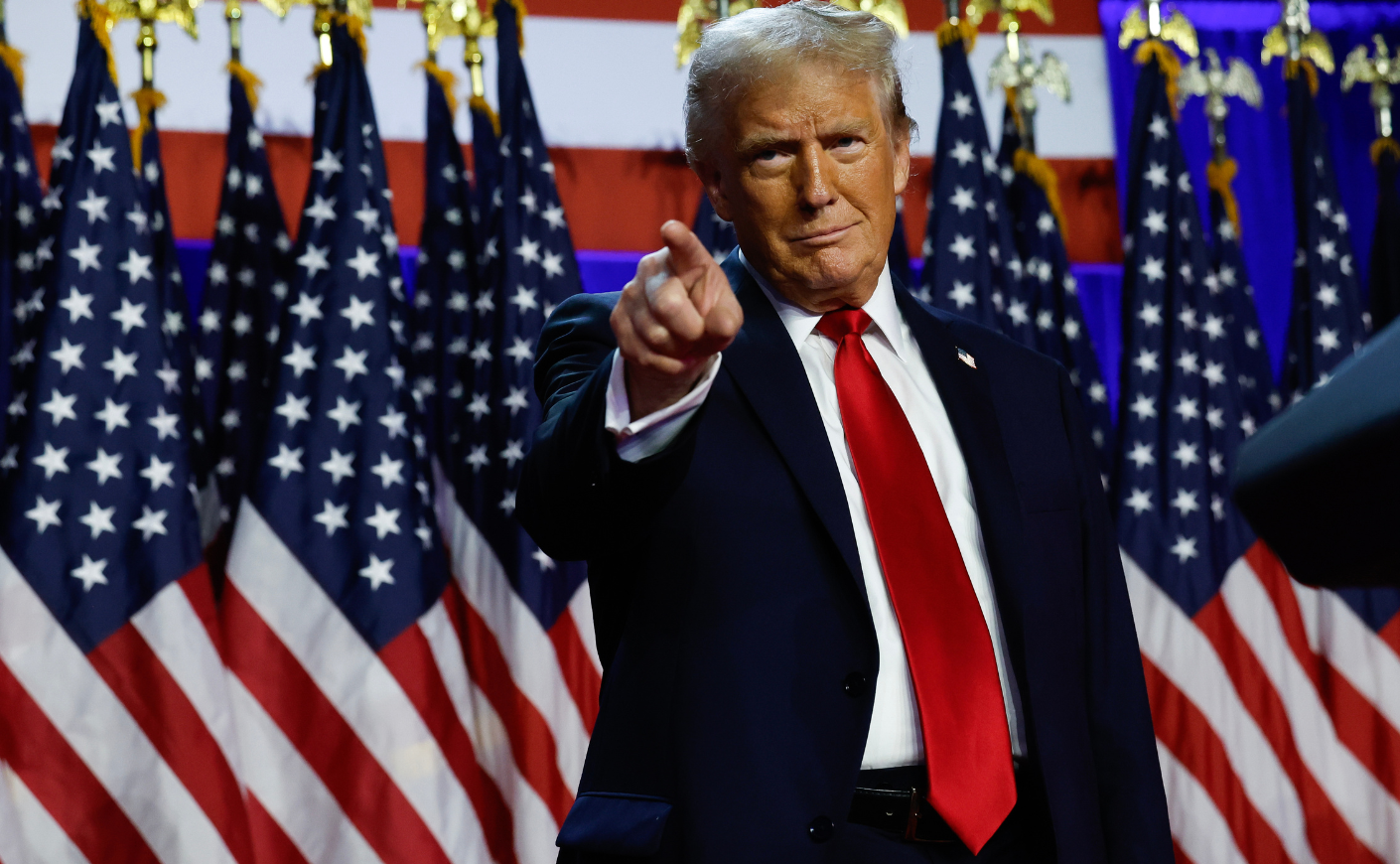
President Trump’s approval ratings have fallen to some of their lowest levels since his return to the White House. Yet despite his weak national standing, Trump-backed candidates continue to win GOP primaries, and Republicans seen as insufficiently loyal to the president are increasingly finding themselves pushed to the political sidelines.
For many Americans, that disconnect can seem puzzling: If Trump is so unpopular nationally, why does he still hold such enormous influence within the Republican Party?
Political analysts say the answer lies in a combination of forces reshaping modern American politics: deep partisan polarization, Trump’s enduring grip on the GOP base, conservative media ecosystems, and an electorate that increasingly views politics through the lens of party identity rather than personal approval of a single politician.
The result is a political environment in which weak national approval ratings do not necessarily weaken the president’s standing within his own party, particularly in primary elections dominated by highly engaged partisan voters.
Here’s why weak national approval numbers have not necessarily translated into weaker influence inside the GOP.
Trump’s approval is weak — but highly polarized
Despite slipping national approval ratings, Trump’s grip on the Republican base remains remarkably strong.

A Reuters/Ipsos poll released in May found that President Trump’s approval rating had fallen to 35 percent — just one point above the low he hit in April as voters grew increasingly frustrated over rising gas prices, inflation, and the fallout from the Iran conflict.
Still, Republican voters remain overwhelmingly loyal to Trump. The same Reuters/Ipsos poll found that 79 percent of Republicans continue to approve of his performance, even as his standing nationally has weakened.
“His support is — it’s not a mile wide, but it’s very deep,” Thad Kousser, a political scientist at the University of California, San Diego, tells Katie Couric Media.
That dynamic matters because primaries — particularly in safe GOP districts — are often decided by highly engaged party voters rather than the broader electorate.
“GOP primary voters are heavily MAGA, and with turnout low, they carry over influence within the party,” Lee Miringoff, director of the Marist Institute for Public Opinion, tells us.
Primaries reward loyalty, not broad electability
Trump’s endorsements still carry enormous weight in GOP primaries. Candidates who criticize him often face backlash, while loyalists benefit from his base’s enthusiasm. Outgoing Kentucky Rep. Thomas Massie became one of the clearest recent examples after emerging as one of Trump’s most vocal Republican critics. He ultimately lost to Trump-backed challenger Ed Gallrein — a farmer and former Navy SEAL — in the most expensive House primary in U.S. history.
Trump’s endorsement of Texas Attorney General Ken Paxton, who took the win over incumbent Sen. John Cornyn in the state’s closely watched Senate primary, offered another reminder of the president’s influence with GOP voters.
The question is: Will the same trends hold in the midterms?
“Embracing Donald Trump is the recipe for making it out of a primary,” says Kousser. “But if you’re tied too closely to a deeply unpopular president, that will hinder you in November.”
Political analysts often point to a divide between primary and general-election electorates. As Cook Political Report editor-in-chief Amy Walter and others have noted, Trumpism can be especially powerful in Republican primaries, where the electorate tends to be smaller, more ideological, and dominated by highly engaged conservative voters. But those same dynamics don't always translate as effectively in general races, where candidates must appeal to a broader and often more moderate electorate. During the 2022 midterms, Trump-endorsed candidates like Mehmet Oz in Pennsylvania’s Senate race and Kari Lake in Arizona’s gubernatorial race won over Republican primary voters but ultimately lost statewide in November.
Voters can dislike Trump and still vote Republican
In today’s highly polarized political environment, many voters increasingly see elections less as a choice between two specific candidates and more as a choice between two parties and those groups' competing worldviews. That dynamic helps explain why Trump’s personal approval ratings don't always neatly line up with voter attitudes toward the Republican Party or conservative policy priorities more broadly.
Some voters unhappy with Trump still align with Republicans generally on issues like immigration, taxes, crime, and the economy — underscoring how dissatisfaction with the president does not necessarily translate into a broader rejection of the GOP coalition.
Split-ticket voting has also become far less common over the past two decades. A 2020 Pew Research Center survey found that just 4 percent of voters planned to support presidential and congressional candidates from opposite parties, underscoring how few Americans regularly cross party lines anymore.
As Kousser puts it, modern presidents are “almost guaranteed to be opposed by nearly half of the country” because of entrenched partisan polarization.
Still, analysts say presidential approval ratings continue to matter, particularly when it comes to swing voters.
“Presidential approval ratings impact turnout,” says Miringoff. “They motivate opposition and drain supporters. Middle-of-the-road independents are especially reactive to a low standing of the president.”
Geography matters more than national popularity
National approval ratings don’t always translate neatly into election results, especially in House races, where geography can matter just as much as raw vote totals. Democrats can pile up huge margins in big cities and still fall short in the districts that decide control of Congress.
Republicans currently hold structural advantages in many congressional districts, thanks to strong support in rural areas and among non-college-educated white voters — groups that are more evenly distributed across House maps than Democrats’ increasingly urban voter base. Stanford political scientist Jonathan Rodden has noted that Democrats’ concentration in urban areas can create an electoral disadvantage in House races, particularly as geographic polarization intensifies.
Redistricting maps in states like Texas, Florida, North Carolina, and Ohio have also helped cement GOP-leaning seats. At the same time, turnout patterns in midterm and off-year elections often favor conservative candidates because older Americans — who tend to vote more consistently in lower-turnout races — have increasingly leaned Republican, according to findings from Pew Research Center.
But those geographic advantages are real — and they aren’t static. In recent months, Republicans have pushed new congressional maps in several Southern and Sun Belt states, including Alabama, as part of a broader effort to strengthen their House advantage ahead of the 2026 midterms. (Meanwhile, Democrats haven't had quite the same luck trying this tactic, as we saw when a Virginia court struck down a new congressional map there — despite it having been approved by voters in the state.)
Miringoff says that Trump still maintains a deeply loyal base within the Republican Party — one that can dominate GOP primaries — but argues the picture changes in a general election.
“President Trump still has a solid and mobilized MAGA base, which can rule the day in a GOP primary,” Miringoff says. “But his base becomes greatly diluted when you add in Democrats and independents for a general.”
“That’s why the GOP is hoping redistricting can provide a cushion for what is historically a potentially losing situation,” Miringoff added, noting that presidents with weak approval ratings have often struggled in midterm elections.
In an era of intense partisan polarization, national approval ratings no longer predict political power as neatly as they once did. Trump may be unpopular with much of the country, but as long as Republicans maintain structural advantages — and a deeply loyal base — the GOP can continue winning, even when the president himself remains underwater.
