






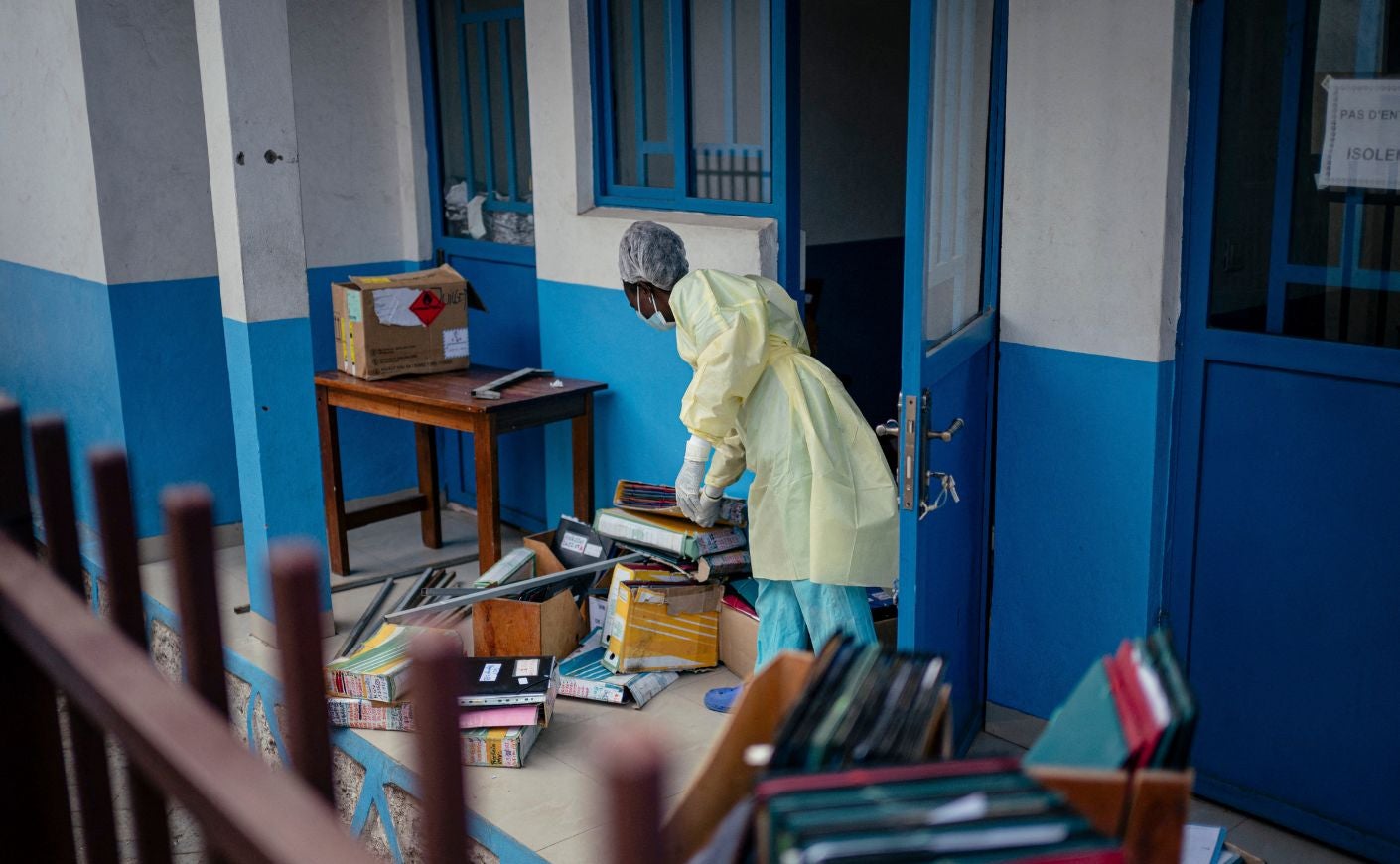
As officials keep a close eye on hantavirus cases, another global health concern is drawing attention overseas: Ebola.
The World Health Organization has declared an Ebola outbreak in Africa a public health emergency of international concern — the agency’s highest level of global alert. WHO Director-General Dr. Tedros Adhanom Ghebreyesus told reporters that as of Tuesday, there are at least 500 suspected cases and 130 suspected deaths from Ebola since the new outbreak began.
"I'm deeply concerned about the scale and speed of the epidemic," Dr. Tedros said, according to Reuters.
The Washington Post reports that the White House resisted allowing a doctor who'd been exposed to Ebola in the Democratic Republic of Congo to return to the United States. As a result, Peter Stafford's evacuation and treatment were delayed before he was transferred to Germany. The Post notes that doctors say it's crucial to identify Ebola early and provide supportive care, because patients can deteriorate to multi-organ failure within days.
Meanwhile, U.S. health officials are urging calm. Health and Human Services Secretary Robert F. Kennedy Jr. told ABC News the situation is “under control” and said federal agencies are working to contain the outbreak, even as the CDC confirmed that one American has tested positive. While the agency did not identify the individual, the international charity Serge said Christian missionary physician Dr. Peter Stafford tested positive after “presenting symptoms consistent with the virus.”
Here’s what to know about the disease, how it spreads, and the most common symptoms.

Why the Ebola outbreak is raising alarms
Speaking before the World Health Assembly in Geneva, Dr. Tedros said he expects the number of confirmed and suspected Ebola cases to rise as field operations expand, including efforts to strengthen surveillance, contact tracing, and laboratory testing.
The CDC is also ramping up public health screening and traveler monitoring as officials work to contain the outbreak. On Monday, the agency announced new travel restrictions barring most foreign nationals from entering the U.S. if they have recently been in Uganda, the Democratic Republic of the Congo, or South Sudan within the last three weeks.
Still, health officials emphasized that the risk to Americans remains low. “To the American public, the risk to the United States remains low,” said Satish Pillai, the CDC’s Ebola response incident manager. “Travelers to the region should avoid contact with sick people, report symptoms immediately, and follow our travel guidance.”
Some public health experts say one of the most concerning aspects of the outbreak is how long it may have spread undetected. Jennifer Nuzzo, director of the Pandemic Center at Brown University School of Public Health, told The New York Times that these kinds of outbreaks are typically identified much earlier by health authorities or local reporting networks.
During a press briefing on Friday, Dr. Tedros said the agency was first notified about suspected Ebola infections on May 5 and immediately dispatched a team to Ituri to investigate. But he explained that early testing efforts were complicated because field equipment could detect only the Zaire strain of Ebola — the only version of the virus with a licensed vaccine. Samples were later sent to the National Institute of Biomedical Research in Kinshasa, where several infections were ultimately confirmed on Thursday.
What is Ebola?
Ebola is a rare but severe — and often deadly — disease caused by a group of viruses known as orthoebolaviruses. The current outbreak has been linked to the Bundibugyo strain, one of several known types of Ebola virus.
The disease causes a form of viral hemorrhagic fever that can damage blood vessels and, in severe cases, lead to organ failure. According to the World Health Organization, fatality rates in past outbreaks have ranged from roughly 25 percent to 90 percent, with an average death rate of about 50 percent.
Ebola is highly contagious and can be transmitted through direct contact with the bodily fluids of someone who is infected and already showing symptoms, including blood, vomit, saliva, sweat, urine, or semen. The virus can also spread through contaminated objects or by handling the body of someone who died from the disease.
That’s one reason Ebola outbreaks tend to remain more geographically contained, even though the illness itself can be far deadlier. Orthoebolaviruses were first identified in 1976 in what is now the Democratic Republic of the Congo and are found primarily in sub-Saharan Africa, where more than 35 Ebola outbreaks have been documented. The DRC alone has experienced at least 17 outbreaks as of May 2026.
But the largest Ebola epidemic on record occurred in West Africa between 2014 and 2016, infecting more than 28,600 people and spreading to several other countries, including Italy, Nigeria, the United Kingdom, and the United States. The outbreak drew international attention and ultimately helped spur the development of Ebola treatments and vaccines later approved by the Food and Drug Administration.
Still, while there are now two approved Ebola treatments, none are designed for the current Bundibugyo strain. There are also no Bundibugyo vaccines or therapeutics currently listed in ClinicalTrials.gov, the federal database of clinical studies.
What are the symptoms of Ebola?
Ebola often begins with symptoms that can seem fairly ordinary at first. The CDC refers to these as “dry” symptoms, which can include fever, severe headache, muscle and joint pain, weakness, fatigue, and a sore throat. Signs of the disease typically appear between two and 21 days after exposure to the virus.
As the illness progresses, some patients can develop more severe “wet” symptoms, including nausea, abdominal pain, diarrhea, loss of appetite, unexplained bleeding, and other gastrointestinal issues. Some people may also experience chest pain, shortness of breath, confusion, red eyes, skin rashes, hiccups, or seizures.
Since early Ebola symptoms can resemble more common infectious diseases — including the flu and malaria — the CDC says quickly identifying and isolating cases is critical to helping prevent further spread.
