






It was a Wednesday morning in the middle of an unseasonably sunny October in 2025, just a couple of weeks after my 40th birthday, when the clarity I thought I had about my own health unraveled.
I pulled into the parking lot of my new OB-GYN’s office to review the results of a laparoscopic diagnostic from the week prior. Maybe it was the Spotify playlist that I’d been vibing to on the drive over, but I walked into my appointment with a pep in my step. For once, I felt hopeful because I was finally getting answers — real answers — to explain why I’d been living with excruciating, chronic pelvic pain that refused to let up.
Less than two years earlier, in 2023, I'd undergone an emergency open myomectomy to remove uterine fibroids. I expected that surgery to be a turning point. Instead, my condition was still declining, and the worst part wasn’t even the pain; it was the not knowing what was happening inside my body. The pain was debilitating. At times, it felt like my insides were on fire, cramping so intense it would stop me in my tracks. There was a sharp, localized pain on the right side, near my belly button, that was best described as a severe “gas bubble” that wouldn’t let up. Add in breast pain, along with severe headaches and constant fatigue, and my body felt completely foreign to me, something I didn’t recognize.
As the nurse led me into the exam room, I took slow, steady breaths, trying to calm myself as I waited for the doctor. In previous appointments, the doctor had always been warm and professional, with a sprinkle of maternal energy that made me feel heard.
This time was different.
The cold, hard truth
The moment my doctor walked into the room, I felt the shift immediately. “Ms. Johnson,” she said gently, “I’m afraid it’s not good news.”

Her words punched me in the gut. Suddenly, I couldn’t catch my breath, and in an instant everything changed.
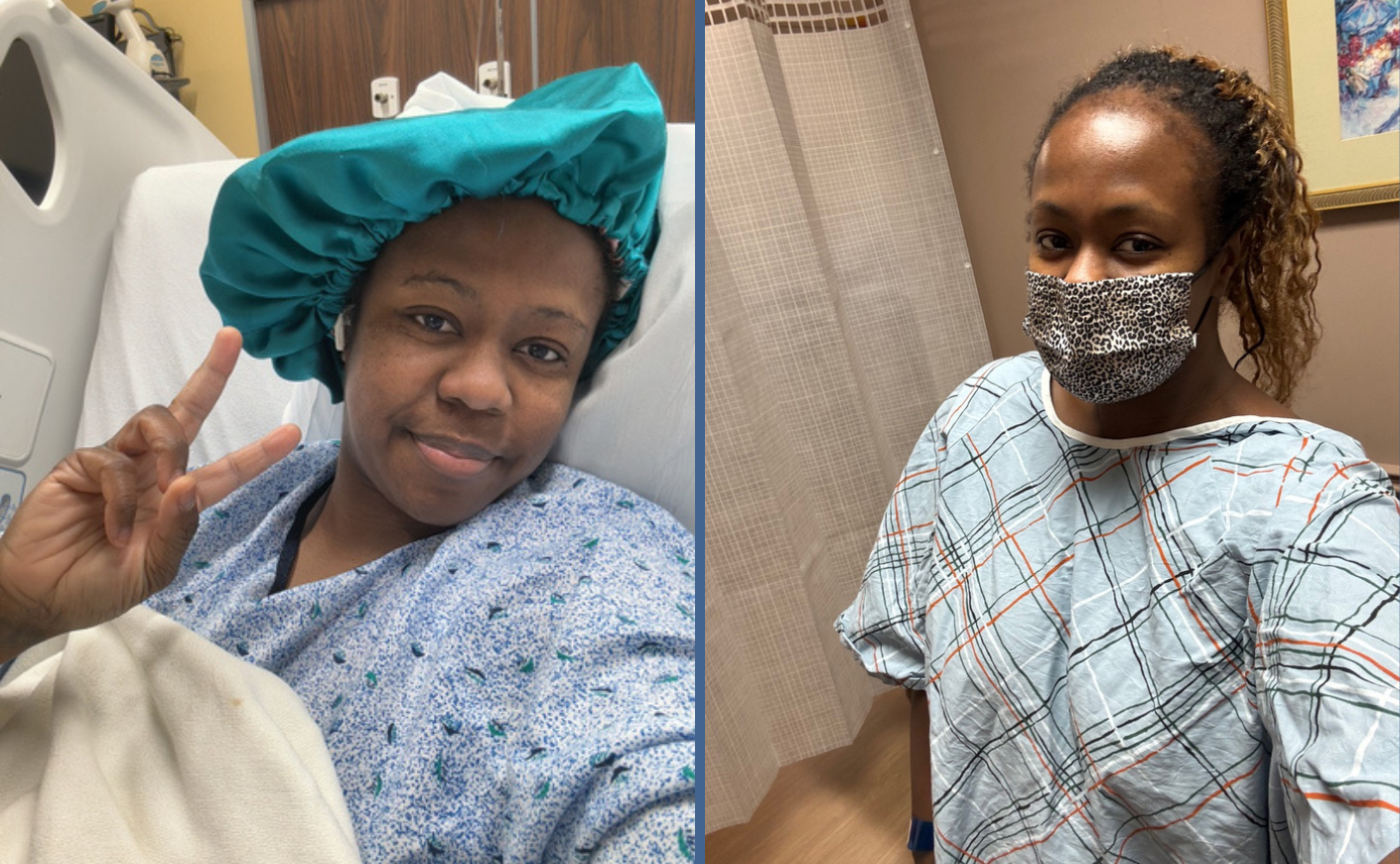
The doctor explained that my fallopian tubes were not functioning, and one was severely twisted. There was extensive scar tissue, adhesions, more fibroids than I'd known I had (including inside my uterus), and even worse, endometriosis. My case was horrendously complex, and it required the expertise of a specialist beyond my OB-GYN.
It felt like my lifelong dream of getting pregnant and becoming a mother was shattering before my eyes.
I had so many questions, but my mind was in overdrive, struggling to process everything all at once. Every time I tried to speak, I could feel the floodgates about to open. As I tried to process some of the most devastating news of my life — the shock, the fear, the heartbreak, and especially what it could mean for my ability to have children naturally — there was another feeling I hadn’t expected: validation. On the outside, I looked healthy, but internally, my body had been sending out an SOS.
The signs my doctors should've seen
Back in 2023, during an egg-freezing consultation, an ultrasound revealed I had multiple uterine fibroids. At the time, I wasn’t overly concerned. I wasn’t experiencing what I thought were “typical” symptoms, and I had always taken care of myself with regular checkups, working out, and eating well. But looking back, the signs had been there all along: the fatigue, the bloating, the pelvic pain, the pressure, and the hormonal shifts I couldn’t quite explain.
By the end of 2023, the pain had become unbearable and impossible to ignore. I pushed the doctor for more testing, including another ultrasound and a colonoscopy. When the ultrasound results came back, my primary OB-GYN’s office (the one I had seen since college and the same office where I was born, trusted by my family and community) called to tell me that the doctor reviewed my results, and although I had multiple fibroids, including one the size of a grapefruit, everything was “fine.”
But I wasn’t fine. I was in some of the worst pain imaginable, with no follow-up plan, urgency, or concern. The quiet dismissal left me to navigate one of the hardest periods of my life on my own.
Within weeks, my condition spiraled. I was hemorrhaging, unable to walk, my abdomen so distended I looked several months pregnant. I felt like it might rupture at any moment. I had no choice but to undergo an emergency open myomectomy to remove the fibroids with another doctor in the same practice. I wanted to believe that would finally be the end of it and everything I had just been through would be resolved. But it wasn’t.
How I found help
The pain that followed was different. It was deeper, more intense, almost indescribable. Intuitively, I knew something wasn’t right, and I refused to give up, so I advocated for myself. Relentlessly. I went through additional testing, CT scans, ultrasounds, an endoscopy, and even a trip to the emergency room just weeks after surgery. And still, I was told the same thing: “You’re fine” — and that whatever pain I was experiencing was just part of the healing process. I even got prescribed birth control to mask the symptoms.
Desperate for answers, I turned to AI to research specialists, which was something I never considered before. That search led me to a pelvic surgeon who, within a single consultation, confirmed what others had missed. My case was far more complex than anyone had acknowledged, requiring a level of surgical expertise that only a handful of doctors could provide.
Within eight weeks of the October 2025 appointment, everything moved quickly from diagnosis to finding the right specialist to preparing for complete pelvic reconstruction surgery. After that operation, I’m finally feeling more like myself again for the first time in a long time. I have hope that my body may one day carry life, that I can get pregnant in the future, and that I can live a life that feels free.
Unlike my previous experiences, the doctors who got to the root of the problem didn’t dismiss or gaslight me. They investigated. They didn’t just chalk it up to neuropathy or label my symptoms as neurological, like some of the other doctors had.
What I've learned — and what I want you to know
No one talks about what it’s like to not be believed in your own body and the toll it takes on you mentally, emotionally, and physically. I started to question myself. Am I overreacting? Maybe this is normal. Always go with your gut and press forward.
When I later reviewed my medical records, I discovered that my original OB-GYN had documented my fibroids as far back as 2016 but never disclosed it to me or provided a plan of action. It was a shocking realization, to say the very least.
As women, especially Black women, we are too often dismissed, doubted, and expected to live with pain that should never be normalized. The cost of delayed diagnoses and dismissal can be years of unnecessary suffering or worse.
If something feels off, keep pushing until someone listens. Seek multiple opinions. Ask a lot of questions. Find specialists you can trust and always advocate for yourself, even when you feel like giving up. You know your body best.
The difference between being dismissed and being heard can be the difference between suffering and healing — and in some cases, between life and death.
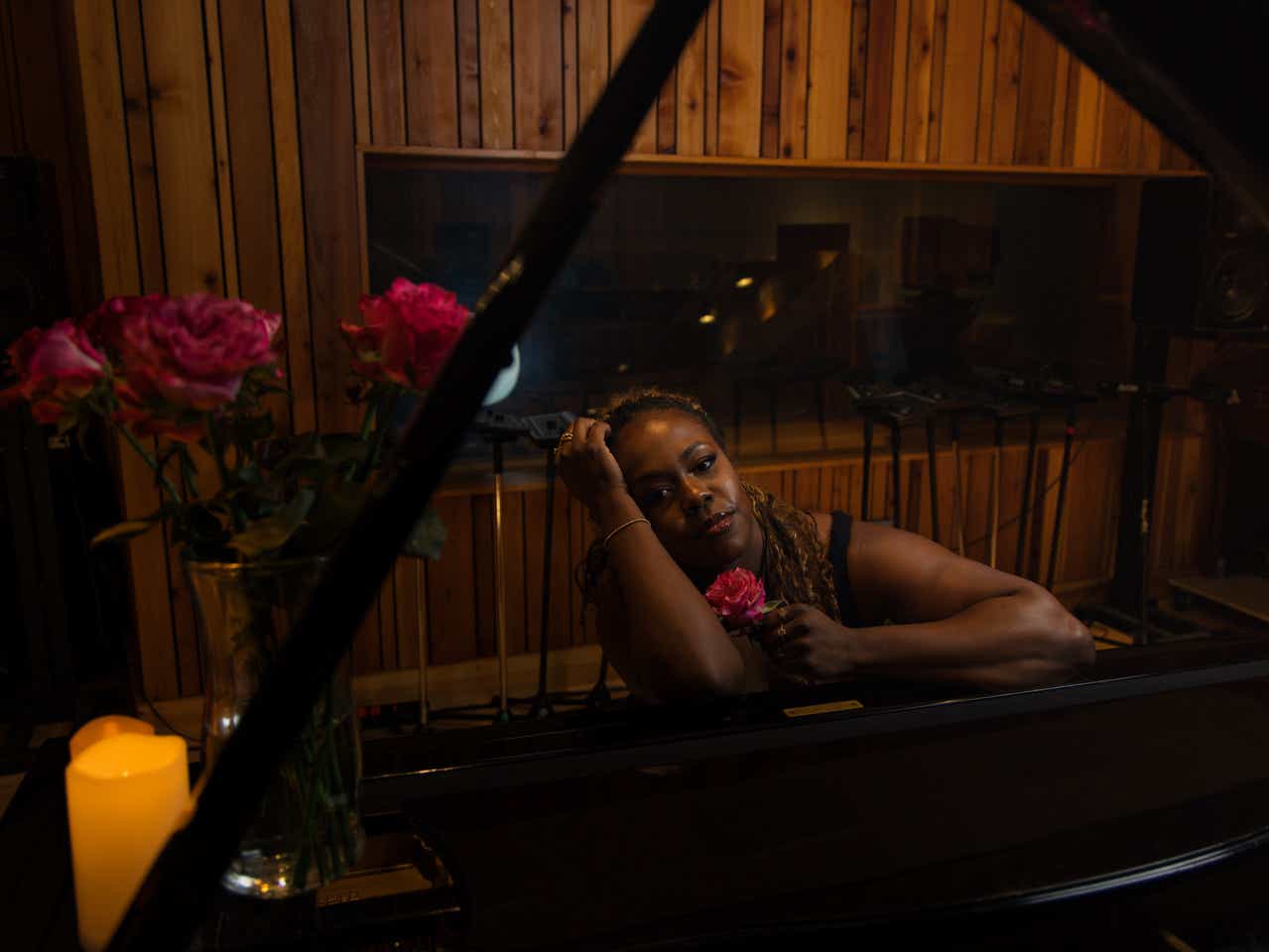
Monica Eryn Johnson is a multi-faceted creative, producer, beauty entrepreneur, and concert pianist. Self-taught during the pandemic, she discovered piano as a powerful tool for healing and now uses music as a way to uplift, empower, and inspire others.
