






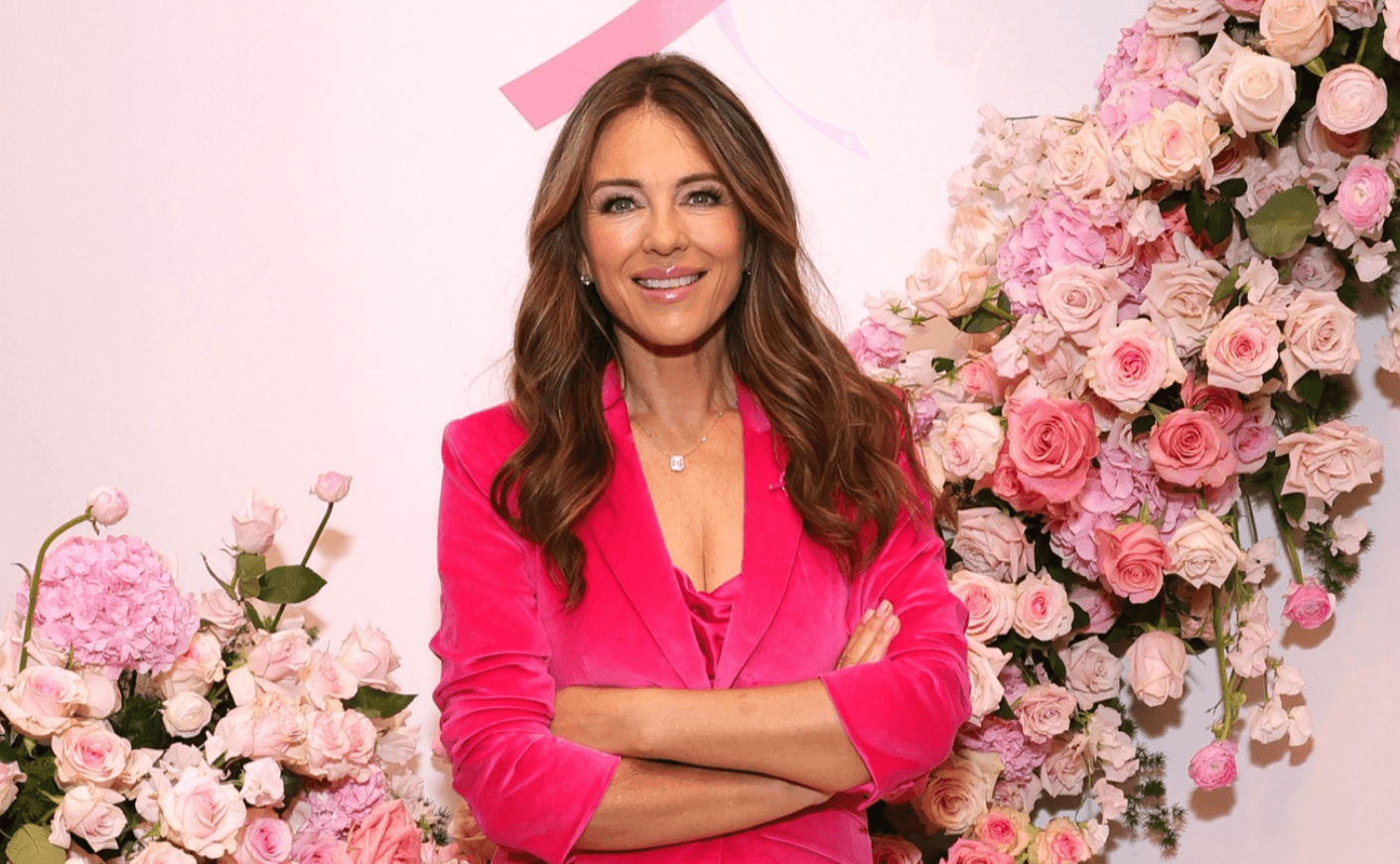
When Elizabeth Hurley became Global Ambassador of The Estée Lauder Companies’ Breast Cancer Campaign in 1995, she had recently lost her grandmother to the disease — and knew how difficult it could be for families to talk about it. More than three decades later, the actress and model is still helping to start those conversations. Much has changed since those early days, from the treatments available to the willingness to discuss a diagnosis openly. But Hurley is determined to keep the progress coming.
To mark the start of Breast Cancer Awareness Month, Katie spoke with Hurley about the loss that inspired her advocacy, the people who have sustained her commitment, and the questions researchers still need to answer. They also discussed The Estée Lauder Companies’ new $15 million commitment to the Breast Cancer Research Foundation to study breast cancer in younger women — and what Hurley hopes that investment will make possible.
Elizabeth, you’ve been doing this work for more than 30 years. How have you seen the breast cancer landscape evolve, and what still needs to change?
When I first began this work more than 30 years ago, breast cancer was still spoken about in whispers. Women often did not discuss their diagnoses, suffered in silence, and there was far less awareness of the importance of early detection. Treatments were also much less advanced and women had fewer options. Today, the pink ribbon is recognized around the world, women are having more open conversations, and research has led to significant advances in prevention, diagnosis, and treatment. Yet still, one in eight women will be diagnosed with breast cancer, so we cannot become complacent. We need to keep funding the best science, reach communities where care and information are limited, and better understand why more younger women are being diagnosed.
Take us back to the beginning. How did you first get involved, and what has kept you inspired all these years?
I first became involved in 1995, shortly after I joined as an Estée Lauder model, when Evelyn Lauder asked me to help with a campaign she had recently started. She said women around the world were dying from breast cancer and no one was talking about it and she wanted to change that. I had recently lost my grandmother to breast cancer, at a time when we simply did not speak about the disease, so Evelyn’s determination immediately resonated with me. She had extraordinary energy and could bring people into the cause in a way like no one else. I immediately said yes. What has kept me inspired all these years is the people I have met — the patients, families, advocates, and brilliant researchers — the impact we have made, and the knowledge that sustained awareness and funding truly can save lives.
You’ve helped raise millions of dollars for breast cancer research and organizations around the world. What has that support made possible?
That support has been transformative: The Estée Lauder Companies has now committed more than $182 million to fund life-saving research, education, and medical services around the world. It has enabled scientists to pursue discoveries that have improved how breast cancer is detected and treated, while local organizations have been able to provide care and practical support to people and families when they need it most. I'm immensely proud of what has been achieved, but every advance reinforces why continued investment matters: Research gives us answers, and those answers give people more time and better outcomes.
The Estée Lauder Companies just announced a $15 million grant to the Breast Cancer Research Foundation to launch the Global Research Initiative on Breast Cancer in Younger Women. Why is this so important right now?
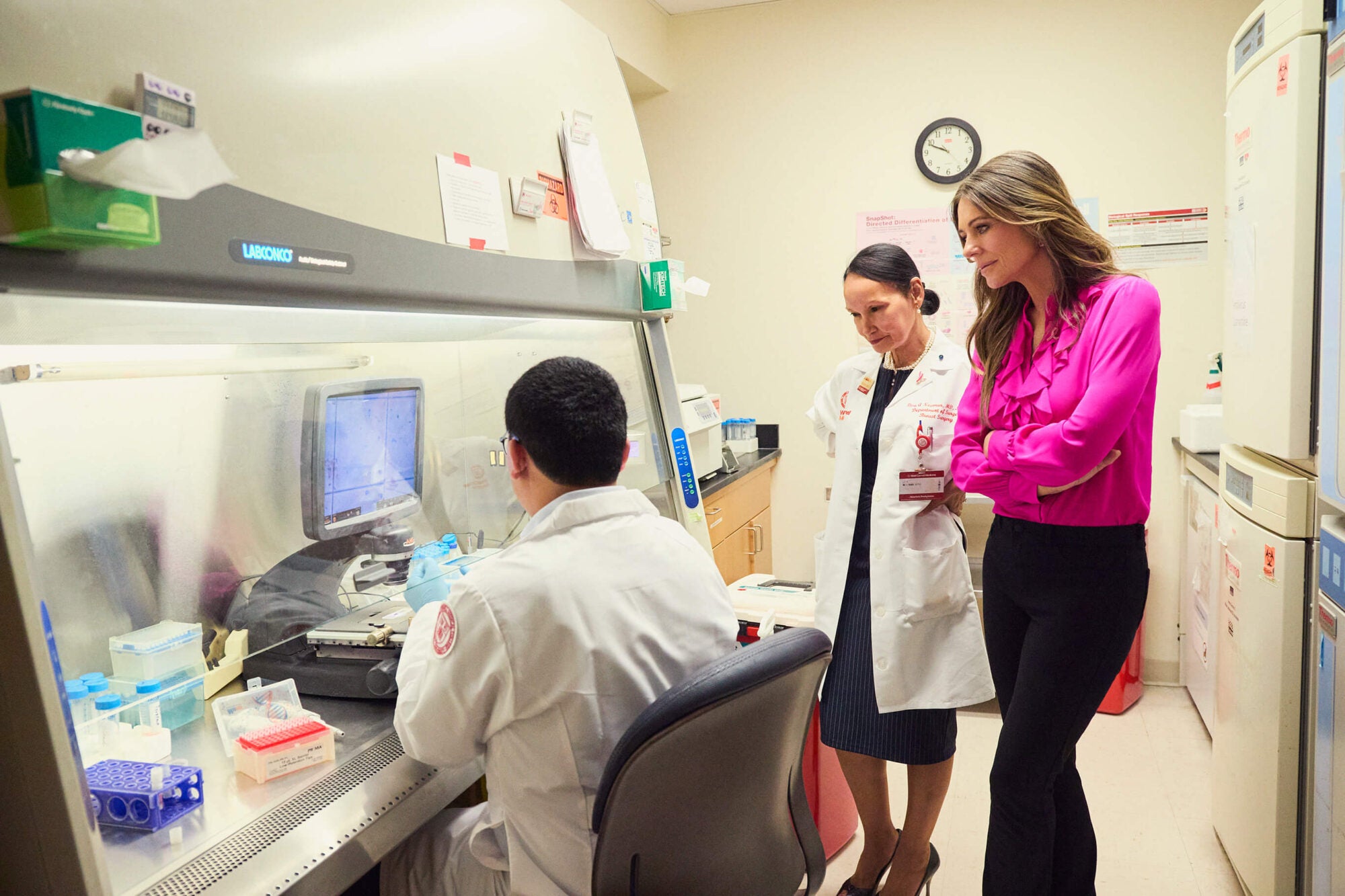
The new $15 million commitment from The Estée Lauder Companies is so timely because diagnoses among women under 45 are rising, yet research focused specifically on younger women has historically received only a fraction of breast cancer funding. Breast cancer in younger women can also be diagnosed later and behave more aggressively. This new initiative brings leading scientists together across the world to investigate the biological factors of early-onset breast cancer and seek to translate what they learn into better ways to predict risk, prevent the disease, detect it earlier and treat it more effectively. Younger women deserve answers, and they deserve them with urgency.
What do you hope this new initiative will mean for younger women facing breast cancer?
I want this to give younger women more information, more hope, and ultimately save lives. I hope it helps every young woman feel seen and know that the scientific community is working with urgency on her behalf.
What do you want women to know about taking care of their breast health and being proactive about it?
Women are so often looking after everyone else that we put ourselves last, but caring for your breast health is not self-indulgent, it’s essential. We believe that breast care is self-care, and want to empower women to be proactive with their breast health. Know what is normal for your body, check your breasts regularly for any changes, attend the screenings recommended for you, take a risk assessment, and speak to a healthcare professional promptly if something does not feel right. Being breast-aware should become a simple, familiar part of looking after yourself.
When you look back on more than 30 years of this work, what are you most grateful for? And what has brought you the greatest sense of purpose?
This has truly been the most meaningful work of my life. I am eternally grateful to Evelyn for inviting me to stand beside her and for showing me what determined, compassionate advocacy can achieve. I also want to deeply thank every person who has shared a story, supported our breast cancer campaign, raised funds, or devoted a career to research and care. The greatest sense of purpose comes from knowing that this work has helped change the conversation around breast cancer and contributed to real progress. We have come a very long way, and I remain as committed as ever to work towards a world without breast cancer.

