







Ever since she was a little girl, LaShae Rolle knew she wanted to work in medicine. “I’ve got a number of doctors in my family, and my mother is a nurse, so I’d always had it modeled right in front of me,” she says.
She pursued her passion with a single-minded focus. After receiving a Master's of Public Health in epidemiology at the University of South Florida, she decided to pursue a Ph.D. in prevention science and community health at the University of Miami. At age 25, Rolle was matched with a mentor at the cancer center. She learned about lifestyle oncology and wrote manuscripts, including a lead author publication on breast cancer screenings among women with a disability.
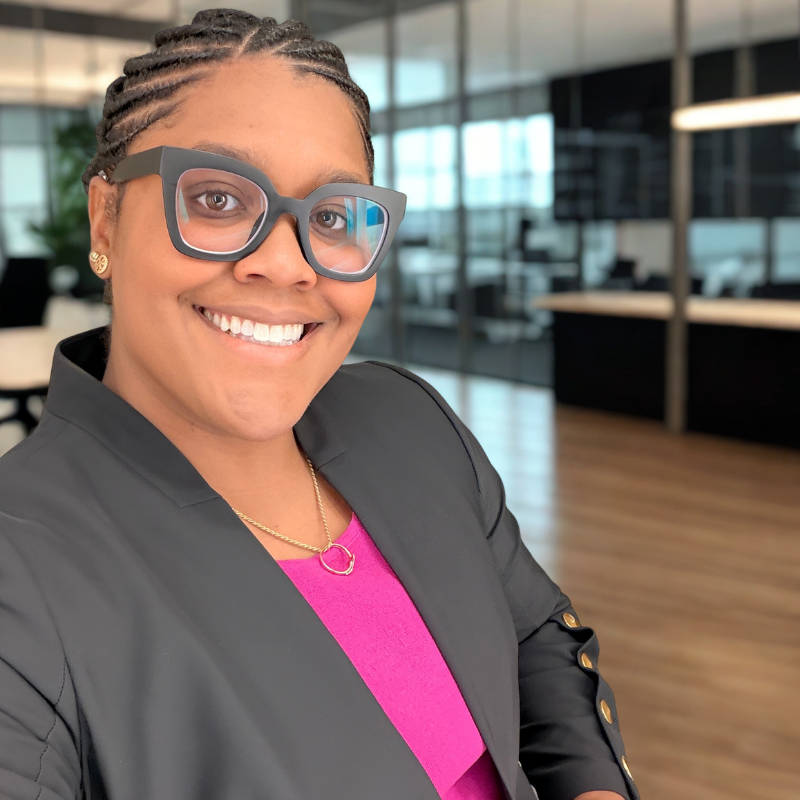
During the second year of her doctoral program, Rolle found a lump in her breast. “I was so busy that I almost didn’t even go to the health center,” she remembers. “But I’d just published that paper and was training to become a cancer prevention scientist, and I decided that I needed to practice what I was preaching.”
Rolle was referred for a mammogram and ultrasound, during which she quickly sensed that something was wrong. “The physicians never actually said the word cancer,” she says. “They were saying things like, ‘we’re seeing masses,’ or ‘you have calcifications,’ or ‘we need to do a biopsy to confirm your disease.’ And I’m thinking, what disease are you even talking about?”
She was diagnosed with high-risk early breast cancer, which can be treated effectively but has a high chance of returning or coming back. The moment brought an unexpected sense of clarity. “Now that I had a name for it, I could start trying to fight it,” Rolle says. She threw herself into research. “I looked at every decision through a statistical lens,” she remembers. “I decided to let the data drive my decisions.”
Recognizing how she processed information, her oncology team leaned into that approach. They shared studies and detailed explanations alongside every recommendation, creating a dynamic in which Rolle could weigh the options herself. “It all felt very collaborative,” she says.

As she began to understand the realities of treatment, one question rose to the top: After a mastectomy and chemotherapy, would she still be able to have children one day?
Just as she had always known she wanted a career in medicine, Rolle also knew she wanted to be a mother. “The first priority for me, after surviving, was to protect my fertility,” she says. While many women with her diagnosis opt for a double mastectomy, Rolle chose a unilateral procedure after reviewing research suggesting it would not significantly increase her risk of recurrence. “I asked my surgical oncologist if that was possible, and she shared a paper with me,” she says. “So now, in the future, I will be able to breastfeed normally on the left side.” She also chose to freeze her eggs, preserving the option of IVF.
Because most breast cancer patients are diagnosed later in life, fertility preservation is not a concern many women have to face. At 26, Rolle was categorized as an adolescent or young adult (AYA) patient — a group spanning ages 15 to 39. It’s a relatively small population, and their needs are often overlooked. “There are hospitals that specialize in pediatrics, and then there are regular hospitals where the average cancer patient is 60 plus,” she says. “Then we're just smack in the middle. There's no place for us.”
Rolle noticed that gap not just structurally, but socially. In waiting rooms, people often assumed she was a caregiver rather than the patient. “My mom came with me to an appointment once, and the nurse asked her to get on the scale,” she says. “They assumed she was the one who was sick.”
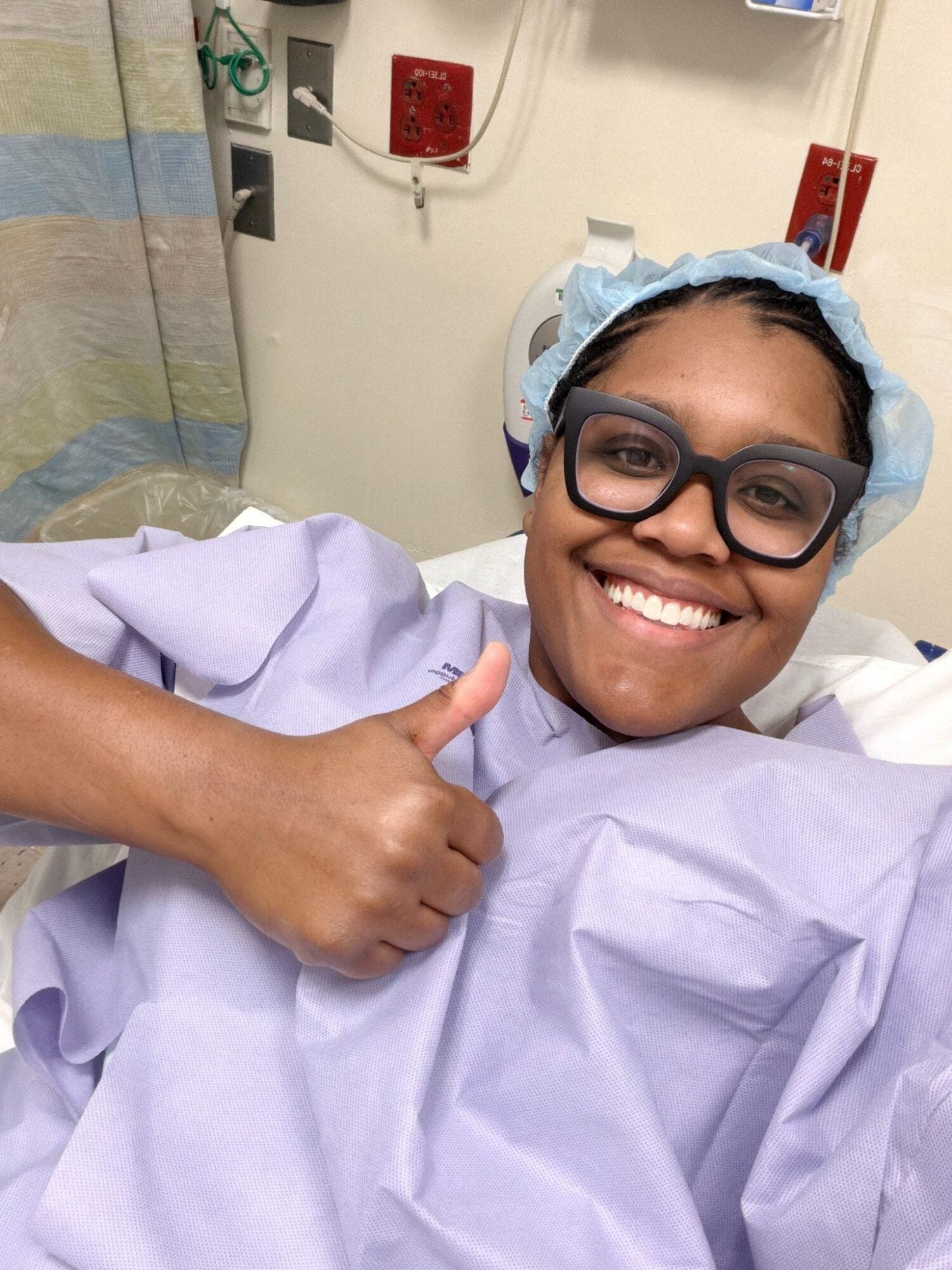
Those experiences stayed with her. “Providers can’t control what other patients say in the waiting room,” she says, “but they can control what happens in the exam room.” After completing treatment, Rolle shifted her academic focus to better serve patients like herself. “No matter how old I am, I’ll always be someone who was diagnosed at 26,” she says. “This is my group.”
A central focus of her work will be ensuring all AYA patients understand their options for fertility preservation. “I could freeze my eggs and never use them, but at least I have the option,” she says. Too often, she’s seen young patients go through treatment without fully understanding how it might affect their ability to have children later. “The biggest sense of loss and disappointment I see in the AYA community is around fertility,” she says. “You already lose so much control over your life with breast cancer — but this is something you can control.” That’s why she believes these conversations need to happen early and clearly. “It needs to be framed as, ‘if you don’t do this, you are potentially removing this option for yourself in the future,’” she says.
Today, Rolle is in remission — but she’s quick to point out that the experience doesn’t end when treatment does. “You’re not the same person you were before the diagnosis,” she says. “I still don’t feel completely whole, and my reconstructive journey has been long, but all I can do is continue to move forward.”
At the beginning of her cancer journey, Rolle asked herself the same question many patients do: Why me? But over time, that question has shifted. “I think the immediate response people have is to wonder, why did this happen?” she says. “But the more I talk about my story, the more I understand 'why me.'' Surviving cancer gave Rolle an important perspective on the specific challenges young women face, and she refuses to let that go to waste. Instead, she’s using it as a tool to make her a better researcher, a better scientist, and a better advocate.
