






Few things soothe my soul more than the peace and solitude of sitting among the stacks and manuscripts of library archives. The feel of heavy linen paper. The sight of longhand penmanship, which I must now struggle to decipher. The sound of, well, very little beyond the stories I hear calling out to me from the past, begging to be shared. Pure heaven.
In those quiet moments, I feel compelled to turn up the volume, to take the voices whispering to me and transform them into shouts of defiance, demanding, for once, to be heard.
For going on 20 years now, I have delighted in examining seemingly familiar moments in American history — World War II, Thanksgiving, the Gilded Age — from under-explored perspectives. More specifically, I analyze these events through the stories of those whose voices are often marginalized: women.
Women, Indigenous people, and Black Americans have always been a part of history. To overlook their perspectives is to omit the experiences of more than half the population — and leave behind a very incomplete account of key moments in the American story.
To be clear, I don't consider myself someone who writes “women’s history.” I write history, full stop. Women, Indigenous people, Black Americans — they have always been a part of history. I’m just sticking them back into the nation’s narrative. To overlook the perspectives of these people is to omit the experiences of more than half the population — and leave behind a very incomplete account of key moments in the American story.
What can sometimes make my job harder is that the further back in history we venture, the more challenging it becomes to find the everyday details that make those worlds of long ago believable to the reader. Throughout the process of researching and writing Obstinate Daughters, which tells the true story of the American Revolution through the experiences of women, enslaved individuals, and Indigenous peoples, I found myself inspired yet constantly frustrated as I put the book together. I would discover the snippet of an amazing story and wonder why more had not been recorded about, or by, a particular person. I think of all the specifics that have been missed because no one thought they were worth capturing in the first place. And when we leave them out, we all miss out.

We miss out on stories of resistance and powerful tales of struggle that are at the heart of what it takes to forge a new nation. Women are absolutely at the heart of it: Women who took up arms. Women who kept entire cities running as innkeepers and publishers. Women who organized boycotts and fundraisers to support causes they believed in. When they did not have the power to vote, they exercised the power of the purse. They voted with their dollars, a tactic that still works today.
To fill in gaps in the record, newspapers and other public records sometimes help. In Obstinate Daughters, I tell the story of Mary Katharine Goddard — a newspaper publisher, printer, and stationer who became the first female postmaster in the United Colonies when she assumed that post in Baltimore in 1775. She was also the only woman to have her name appear on the Declaration of Independence because Congress hired her to print the first version. Goddard did her job, and, as printer, added her name to the bottom of the document that landed in the official records of the 13 states.
Petitions to the government can also shed light on people and events, no matter the government. Belinda Sutton was enslaved to Isaac Royall in Medford, Massachusetts. Royall fled Medford in 1773, and he left Belinda £30 in his will. When Royall died in 1781, Belinda received nothing. So she petitioned the Commonwealth of Massachusetts. During that process, she described the details of her kidnapping from West Africa and enslavement in the colonies.
Similarly, Elizabeth Freeman secretly approached a lawyer in the Berkshires whom she had seen at the home of her enslaver, Colonel John Ashley. That lawyer, Theodore Sedgwick, accepted Elizabeth’s case, and in 1781, she sued for her freedom and won. That lawyer’s daughter, Catharine, saw fit to write Freeman’s story — otherwise, we would likely never know it.
Because the Americans and the British were desperate for the support of Native Americans, we have governmental records of meetings and treaties, often written by white men, including Thomas Jefferson, who wrote of the “famous” Cherokee woman Nanye’hi, or Nancy Ward, whose controversial actions risked the lives of her own people.
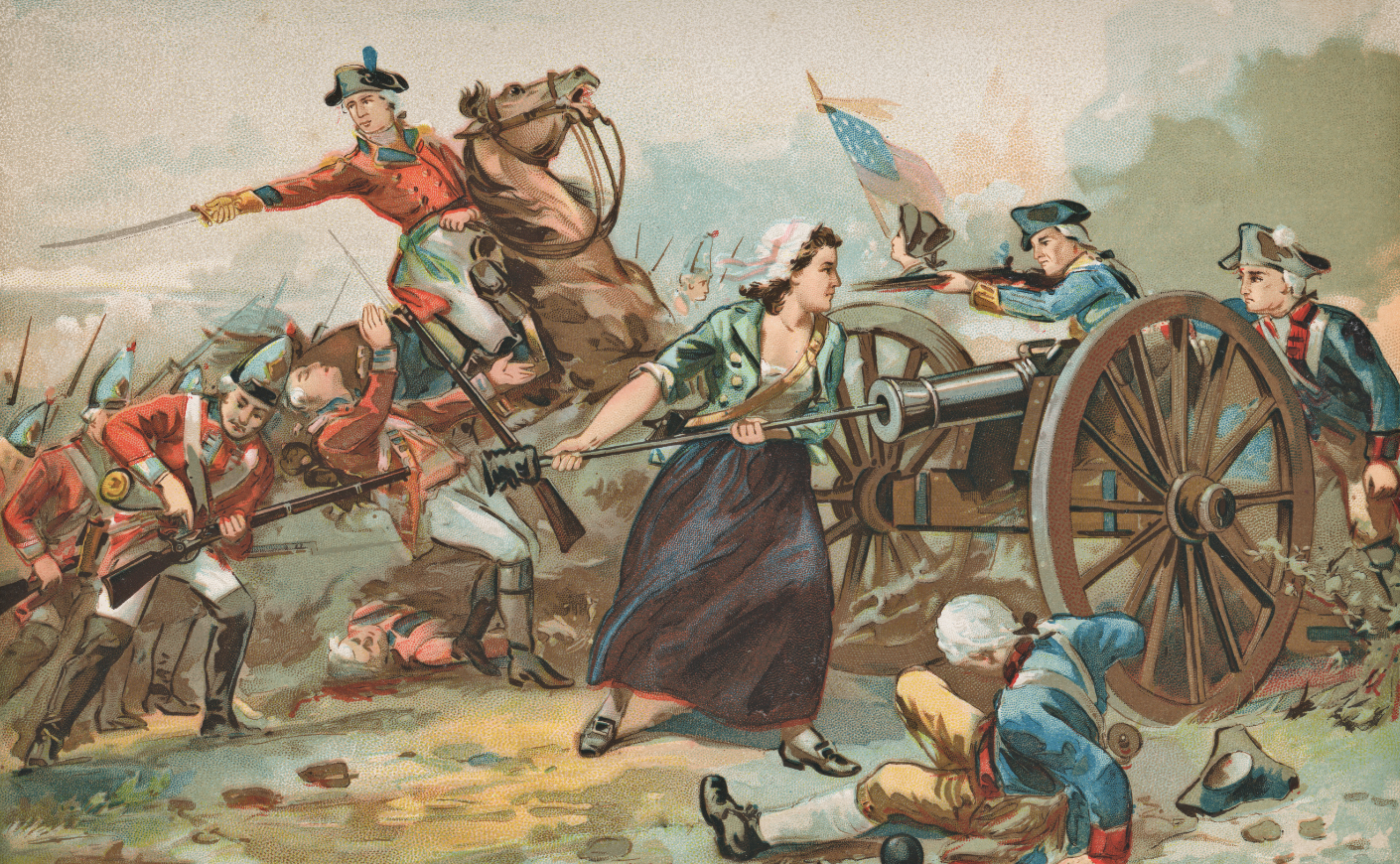
The simplest records yield powerful insights into the lengths some women went to fight for an independent America. Prudence Wright, alongside other women in her Massachusetts region, organized a guard while their husbands were away fighting, arrested a British courier, confiscated his documents, and detained him. Margaret Corbin took up her husband’s arms after he fell dead next to her in the Battle of Fort Washington in 1776. She suffered debilitating injuries in the process but continued to serve in the military, becoming the first woman to earn a military pension from the U.S. Congress. Toward the end of the Revolutionary War, Deborah Sampson concealed her gender to enlist and fight.
Writing Obstinate Daughters, I was astounded by the bravery I uncovered. These are up-from-their-bootstraps, against-all-odds stories. They're lessons of resourcefulness and inspiration that we don’t necessarily learn from individuals who are already privileged and in positions of power.
Which brings me to the present.
Women continue to make remarkable contributions to every aspect of American life: from politicians and tech entrepreneurs, to doctors and engineers, astronauts and stay-at-home parents. All this, despite facing a continuing erosion of their rights and limiting beliefs about what their roles in society should be. In this time of discord, we should be asking: Whose voices are we amplifying? Who are we lifting up? Whose stories are we sharing? Who are we encouraging to speak up and share their experiences?
Most importantly: How can we do better?
If today’s storytellers exclude these lives, experiences, and contributions from the ongoing historical record, we do ourselves and future generations a disservice. Incomplete records only grow more opaque with passing time. To remember is first to see, to recognize, and then to value.
So take a moment and listen. Then crank that volume up to 11, for the voices of others, as well as your own.
Denise Kiernan is the author of Obstinate Daughters: The Rebels, Writers, and Renegade Women Who Ignited the American Revolution.
