






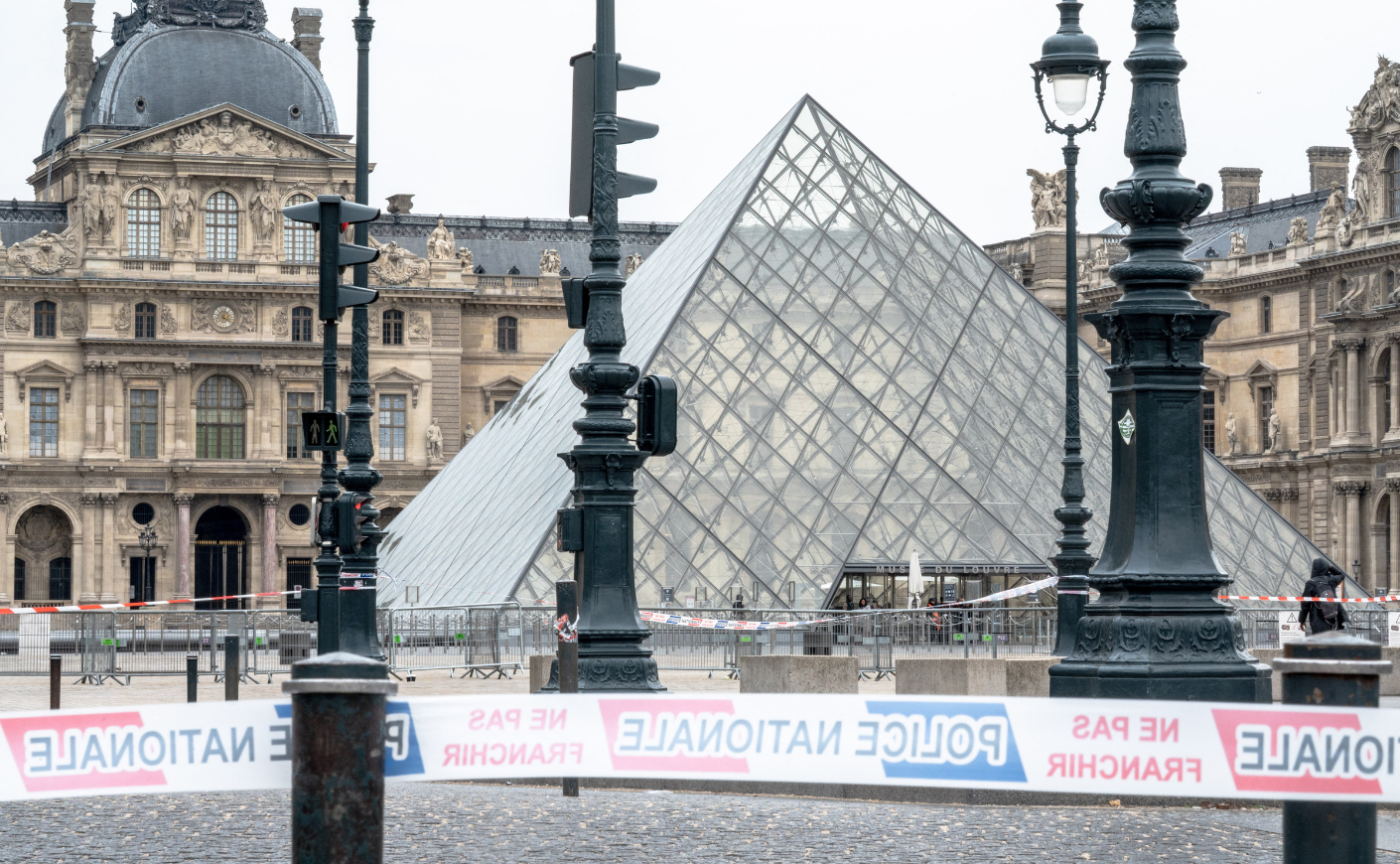
For the first time, the thieves who broke into the Louvre last fall and made off with millions in crown jewels are breaking their silence.
According to Le Monde, they’re finally revealing some of the nitty-gritty details of the crime, including what they were paid (very little compared to what they stole), the fact that one of them didn’t even know it was the Louvre they were going to rob, and the pseudonym of the mastermind behind the entire heist, a shadowy figure named Jo.
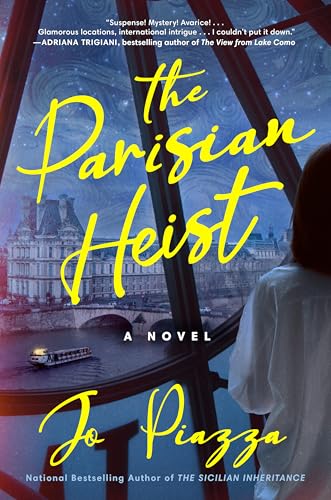
My name also happens to be Jo. And this week I released The Parisian Heist, a book about a massive art theft in Paris, featuring yet another woman named Jo. Sometimes the universe is hilarious.
Thankfully, I have an alibi for October 19, 2025, the day the four thieves stole some simple construction equipment, broke a window in the Louvre, smashed display cases in the Apollo Gallery, and made off with eight priceless pieces of the French Crown Jewels — including tiaras, necklaces, and a brooch once worn by the likes of Queen Marie-Louise and Empress Eugénie.
Still, the coincidence of this news breaking this week as I’m on a book tour talking about heists for hours is uncanny. And if the authorities were to go through my Google searches for the past three years, they would probably have reason to bring me in.
The actual Louvre thieves were clearly amateurs, at least according to the new information they’ve given authorities. The men were working-class fathers from the northern Paris suburb of Aubervilliers. Both say they were recruited just days before the robbery by an unnamed client who offered them between €15,000 and €25,000 — roughly $17,000 to $29,000 — to break into the museum. One of the men claims he was told the target was a jewelry store, not the Louvre, and says he never would have set foot inside had he known.

Imagine accidentally robbing the Louvre!
The other one says he was well aware what he was about to break into.
The entire Louvre heist feels messy and a little simplistic. But if I’ve learned anything from spending years researching heists, it’s that real-life robberies are almost nothing like the ones we see in movies.
There's rarely a George Clooney or a Pierce Brosnan in a tailored suit with perfectly coiffed hair calmly explaining an elaborate plan to a room full of glamorous criminals while they all sip martinis. There are no security systems that shoot out laser beams you have to backflip over. No one dangles elegantly from the ceiling, waiting for massive metal walls to slam down. In reality, some of the most effective barriers to theft are tiny, like security screws holding a painting to the wall that can only be removed with a very specific screwdriver. And usually the thieves aren't criminal masterminds at all: They're low-level criminals hired by someone who sees a vulnerability and exploits it, often with a shocking lack of sophistication and insider information (like access to that very specific screwdriver).
Much of the research for my book was done with Anthony Amore, the head of security at the Isabella Stewart Gardner Museum in Boston and one of the world’s leading experts on art theft. The Gardner is the site of the most famous unsolved art heist in history. In 1990, before Anthony came on, two men disguised as police officers talked their way into the museum in the middle of the night, tied up the guards, and disappeared with 13 works of art worth hundreds of millions of dollars. Those pieces have never been recovered, and the empty frames still hang on the walls, waiting for the paintings to return.
After years of talking to Anthony and researching thieves who succeeded and thieves who failed, I became very curious about what actually ends up separating the two.
The answer is patience, careful planning, the ability to anticipate what might go wrong, multiple backup plans, the willingness to watch and wait rather than barrel ahead, and the ability to multi-task like an octopus. In other words, many of the same skills women use every single day.
That’s one of the many reasons I decided the central heist in my book The Parisian Heist would be carried out by an all-female crew. Think about the effort so many women put into the 4-D chess that is planning their children's summer activities: coordinating three kids, two camps, one swim team, four pickup times, a carpool, a pediatrician appointment, and the fact that someone needs a white T-shirt for tie-dye day by tomorrow morning. On some days, this could require more strategic thinking than breaking into a museum.
Middle-aged women, in particular, are also adept at moving through spaces without being noticed, in part because women in the middle of their lives have been underestimated and overlooked for most of history. Even today, no one expects a 50 year-old woman in a Vineyard Vines shift dress to be casing a joint. Being underestimated could be an enormous advantage when it comes to burglary.
Despite the new admissions from the Louvre heisters, the stolen jewels worth $102 million remain unaccounted for. And yet I feel like a lot of us are still sort of on the thieves' side.
These are actual crimes. And yet we can't stop watching heist movies and reading heist books. We often feel a weird kinship with the thieves (or at least, I do). We usually want them to outsmart the guards, slip past security, and get away with it all — because unlike other crimes, heists feel victimless and even doable.
I think another part of the appeal is that a good (aka never-solved) heist lets us imagine breaking the rules without having to suffer any of the consequences. The best fictional heists also give us someone to root against: a billionaire, a corrupt collector, a casino, an institution putting things behind velvet ropes. And we can tell ourselves no one is really getting hurt.
Again, I have an alibi for last October.
