


How long will I live? Of course I wonder about that — don’t we all? But increasingly, I'm interested in another question: how well I’ll live. That's the concept of healthspan, the term for how many of our years we'll spend physically active and in good health. Because let’s be honest: I’m not interested in winning a longevity contest if the prize is an extra decade of struggling to get out of a chair.
I want to be strong. Independent. I want to be able to travel, carry my own bags, chase after my grandchildren. I want to move through the world without thinking much about it. So, like many of us, I’ve come to appreciate the importance of strength training. We know that lifting weights and doing other load-bearing exercises can help preserve muscle and support bone health as we age. Strong muscles matter whether you're trying to maintain your balance or opening a jar of olives.
But recently, I’ve been wondering: Is strength alone enough? In talking with fitness experts, I learned that there’s another quality worth paying attention to, one that doesn’t get nearly as much airtime in conversations about exercise: power, or the ability to produce force quickly.
Strength versus power: What’s the difference?
Think of strength as how much force your muscles can generate. Power is about how quickly you can generate that force. The distinction might seem technical, but it has huge implications for how we move through everyday life.
Imagine you’re walking along, minding your own business, when your foot catches on an uneven sidewalk. In that split second, you need your muscles to react quickly enough to help you regain your balance. Or imagine you stumble on a stair, have to step sideways to avoid bumping into someone, or need to push yourself up from a low seat. These movements aren’t simply about having strong muscles. They’re about getting those muscles to respond the instant you need them to.
As we age, that ability can decline, even if we don't notice it right away. Being able to lift a heavy weight is great, but that doesn't tell us how quickly we can move when we need to.

Are we training for real life?
Like I said, I do strength training, get my steps in, and play pickleball: I generally feel pretty good about how much I’m moving my body. But am I training for the kinds of movements that will help me get around five, 10, or 20 years from now? And what, if anything, should I be doing differently?
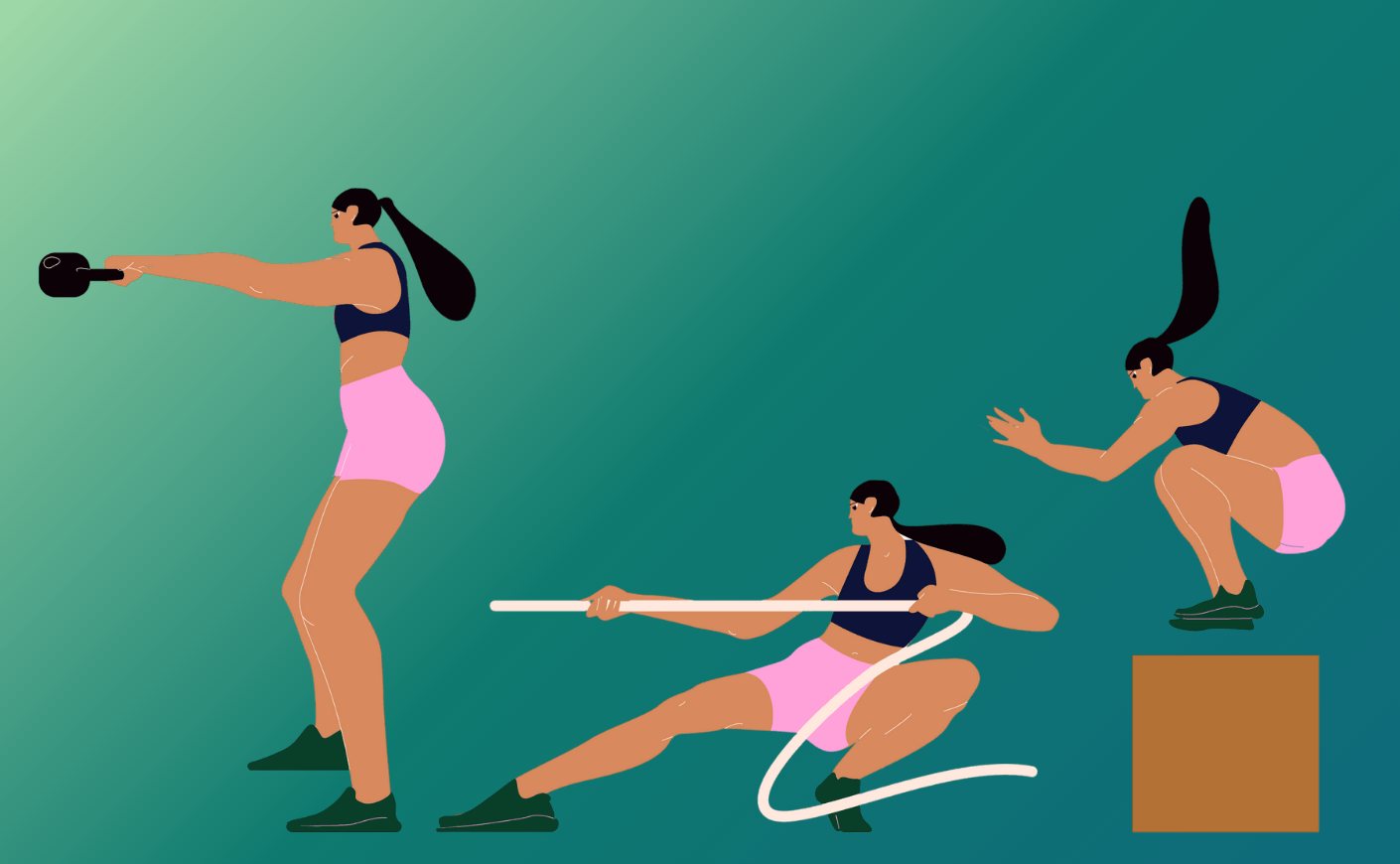
That's where power training comes in. It focuses on putting strength to work more quickly, with control — think box jumps, kettlebell swings, or medicine ball slams (that exercise where you're basically throwing it onto the floor). The point isn't to start flinging dumbbells around the gym just because someone on Instagram makes it look easy. (Please don't.) It's to think about speed as well as strength — and find the right way to improve both.
Of course, the right approach will look different for different people. Someone who has exercised consistently for decades may have very different options from someone returning to activity after an injury. If you have arthritis, joint pain, osteoporosis, or a history of falls, it's especially important to ask your doctor or physical therapist what's right for you before getting started.
What do we want to stay strong for?
That's the question I keep coming back to. Yes, we can track how much weight we lift, how many reps we complete, or how fast we walk a mile. But I also want to know what all that effort will help me do outside the gym.
To me, healthspan is about preserving options. It's about saying yes to a hike, navigating a new city on foot, or catching myself when I lose my footing. It's being able to do more of the things that make life feel big and possible, rather than gradually reorganizing our lives around what our bodies can no longer manage.
None of us gets to decide exactly how aging will go. And taking care of ourselves doesn't guarantee we'll avoid illness or injury. But it's worth asking whether the way we exercise is preparing us for real life. I don't need to become a competitive athlete: I just want to do the things I love for as long as I can. If that means rethinking how I exercise, I'm all for it.
