


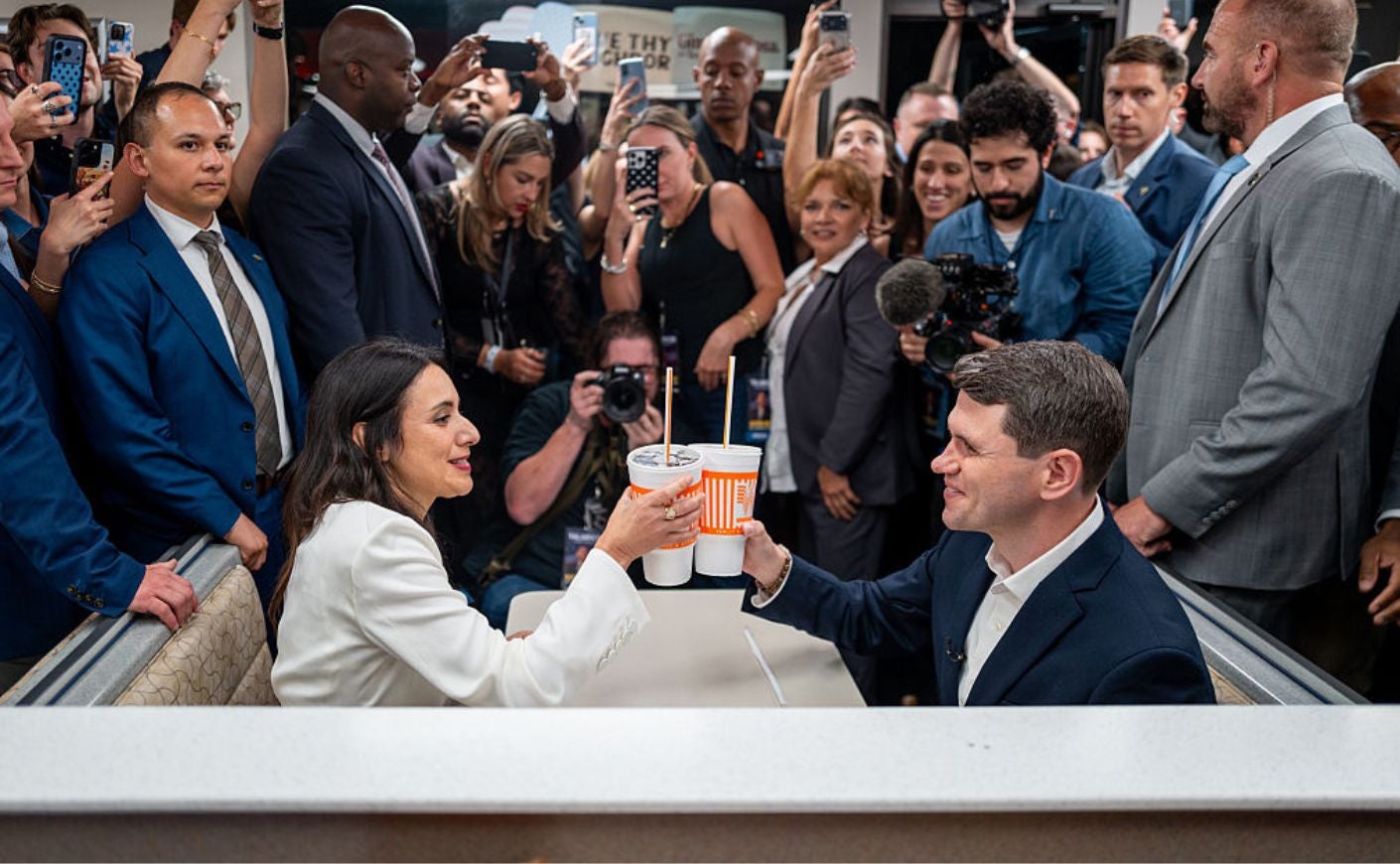
For decades, Texas Democrats have been promising a breakthrough — and on Tuesday, they finally got one.
James Talarico flipped a U.S. Senate seat, and Gina Hinojosa unseated Gov. Greg Abbott. And the wins didn’t stop there: Democrats swept the lieutenant governor, attorney general, comptroller, land commissioner, and agriculture commissioner races. They also broke the GOP’s hold on the state’s highest courts, winning all four seats up for election on the nine-member Texas Supreme Court, where seven justices will now be women. Together, the victories ended the party’s statewide losing streak stretching back to 1994.
They even took control of the Texas House for the first time since 2003. But Republicans held on to the state Senate, leaving Democrats with a new challenge: turning those wins into results under divided government.
So how did Democrats pull off a win that had long seemed out of reach? After talking with Texas Democratic Party Chair Kendall Scudder ahead of the election, we followed up two days after the big upset to discuss the strategy behind the win, the overlooked candidates who helped make it happen, and what comes next.
Katie Couric Media: Take us back to election night. When did you realize this was real?
Kendall Scudder: One of the things we did this cycle was invest money in setting up a research consortium [to help Democrats share polling and voter research]. A lot of swing states have them, but Texas has never had one.
A couple of weeks ago, we got polling back showing this was going to happen — and it consistently tracked that way. But we were all looking at each other like, “Did we set it up wrong?”

I was in this war room, sitting next to State Representative John Bryant and Texas Democratic Party senior advisor Lillian Salerno. When [the numbers] started coming through, we were gobsmacked that our consortium was right. We’re infrastructure people. We want to build this for long-term gains and make sure we’re competitive cycle after cycle.
Texas Sen. Ted Cruz described the midterm results as "a Watergate-level repudiation" of the Republican Party. What do you make of his response?
You’ve got to take ownership of failures of the past. When I became chair of the party, I went around the state owning up to mistakes the party had made, listening to people and trying to make it right. I think that’s what [Republicans] are doing a little bit. And I’m actually a little surprised that they had the bandwidth to do it.
Maybe what you’ll see is them moving forward, trying to make right and moderate themselves. We’ve been waiting for Donald Trump’s healthcare plan for 10 years. They don’t have plans. They don’t do things to help people. So maybe we’ll start seeing Republicans come up with some plans, and we can start having substantive discussions about whose policies are better. Holy cow, what an adjustment to American politics that would be.
I don’t know if they’re going to be able to help themselves. But I think they’re starting down that path, and we’ll see.
Beyond the war and gas prices, what else do you think drove this blue wave?
People vote with their gut. They don’t vote with their heads. It’s about how people are feeling and their overall sentiment about life. Certainly, the war and gas prices contributed to a lot of that. But it was also something a little more innate. People yell because they feel like they aren’t being heard. They’re putting data centers in your backyard, and by the time you show up to a county commissioners' meeting because you found out about it, you realize they’ve already been bought. No one’s listening. No one cares.
[Voters] didn’t feel like things were going well under Joe Biden. They threw him out and elected Trump, who sells every one of them out, and completely disregards all the hopes and dreams people put in him.
Now they’ve come over to Democrats. It's on us to make sure we’re listening to these folks. That means talking about things that Democrats may not feel comfortable talking about as often. We need to get serious about cutting people’s property taxes. You don’t hear Democrats talk like that very often, but we mean it. If we’re champions for working class people, that means being efficient with their tax dollars. Give pay raises to our teachers, make sure your classrooms are fully funded so people aren’t having to buy all these school supplies out of their pockets. If we do things like that, people will start to trust us. They’ll start to feel that we’re looking out for them.
What did Democrats do differently this time?
We have a lot of people from a range of backgrounds with different interests coming together. Keeping these Democrats together is like keeping frogs in a bucket without a lid on it. Oftentimes, members of the party focus on their differences rather than their shared values. This cycle, we focused on what we all had in common, and it improved our messaging in a huge way. We built a coordinated campaign where every member of the team was rolled into it. It wasn’t perfect — we had some disagreements along the way, but we shared data and we made sure the limited resources we had were being spent efficiently.
We also did a paid relational program where we did civics classes for low-propensity voters about why your cost of living is high and what you can do to impact that. A lot of times, you don’t live in a household with a culture of voting, and you may need those civics classes to help you through. We built these programs, and I’m on a mission now to keep them operating year-round.
Republicans redrew Texas’s congressional map to give themselves an advantage. How did that affect your party’s efforts this cycle?
That lit a fire in us. We already were scrappy Texas Democrats who would throw punches, but at that point, it was like, "You’re just blatantly stealing from people. You’re just literally saying, instead of having better ideas, 'We’re just going to take it.'" My message to Dan Patrick, Ken Paxton, and Greg Abbott: Accountability is on the way. And it came on Tuesday.
Was this about persuading Republican voters or getting people who usually stay home to turn out?
People in the political space always want it to be one or the other. We threaded a needle where we were able to do both. Early voting numbers show us that a third had Republican primary voting history, a third Democratic voting history, and a third none. The people with no primary voting history tended to be some more low-propensity folks. We saw 10 percent of Hispanic voters had no voting history whatsoever. That's a big number in a midterm.
But we also were seeing margins move in places that there aren’t enough Democrats to move it. We saw lifelong Republicans, people who had consistent Republican voting histories, coming out in exit polls saying they voted straight [Democratic] tickets.
The challenge is going to be holding on to all these seats that we flipped and making sure they aren’t one-offs. We need to be working off year to build in these communities so that that infrastructure exists for our now newly elected candidates to have something to work from.
How much credit belongs to the candidates themselves?
The candidates at the bottom of the ballot are not getting the same praise as others at the top of the ticket, but I think they’re just as responsible — if not more so — for what happened.
Mark Nair, who ran for Congress in the district stretching from Amarillo to Denton, didn’t win. Neither did Roxanne Lathan, who ran in Nacogdoches, or Laticia Ambroz, who ran in Senate District One in Northeast Texas. But their campaigns helped other Democrats win elsewhere on the ballot, even though they will never get the credit they are due. No one will ever write stories about the sacrifices their families made, the jobs they lost.
When you play football, some members of your team get tackled, but when you have a win, the whole team wins. And they were on a team that won.
With Republicans still controlling the state Senate, how much can Democrats realistically accomplish?
We have executive powers now, not just with the governor, but all of the executive offices in Texas. So there are some things that we can do within the confines of law to be able to move needles forward.
It is my hope that Republicans got enough of a wake-up call that they will realize it’s time for us to work together to solve problems. That doesn’t mean Democrats get everything they want. That doesn’t mean Republicans get nothing they want. I think we’ve got to figure out how to do it together.
What would you say to someone who sees this as temporary backlash rather than a lasting shift?
It may very well be. But just as when people told me Texas would never turn blue, I said, “Okay, well, you might be right.” But it doesn’t change anything we’re doing here.
I grew up on a farm in a very low-income family. We were all Democrats because this party threw down for us. FDR and Lyndon Johnson and Ralph Yarborough — those are my heroes because everything I have in my life is because those men threw down for my family.
That’s what I want this party to be again. I want us to stand for something. I want this country to see that this party is worth it. We owe it to those people who brought us here, and to those future leaders who need someone to fight for them.
I intend to make sure we are holding on and we deliver. And when we do deliver, it will enact generational change in this state. When you have generational change in Texas, it will transform American politics and global politics.
This interview has been edited and condensed for length and clarity.
