






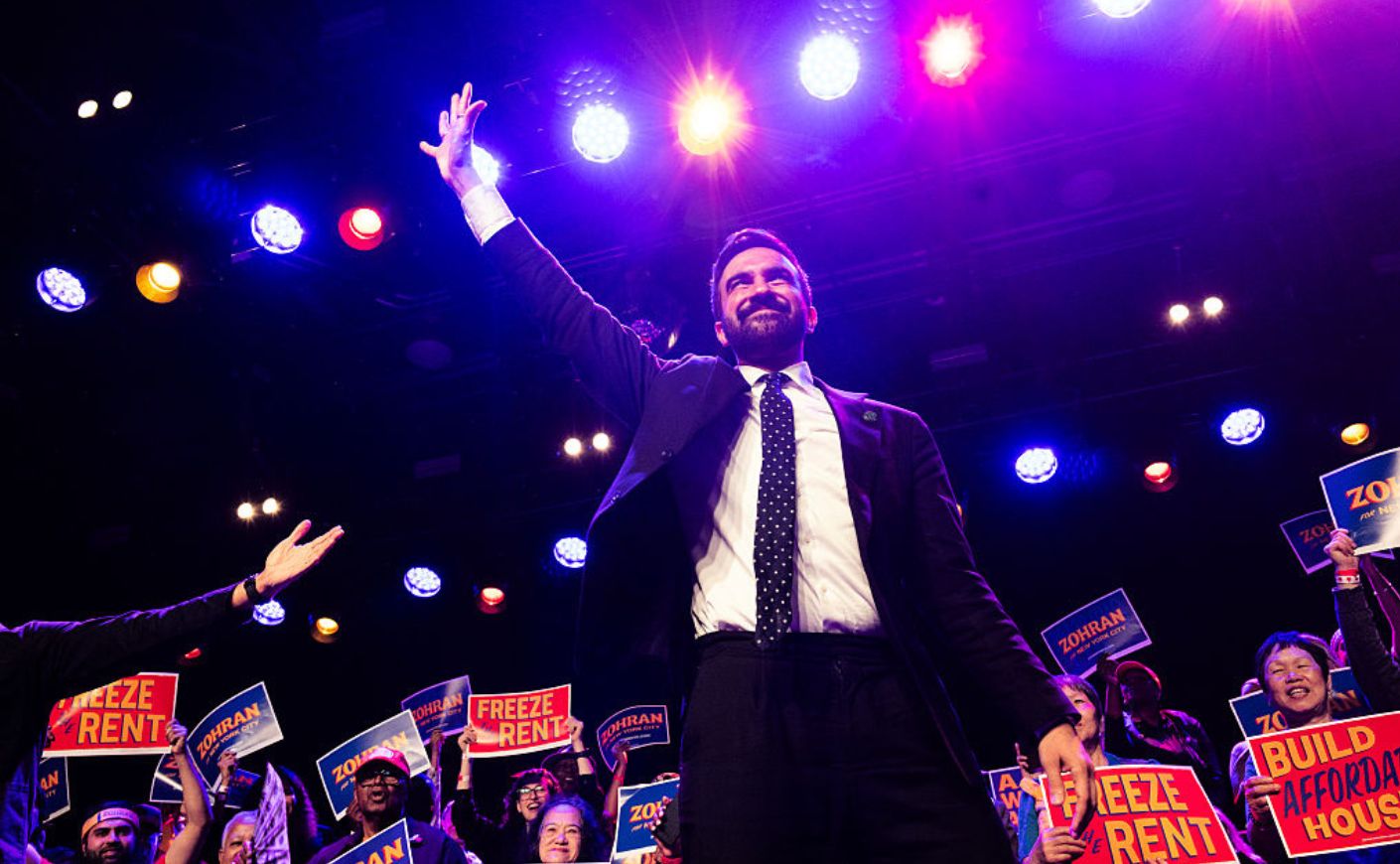
The Democratic Socialists of America was once a relatively small political organization known mostly to activists on the left. Today, it has become one of the country's most prominent progressive groups, helping launch the careers of politicians such as New York Rep. Alexandria Ocasio-Cortez, Michigan Rep. Rashida Tlaib and, more recently, New York City Mayor Zohran Mamdani.
This year's elections have highlighted both the movement's momentum and its limits. Despite recent high-profile victories in New York and another key win in Michigan, Tuesday's primaries also served as a reminder that the DSA still faces resistance from more mainstream Democrats, with former Missouri Rep. Cori Bush falling short in her bid to return to Congress.
Many Americans remain unfamiliar with what the DSA is, what its members believe, and how it differs from the Democratic Party. Here's what to know.
What are the Democratic Socialists of America?
The Democratic Socialists of America is the largest socialist organization in the U.S., with more than 100,000 members and chapters in all 50 states. Once a relatively small movement, the DSA has grown rapidly over the past decade into one of the country's most influential groups on the left, fueled by rising interest in progressive politics and a string of electoral victories.
Although many of the candidates it backs run as Democrats, the DSA is neither a political party nor part of the Democratic Party. Instead, it is a membership-based political organization that endorses candidates, advocates for progressive policies, and mobilizes volunteers to help elect candidates who support its agenda.
The organization is also far from monolithic. Its members range from pragmatic organizers focused on winning elections to more ideological democratic socialist and Marxist factions. As the DSA has grown, so have debates over its direction: Should it continue working within the Democratic Party or chart its own path? Should it endorse only candidates who fully embrace democratic socialism, or also back Democrats who share many of its priorities?

But even as the DSA gains influence, many Americans remain unfamiliar with it. A CNN poll released on July 30 found that one-third of Democrats identify as democratic socialists, while a Reuters/Ipsos survey released two days earlier found that 47 percent of Americans say they don't understand democratic socialist policies.
What does the DSA believe?
The DSA advocates a democratic socialist vision centered on shifting economic and political power to working people. The group argues that basic necessities such as healthcare, housing, and education should be guaranteed as rights, while workers should have greater influence over the economy through stronger labor unions and expanded public ownership of key industries.
Those priorities are reflected in the organization's "Workers Deserve More" platform, which calls for universal healthcare, affordable housing, tuition-free education, a 32-hour workweek with full pay and benefits, paid family leave, higher taxes on the wealthy, and aggressive action on climate change.
The program, launched July 14, also demands a sweeping overhaul of the U.S. political system. Among its most ambitious proposals are abolishing the Senate and Electoral College, expanding the House of Representatives, replacing the two-party system with a multiparty democracy, and having Congress choose the president and Supreme Court. It also calls for publicly funded elections and a crackdown on the influence of lobbyists and "dark money" — political spending by groups that aren't required to disclose their donors.
Beyond changes to government, the platform calls for abolishing Immigration and Customs Enforcement, defunding the Pentagon, closing many overseas military bases and scaling back U.S. military involvement abroad.
Many of the proposals would require constitutional amendments or other sweeping changes to federal law, making them unlikely to be enacted anytime soon. But they define the DSA's vision for the country, which has, inevitably, fueled criticism from Republicans, who argue the agenda would fundamentally reshape the U.S. government and economy. House Speaker Mike Johnson, for example, called the platform "communism" promoted by "barbarians," while President Trump and other GOP leaders have similarly portrayed democratic socialists as communists.
Who are the most prominent DSA-backed politicians?
The DSA's rise has been closely tied to a growing roster of elected officials (though not everyone it endorses is actually a member).
New York Rep. Alexandria Ocasio-Cortez and Michigan Rep. Rashida Tlaib helped propel the DSA into the national spotlight after their 2018 victories. More recently, DSA member and New York City Mayor Zohran Mamdani has become the face of the organization's latest surge following his election last year.
The group's influence was on full display during New York's primaries in June, when several of its endorsed candidates won high-profile Democratic contests. Among the biggest winners was Claire Valdez, who won the Democratic nomination in an open congressional district in Brooklyn and Queens. Darializa Avila Chevalier defeated longtime Rep. Adriano Espaillat in one of the night's biggest upsets, while state Senate candidate Aber Kawas also won a closely watched primary. On Tuesday, DSA-backed Michigan state Rep. Donavan McKinney unseated Democratic Rep. Shri Thanedar in another major victory for the group's endorsed candidates. But the primaries also underscored the movement's limits, with former Missouri Rep. Cori Bush, a prominent DSA member, falling short in her bid to reclaim the Democratic nomination from incumbent Democratic Rep. Wesley Bell.
But the DSA's relationships with elected officials have shifted over time. In 2024, the national DSA withdrew its endorsement of Ocasio-Cortez after disagreements over several issues, including the war in Gaza and whether to abolish the Senate in favor of a parliamentary system. Pennsylvania Rep. Summer Lee and Texas Rep. Greg Casar were also once endorsed by the group but no longer identify as members.
At the same time, not every progressive Democrat is part of the DSA. Many support policies like universal healthcare, stronger labor protections, and climate action without belonging to the organization. Vermont Sen. Bernie Sanders is perhaps the best-known example: he identifies as a democratic socialist but is not a DSA member. The organization represents just one part of the broader Democratic coalition, but its recent electoral successes have made it one of the most closely watched forces on the Democratic Party's left flank.
