






- Aging Congress and recent absences raise questions about disclosure when lawmakers cannot serve.
- House vacancies must be filled by special elections, leaving districts unrepresented for weeks or months.
- Senate vacancies vary by state; governors may appoint temporary replacements under the Seventeenth Amendment.
- A member's office can keep helping constituents, but only the lawmaker can vote or serve on committees.
- Proposed Duty of Transparency Act would require disclosures when members miss over three weeks of votes.
Two recent congressional absences have Americans asking the same question: How much should lawmakers have to tell the public when they're unable to serve?
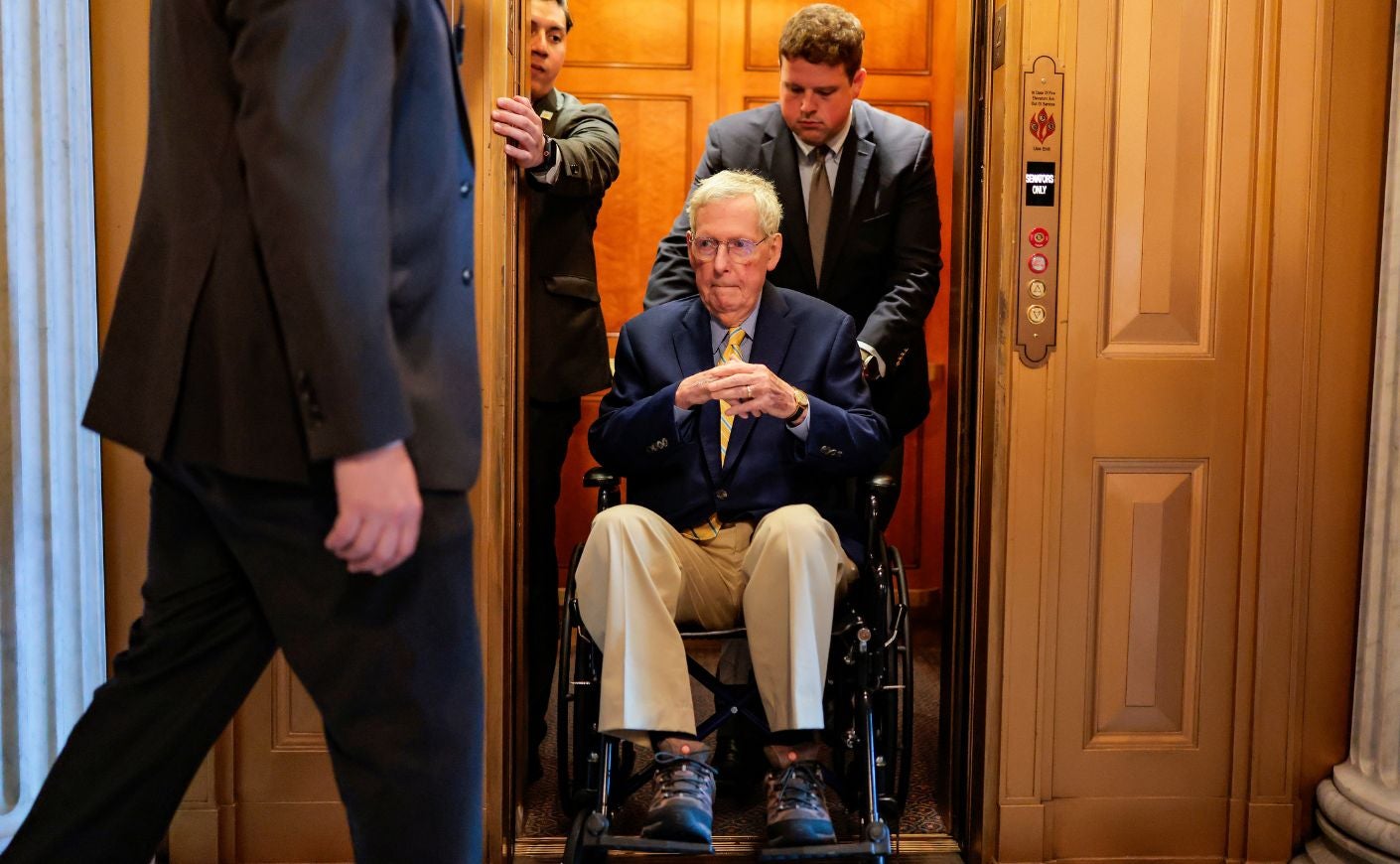
Republican Rep. Tom Kean Jr.'s months-long disappearance from public view and Sen. Mitch McConnell's ongoing hospitalization have renewed debate over how transparent elected officials should be when health issues keep them from doing their jobs — an issue that's gained new urgency as Congress has become increasingly older. Today, 24 members of Congress are 80 or above, and more than half of them are seeking reelection.
What actually happens when a member of Congress dies, resigns, or is unable to serve depends on the scenario and whether they're in the House or the Senate.
In some situations, a congressional office may continue operating and helping constituents with casework even when the member is unable to serve, or the seat is vacant (for example, after Democratic Rep. Sheila Jackson Lee died in 2024, her office continued helping constituents while the seat awaited a special election). But no one other than the elected lawmaker can vote on legislation, serve on committees, or otherwise exercise the powers of the office. As a result, constituents can go months without active representation in Congress.
We're taking a closer look at how it works — and why the recent absences are prompting calls for greater transparency on Capitol Hill.
What happens when a lawmaker dies or resigns?
When a member of Congress dies or otherwise leaves office, the seat becomes officially vacant and must be filled. But the process depends on whether the lawmaker served in the House or the Senate.

In the House, the Constitution requires every vacant seat to be filled through a special election, meaning governors can't appoint temporary replacements. As a result, districts can go weeks or even months without voting representation in Congress while states organize those races.
The Senate follows a different set of rules. Under the Seventeenth Amendment, governors can appoint someone to temporarily fill a vacant seat until voters elect a permanent replacement. The particulars of executing that vary by state. According to the National Conference of State Legislatures, 10 states — Arizona, Hawaii, Kansas, Maryland, Montana, Nevada, North Carolina, Utah, West Virginia, and Wyoming — require governors to appoint someone from the same political party as the departing senator. Four states — Kentucky, North Dakota, Rhode Island, and Wisconsin — don't allow interim appointments at all, leaving the seat vacant until an election is held.
That patchwork of state laws means there's no single national rule for replacing senators. In a recent example that made headlines, South Carolina Gov. Henry McMaster was authorized to appoint Darline Graham Nordone to serve out the remaining term of her brother, the late Sen. Lindsey Graham, which expires in January 2027. Before his death on July 11, Graham had also been running for another six-year term. As a result, South Carolina Republicans will hold a special primary to choose a new nominee before voters elect someone to serve the next full Senate term this November.
What happens when a House member disappears from public view?
Things get murkier when a living House member is unable to serve because of illness or another personal circumstance. A representative's seat becomes vacant only if the member dies, resigns, is expelled by a two-thirds vote of the House, or is disqualified under very limited constitutional circumstances. That means an absent lawmaker technically remains in office, even if they're unable to vote or participate in congressional business for months.
Recent cases have highlighted overlapping questions about lawmakers' health, transparency, and their ability to serve. McConnell's weeks-long hospitalization has raised many questions about how much elected officials should disclose when serious health problems keep them from doing their jobs. He has not yet returned to the Senate, saying he's recovering from a fall that briefly left him unconscious and a subsequent case of pneumonia and remains in rehabilitation. His continued absence has also temporarily reduced Republicans' voting strength in the Senate, underscoring how even a single lawmaker's absence can have political consequences when margins are tight.
In Kean's case, the public went months without answers about why he hadn't been on the job. Then, in a brief House floor speech in June, the New Jersey Republican revealed he had been diagnosed with depression and that doctors had recommended he remain hospitalized. Calling himself "a private person by nature," Kean said that was why he had not disclosed his condition sooner. He did not take questions from reporters, and Speaker Mike Johnson said it was up to Kean to decide whether his explanation provided enough transparency.
During his absence, Kean missed 140 House votes. But because his seat was never legally vacant, it could not be filled, leaving New Jersey's 7th District without anyone casting votes on its behalf in the House even as his office continued providing constituent services, such as helping residents resolve Social Security issues or passport delays.
Could the rules change?
The high-profile absences have put a spotlight on a difficult question: How much should lawmakers have to tell the public when they're unable to serve?
Democratic Rep. Ritchie Torres is hoping to answer just that. He's now drafting legislation called the Duty of Transparency Act, which would require House and Senate members who miss more than three weeks of votes to publicly explain their absence, though they wouldn't have to reveal private medical information.
Under the proposal, lawmakers would have to say how long they expect to be away, whether they can still perform any official duties remotely, and who constituents should contact in their office. If a member is incapacitated, a chief of staff or another designated person could file the disclosure instead. The disclosures would be posted online within 48 hours and updated at least every 30 days, while members who fail to comply could face the House or Senate ethics process.
The proposal wouldn't change the rules on filling vacant seats or allow temporary replacements for lawmakers who are unable to serve. Instead, it's designed to give constituents more information when their elected representative disappears from public view.
Whether the proposal gains traction remains to be seen. Measures that would require members of Congress to follow new transparency rules have historically been difficult to pass, in part because lawmakers are often reluctant to impose new requirements on themselves.
