






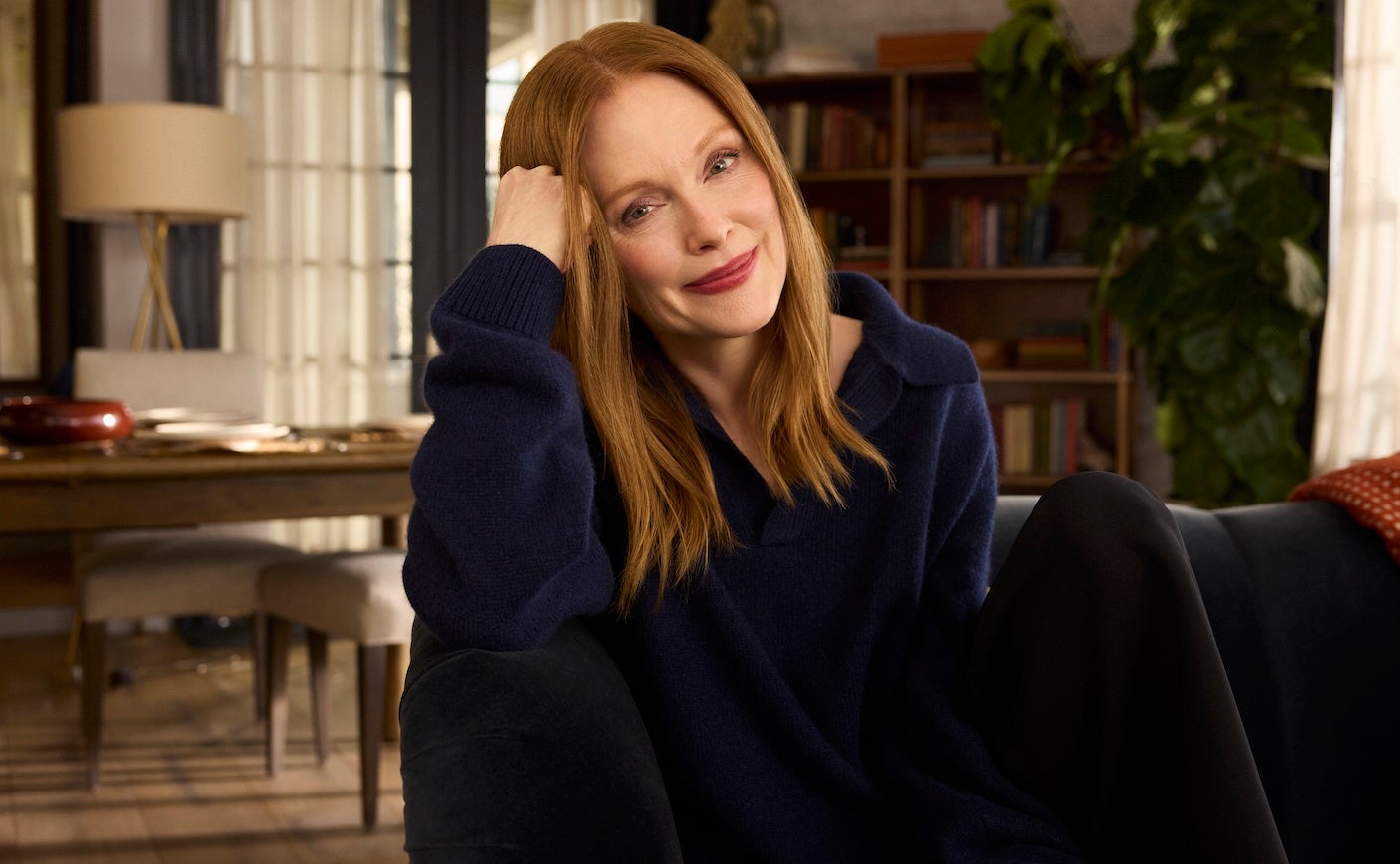
Julianne Moore has starred in everything from blockbusters like The Hunger Games to biopics (as the legendary Gloria Steinem, no less) to star-studded prestige ensemble award-winners (alongside Meryl Streep and Nicole Kidman in The Hours, for example). But the role that impacted her most acutely is from a quieter, more cerebral film: Still Alice, the 2014 drama about a woman diagnosed with early-onset Alzheimer’s disease. "I’ve made a lot of movies, but people still approach me about Still Alice because it's very personal to them — they’ve had a family member deal with Alzheimer's, or they have questions about their own health," she says.
She demurs that while she's “not an expert” on the disease, that role required extensive research. And in the years since the film's release, Moore has kept the issues around Alzheimer's close to her heart. In 2025, she even began a partnership with Eli Lilly & Company for its Brain Health Matters campaign to empower individuals to take charge of their cognitive health.
We spoke to Moore for Alzheimer’s & Brain Awareness Month about one of the more shocking trends she's learned about: Women make up nearly two-thirds of Americans living with Alzheimer’s, but with other major changes in the body occurring — like menopause or motherhood — early signs can be missed in midlife. (Lilly notes that the early indications include having trouble remembering things, thinking clearly, and interacting with others.) She suspects that phenomenon is an unfortunate result of women's selflessness: “I think women push themselves aside, especially when they’re caring for others — maybe for children or an older parent," she says. "Women have a tendency to minimize their pain. So often, women ignore [symptoms], but we have to listen to our bodies and our brains."
Moore also worries that people only start paying attention to cognitive performance when it's too late. "At 50, nobody’s thinking about cognitive decline, but we should be," she urges.
“People are shocked to hear that changes in the brain may happen up to 20 years before an Alzheimer's diagnosis. So if somebody is diagnosed at 70, that means the changes started at 50," Moore notes, underscoring why experts increasingly encourage people to look for signs of neurodegenerative disorders before symptoms appear. "We need to normalize proactive care of our brains," she says.
"People have told me that they know someone diagnosed with early-onset Alzheimer's at 60, and I have to tell them that that's not early. Making the character of Alice 50 in the film was intentional — to send the message that it can happen that early," she recalls.

Moore admits she wasn't always this on-the-ball, but in recent years she’s become more cognizant of protecting her brain and body. “I know now what I need to eat to feel good — like how much protein I need, and that processed foods make me feel sick," she notes. “Recently, I’ve finally gotten consistent with strength training, and I still do yoga." She also walks a lot. "I live in New York City, and I don’t like to be in a car. I like to take the subway — I like to move.”
For cognitive health, in particular, Moore has learned the importance of challenging the brain in new and engaging ways — a recommendation echoed by the 2024 Lancet on dementia prevention, which emphasizes staying cognitively, physically, and socially active in midlife and later life. “You want to keep learning new things, traveling, meeting new people — all of those things matter," she says.
But Moore insists the work has to be proactive, not reactive. “We often don’t take something seriously until it affects us personally,” she says. “But with brain health especially, it’s so important to start earlier.”
