






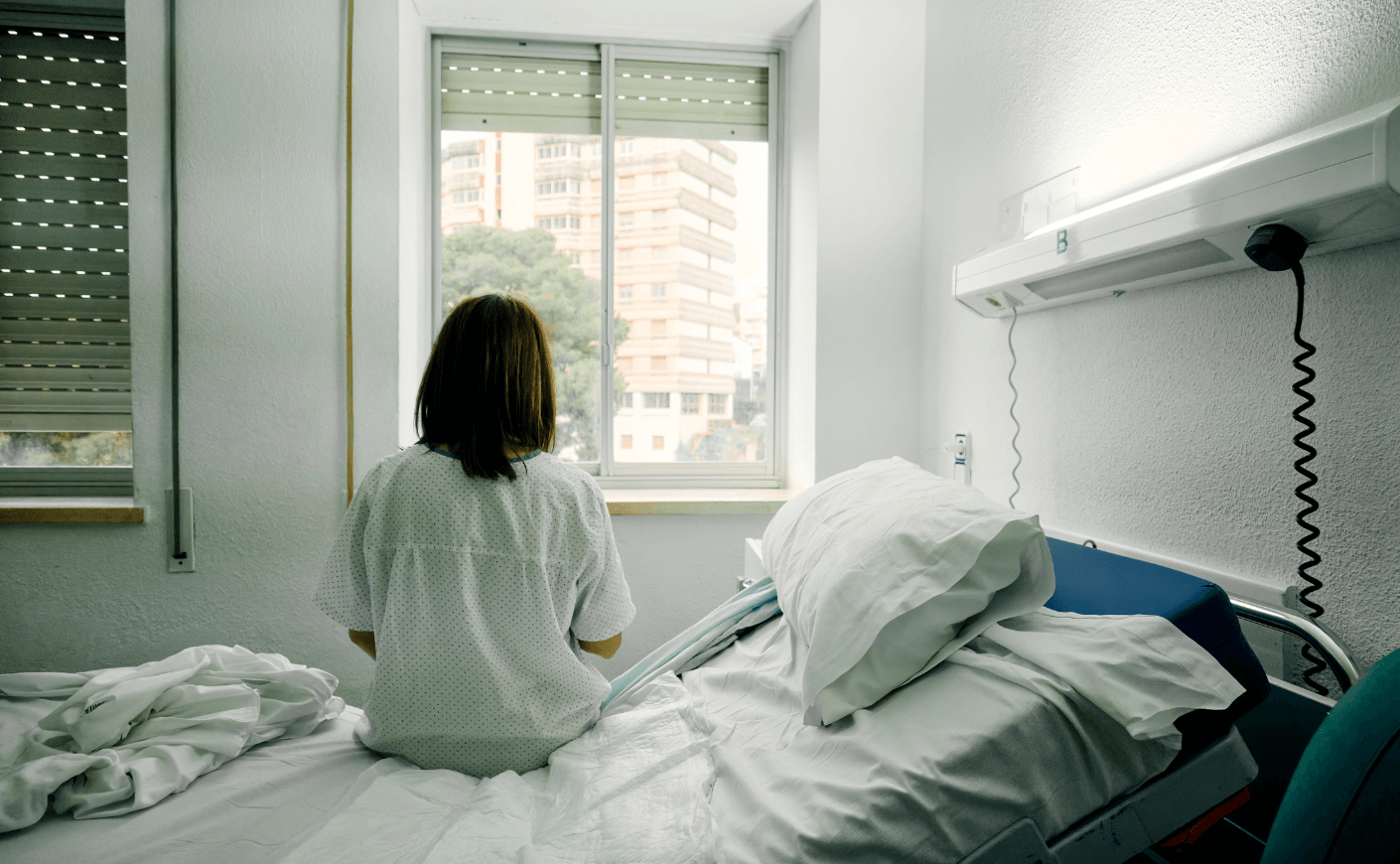
On Easter Sunday in 2017, journalist Bonni Brodnick — then a 60 year-old wife, daughter, sister, and about to be the mother of the groom at her son’s wedding — was driving on an interstate highway, when she suddenly had a massive stroke. Her mother — seated beside her — took the wheel and intentionally crashed the car into the guard rail, managing to save her life and Bonni’s.
By the time Bonni got to a hospital, she could not walk or talk, and had no idea where she was or how she'd gotten there. But her son’s wedding was just eight weeks away, and she was determined to attend. I sat down with Bonni recently, to discover the before and after of her harrowing, and heartwarming, story or resilience and recovery.
What did a “normal day” in your life look like before the accident?
I was working on a documentary at the time, and we were getting accepted into film festivals around the country. It was very exciting. My marriage was great, and my children were successfully launched. I felt like my husband and I were two baby boomers enjoying the ride. Then, bam — my life changed in a millisecond. I had absolutely no warnings, no obvious symptoms of a stroke.
Take me to that moment.
I was in the car with my mother and we were chatting about my son, who was getting married in only eight weeks. Then my mother noticed I wasn’t responding — I was mesmerized by my right hand, which was trembling on top of the steering console. Meanwhile, the car was barreling down the interstate at 65 mph, starting to veer into other lanes. She screamed, “Bonni!” But my gaze was fixated on my hand.
In the distance, I could hear my mom shouting, “Pull over, pull over, Bonni!” but I couldn't move. She rolled down the window, her arm flailing, and screamed, “Help us!” But no one stopped. Then my mother reached toward me and made one of the most heroic, daring, and courageous moves of her life: She grabbed the wheel and steered to the right. The car bounced off the guardrail a few times before coming to a stop, with the holiday traffic streaming past us.
I had become one of the 795,000 people in this country, in this year alone, to suffer a stroke.
You woke up to an unidentifiable new reality: unable to walk, talk, or move much at all. How did you come to realize you’d had a stroke?
It was 72 hours post-surgery — the doctors had removed a blood clot from my brain, in what's called a thrombectomy. It’s like a fishing excursion where the "rod and net" wind their way through the groin, and eventually into the brain. The clot was so large that they had to make five deployments to trap it.
After surgery, I was half-conscious and in a thick morass of fatigue. I felt a feeding tube in the back of my throat, and when I tried to speak, it felt like I was choking. I gazed around the room and saw flower arrangements on the window shelf. I still had no idea what had happened to me.
Andrew, my husband, began reading the message cards on the flowers: “Get better soon!” “Good luck! We love you.” “So sorry you had a stroke.” That was how I learned the reason why I was in bed with doctors and nurses hovering around me, and my family staring at me.

What did despair actually look like day-to-day? Anger? Grief? Denial?
Once I was more conscious of my situation, I felt betrayed by my body, and I felt real grief. Everyone was used to seeing an energetic, attractive, and fun Bonni, so I was ashamed in front of friends and the rest of my family — for them to see me in such a state of weakness and vulnerability. I knew I had to get better.
Did you ever think, I may not come back from this?
Lots of times. I couldn’t use my right hand, and it was frustrating to use my left hand for everything: brushing my teeth, combing my hair. Also, my optic nerve must have been damaged, because my eyes were oversensitive to colors and shapes. And things were distorted — people looked like cartoon characters, with elongated chins that stretched down to their chests.
My tongue felt so heavy, and my voice was weak. I'd have to call to order my meals and invariably, the person on the other line would ask me to speak up; I’d cry practically every time I hung up. Everything was so frustrating. I was given a walker to keep steady, and “FALL RISK” was written in bold red letters on every whiteboard around me. Physical therapy was exhausting, and there were many times when I felt too dizzy to continue. The simple act of tying my shoes or getting up and down from a chair was so hard.
Occupational therapy to the rescue, right? But no. There were a lot of monotonous exercises that I could have easily done in the past, but now my body couldn't handle them. There was one pegboard where I had to move the red pegs next to the yellow ones, but I couldn't connect the "dots," mentally, and my hands were too shaky to move the pegs. Or there was an exercise where I had to simulate eating soup with dried black beans and a spoon. Not pretty.
What was the turning point? When did perseverance become a conscious choice?
The turning point really came after my surgery, when I left the neurological ICU for the critical care unit. I remember staring at the ceiling as they wheeled the gurney down the hall, watching the overhead lights. My room had a window, and the nurses had lined up all the vases of flowers I'd received on the windowsill. The enormous outpouring of support gave me the strength to persevere. By now, the get-well cards began to arrive, too. This constant flow of flowers and cards reminded me to stay with it, keep going, don't give up.
How did you relearn your speech, movement, and independence?
Relearning the basics slowly, like speech and movement, was excruciating. I was so used to being independent, and I yearned to show how independent I was. For example, one of the first nights we had a family dinner at home, I banned everyone from the kitchen. I didn’t want them to see me struggling. For stability, I leaned against the sink while washing vegetables. Using the knife to slice and chop was a joke.
One of my small early victories was the two-person physical therapy team asking me to walk to the bathroom door with the walker. I tried but was too weak and dizzy. They said we would try again tomorrow. The next day, I made it to the bathroom door. The following day, I reached the door to the room, and finally, the mighty task: the hall! With each step, I was getting stronger. I kept saying to myself, “I can do it. I can do it.”
How did your family hold you up during recovery?
My family — my son, daughter, husband, brother, and sister-in-law all showed great patience with me. Everyone chipped in by doing their part. My sister took over, giving friends and family updates about my setbacks and accomplishments on an email chain.
When I came home from the two-week stay at the acute in-patient hospital, I panicked. Who would give me the correct meds, and when? My artist sister created a color-coded simple drawing and put it up in my bathroom. Even that was too confusing: My weakened brain was having trouble grasping even the simple things.
Annaclaire, my daughter, was a med student at the time. She was on summer break, which precisely matched the time I needed her most. For the next five weeks, she fed me high-protein meals and snacks. I didn’t have enough physical coordination to drive yet, so my daughter ended up driving me everywhere. My husband was, and continues to be, my intrepid champion and loving companion.
Your son was about to get married only eight weeks after the accident — what did that mean to you?
His wedding was the beacon of my recovery. Luckily, I had earlier selected the beautiful, designer dress, coordinated the jewelry, and the kitten-heel pumps were ready to go. All I wanted was to walk David down the aisle and have the mother/groom dance without a walker. I lived for that day.
What is it that people don’t understand about stroke recovery?
A stroke can happen at any time, any age. People need to be patient with themselves and understand that recovery can last a lifetime. With neuroplasticity, if you put in the hard work, you can recover forever.
Which was harder, the physical or cognitive recovery?
Physical, for sure. People say I look fine: I may not have a clubbed hand, drooping face, or severe problems with walking. But I still have lingering mild aphasia (you should see me order something in a busy restaurant setting.) I try to hide my right-side weakness, the major tilt way over to the right when I’m tired, and my vision can create ghost images hovering over solid images. Reading is with double-vision, no matter which prescription I’m given for my eyeglasses. Those are a few things I accept because I had a stroke. If I flip it and say, “I’m a badass warrior stroke survivor,” I feel better about the ongoing physical struggles.
Take us to the wedding, and the emotional weight of that day.
A child's wedding is always a big deal. But the fact that I almost missed it and died in a car accident was a huge emotional weight for me, and let’s face it, for the guests as well.
You decided to write a book, My Stroke in the Fast Lane — why go public with your story?
I wrote the book because, as a writer, I wanted people to know what it was like to be in the body of someone who had a stroke. I wanted them to understand the fear, the anxiety, the frustration, and the joy of accomplishment, like how proud and happy I felt one day because I was able to control my hands enough to tie a bow on my sneakers.
Even the fact that I’m here talking to you about my journey to recovery is a miracle.
Was writing the book part of your healing?
In my book talks, it's very healing to hear that my ongoing recovery inspires people on whatever journey they are on.
Who are you now vs. who you were before?
I’ve always been a positive person, but this experience has made me really appreciate every single little and big thing. I remember well what it was like when I couldn’t walk or talk, and was bed-bound in a hospital. I want to be grateful for everything this body can do. Even the fact that I’m here talking to you about my journey to recovery is a miracle.
How has your survival become advocacy for the American Heart Association?
Being on the razor-thin edge of life, and surviving, I realized how important awareness, rapid treatment, and rehabilitation are. Sharing the story of my recovery naturally led me to advocacy work with the American Heart Association.
For over 100 years, the AHA has been dedicated to groundbreaking research, public education, and community programs. If the hospital I went to hadn't been on the cutting edge of research and thrombectomies, my stroke would have been devastating. To date, this amazing organization has raised more than $6 billion for heart disease and stroke research.
Why do prevention and awareness matter so much when it comes to heart disease?
Heart disease is the number one killer of women worldwide, even over cancer. And women have been left out of research, testing, treatments, and funding. Many heart problems develop quietly over the years, often without serious symptoms. But lifestyle changes can make a huge difference: It's crucial to have habits that keep your heart strong and lower your risk of heart disease and stroke. Eat well, stay active, get plenty of rest, manage stress, don’t smoke — and see your doctor and cardiologist regularly.
What would you tell someone who's currently in the darkest moment of recovery?
Never give up. In my "new" life, it takes an absolute and deliberate commitment to be tenacious, perseverant, relentless, and focused. And even if I’m not feeling particularly positive on one day, I say I am. That assertive discipline keeps negativity at a distance.
My mantra is: “I can do it!” Believing in those four words has helped me get to where I am today, a proud stroke survivor.
Nancy Steiner is a career/life coach with a practice called What Comes Next Coaching with Nancy Steiner. You can also connect with her on LinkedIn right here.
