






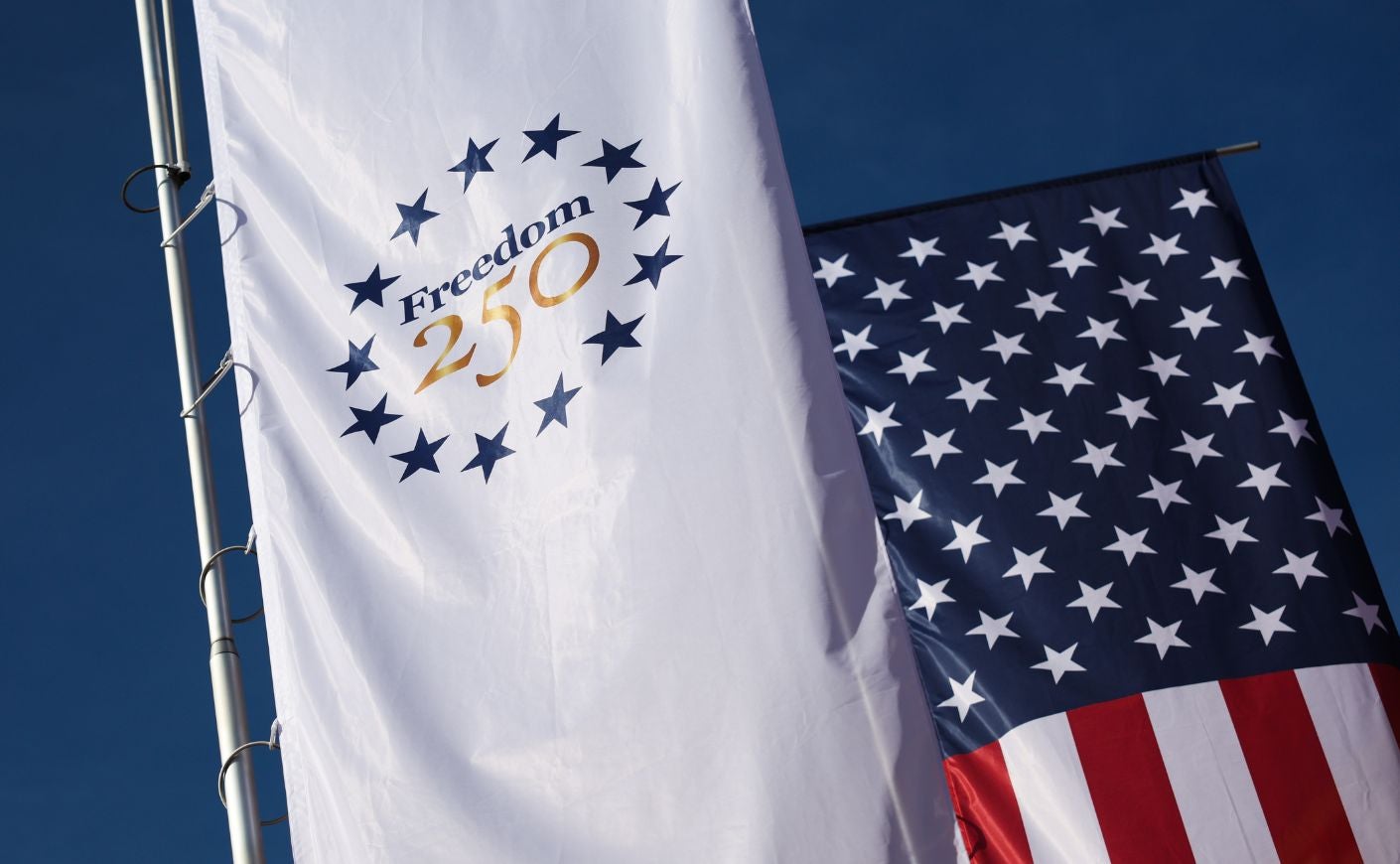
What was supposed to be a star-studded celebration of America's 250th birthday has instead become a source of controversy.
Last week, Freedom 250 unveiled the lineup for its Great American State Fair on the National Mall, touting performances from a mix of rock, country, hip-hop, and pop acts as part of the nation's semiquincentennial celebration. But within days, several artists began backing out, saying they were unaware of the event's ties to President Trump and his administration.
The cancellations have thrust new attention on Freedom 250, a nonprofit helping organize many of Trump's signature anniversary initiatives, which was already facing scrutiny over its fundraising practices and relationship with the White House. Here's how a patriotic celebration became a political flashpoint.
What is Freedom 250?
Freedom 250 is a nonprofit organization launched by Trump through an executive order in 2025 to help shape celebrations marking the 250th anniversary of American independence. While the group describes itself as nonpartisan, it is led by businessman and philanthropist Keith Krach, who served as a senior State Department official during Trump's first administration.
The initiative operates separately from America250, the bipartisan commission created by Congress in 2016 to oversee the nation's official 250th anniversary observance. While both groups are planning events leading up to July 4, 2026, Freedom 250 has emerged as the driving force behind many of the Trump administration's signature anniversary initiatives, including the Great American State Fair.
The fair was originally envisioned as a massive, World Fair-style celebration on the National Mall running from June 25 through July 10, featuring pavilions from all 50 states and U.S. territories, concerts, rides, food, exhibits, and patriotic programming leading up to July 4, 2026. Organizers pitched it as the centerpiece of a broader effort to celebrate America's 250th birthday.

But the timing has also drawn scrutiny because several marquee Freedom 250 events are scheduled around Trump's birthday. The president is slated to kick off the Great American State Fair on June 24, days after his June 14 birthday, and other anniversary-related events have been tied to the same period. The overlap has fueled debate over whether the celebrations are focused on the nation's 250th anniversary, Trump's presidency, or both.
Why are artists dropping out of the Great American State Fair?
Several performers have withdrawn from Freedom 250's planned celebration on the National Mall, saying they believed they had signed on for a nonpartisan event marking America's 250th anniversary — not one tied to political controversy.
The first major departure came from hip-hop artist Young MC, known for the hit "Bust a Move." Since then, The Commodores, Poison frontman Bret Michaels, Prince collaborator Morris Day and the Time, and country singer Martina McBride have also withdrawn.
In social media posts explaining their decisions, several artists suggested they felt misled about the event. Michaels wrote that what had been presented as "a celebration of our country" had become "something much more divisive" than he agreed to support. McBride struck a similar note, writing: "I was offered what I believed to be an opportunity to celebrate our nation's 250th birthday at a nonpolitical event. Unfortunately, it has become clear that this is not the case."
Freedom 250 officials have denied that the concert is political, telling NBC News that the organization is nonpartisan and “singularly focused on celebrating America’s 250th anniversary and bringing Americans together around this historic milestone.”
Not every performer is heading for the exits. Rapper Vanilla Ice has said he still plans to appear, describing the gathering as a chance to bring people together rather than a political event. "I don't even vote, so I don't even care," he told TMZ.
Questions remain about who, exactly, will take the stage. C+C Music Factory's participation has become the subject of a public dispute, with co-founder Robert Clivillés saying the official group is not involved even as former vocalist Freedom Williams has hinted he may still perform. One of the singers associated with Milli Vanilli has likewise said the group was never asked to perform despite being listed on the lineup.
Flo Rida, by contrast, remains on the bill. While several artists have publicly explained their decisions to withdraw, the rapper has largely sidestepped the backlash, responding to one Instagram user who questioned his participation with a series of laughing emojis.
How has Trump responded?
The president has responded to the event's shrinking lineup with a mix of defiance and mockery.
In a series of Truth Social posts over the weekend, Trump brushed off the artist departures, dismissing the performers who pulled out as "Third Rate 'Artists'" and insisting he could attract a bigger audience himself, even comparing himself to Elvis Presley. He then floated replacing the concert series altogether with an "AMERICA IS BACK Rally" in Washington, where he would headline the event and deliver what he described as a major speech to "rally the Country forward."
"I am ordering my Representatives to look at the feasibility of doing an AMERICA IS BACK Rally on Wednesday, Washington, DC, same time, same location. Only Great Patriots invited," he wrote.
Meanwhile, Freedom 250 organizers have sought to downplay the significance of the cancellations, emphasizing that the celebration extends well beyond the concert lineup. The group announced that Trump will kick off the festivities on June 24, while spokesperson Danielle Alvarez said the Great American State Fair will feature exhibits, flyovers, musical performances, family-friendly attractions, and other events through July 10.
Why is Freedom 250 controversial?
The artist withdrawals are only one part of a broader debate surrounding Freedom 250. The organization is helping lead several of the Trump administration's highest-profile semiquincentennial projects, including the May 17 prayer rally held on the National Mall and a proposed UFC event on White House grounds.
In February, Democratic Sens. Adam Schiff and Elizabeth Warren launched a congressional probe after a New York Times report found that donors who contributed $1 million or more could receive perks including invitations to a private dinner hosted by Trump, VIP access to anniversary events, and other exclusive benefits. The lawmakers said the arrangement raises concerns about donor influence, transparency, and the use of public resources to support a privately run initiative.
The scrutiny intensified in May when the watchdog group Public Employees for Environmental Responsibility sued the Department of the Interior, alleging the agency failed to release records related to Freedom 250 in response to Freedom of Information Act requests.
"America's 250th anniversary celebration is supposed to be an occasion for strengthening public trust in our democratic institutions, not eroding it," said PEER Executive Director Tim Whitehouse in announcing the lawsuit.
Freedom 250 has rejected those concerns, saying its goal is simply to celebrate America's 250th birthday. But as artists withdraw, lawmakers seek answers, and legal challenges pile up, the organization has found itself at the center of a broader debate over who gets to shape the nation's historic milestone.
