






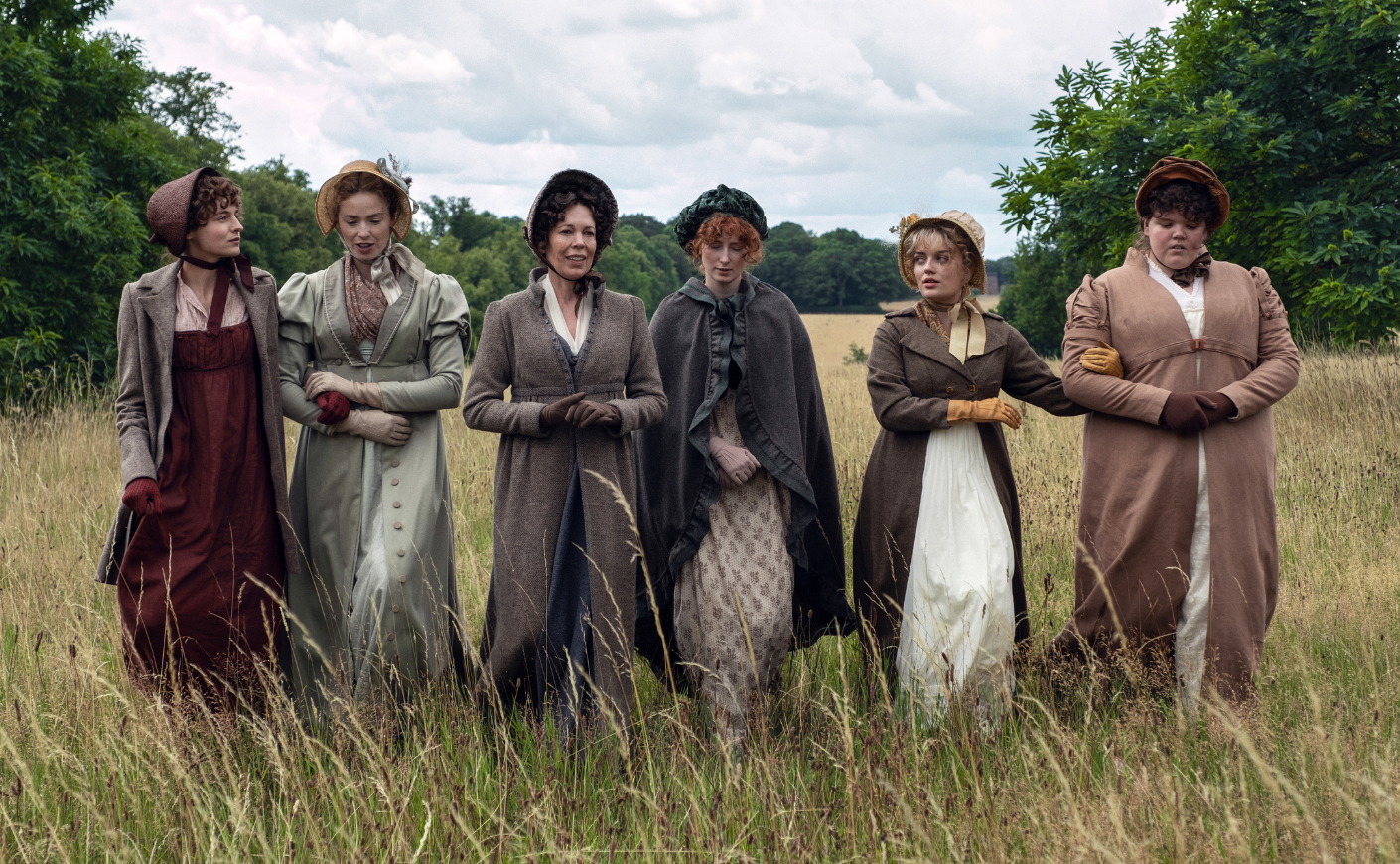
Classic literary heroines are having a moment. With Margot Robbie starring as Cathy in February’s much-talked-about Wuthering Heights adaptation, Emma Corrin taking on the role of Lizzie Bennett in Netflix’s Pride and Prejudice series, Daisy Edgar-Jones headlining a new Sense and Sensibility flick out this fall, and Aimee Lou Wood starring as Jane Eyre in a television adaptation of the novel, the classics — particularly those written by women — are no longer solely the domain of high school English syllabuses and libraries. Even the hosts of the New York Times podcast The Book Review declared their resolution to read more classics this year, rather than dedicating their reading time to new releases.
Authors are getting in on the act too, reimagining many of these same stories and bringing them to new — and often very large — readerships. Think Layne Fargo's USA Today bestseller The Favorites, an ice-dancing do-over of Wuthering Heights that’s recently been optioned by Netflix; or the inaugural selection for Reese Witherspoon’s new YA book club, Beth is Dead, which reimagines Little Women with a side of murder. My own novel, The Chateau on Sunset, is a Jane Eyre story transported to the gothic Chateau Marmont hotel in Hollywood’s Golden Age. All are women-authored, all are reworking women-authored classics — and all are being devoured by readers.
What's going on? Why are these stories, whose plot beats and endings are familiar to so many, commanding such attention in the Digital Age?
Hot take? The popularity of romantasy books — set in a fantastical world, where a love story is central to the plot — including such blockbusters as Sarah J. Maas’s A Court of Thorns and Roses and Rebecca Yarros’s Fourth Wing, has something to do with it. It might seem like the two genres couldn’t be more different, but romantasy has trained us, for one, to root for the morally gray hero. In the classics, that might look like Heathcliff imprisoning a young woman in his home in a fit of selfish passion. What’s more, Wuthering Heights is the epitome of a story centered around the fated mates trope, where two people are destined to be together because of a bond that defies even the finality of death, a trope revitalized by the romantasy genre.
Plus, romantasy has primed us to enjoy fantastical elements in a book. Pride and Prejudice and Little Women, whether on the page or the screen, allow us to explore their own kind of fantasy. In this case, it’s a woman who overcomes all the obstacles in her path, oftentimes bucking societal conventions, to achieve the one thing she’s always wanted. In today’s world, where women’s rights are being eroded, that’s a powerful message. It doesn’t matter if the one thing we want is different from what Lizzie Bennett wants — in her case, an intelligent (and wealthy!) man to marry — readers glean hope from seeing her triumph over Wickham, the wrong guy, and find her happily ever after. In The Chateau on Sunset, readers can live vicariously through Aria, the Jane Eyre character, who sets fire to the Hollywood casting couch, igniting an inferno that burns down all Weinstein-like men in its path. If only!
Romantasy novels have reminded us how much we love fierce heroines. Yes, there are strong women to be found in other genres, but fierceness is different — fierceness is strength buttressed by wild fury, and it’s almost compulsory in the romantic-fantasy mash-ups crafted by the likes of Maas and Yarros. The women in both Austen’s and the Brontë sisters’ classic novels don’t swoop into battle on the back of a dragon with a knife in hand as they do in Yarros’s stories; instead, they use their ferocious voices when it matters most. Who can forget Lizzie Bennett telling Darcy that he’s the “last man in the world whom I could ever be prevailed upon to marry”? Who didn’t cheer aloud at the bravery it took for her to do that at a time when women were supposed to just nod and say yes?

And what about poor, penniless Jane Eyre, in an era when feminism was at least a century away from gaining any traction, declaring to Rochester that she was his equal, that “I am no bird; and no net ensnares me”? Who didn’t love the unapologetic, almost relentless, ambition of Kat Shaw in Fargo’s novel The Favorites? Haven’t we all wanted to declare our independence or our dislike of a man in our past, or to chase after what we desire without being made to feel unwomanly?
All these books could only have been written by women because only a woman can understand the fierce desire in our hearts to speak up, to take action, to stop apologizing. The power in these novels and screen adaptations is all woman, and we’re here for it.
So, for those who think the resurgence in interest in the classics is simply because, in their known plotlines and characters, we find comfort and familiarity, I say: that’s not the whole story. These new adaptations offer us access to fantasy, and who doesn’t want to escape from this world and into another realm from time to time? They remind us to speak out. And they also show us that we can dream and we can hope — and, more importantly, if we use our own ferocious voices, we have the power to make our dreams and our hopes come true.
Natasha Lester is a New York Times bestselling author whose novels have been translated into 21 languages. Her forthcoming novel, The Chateau on Sunset, will be published by Ballantine Books on June 2, 2026. A former marketing executive for L’Oréal, she lives in Western Australia with her family.
