






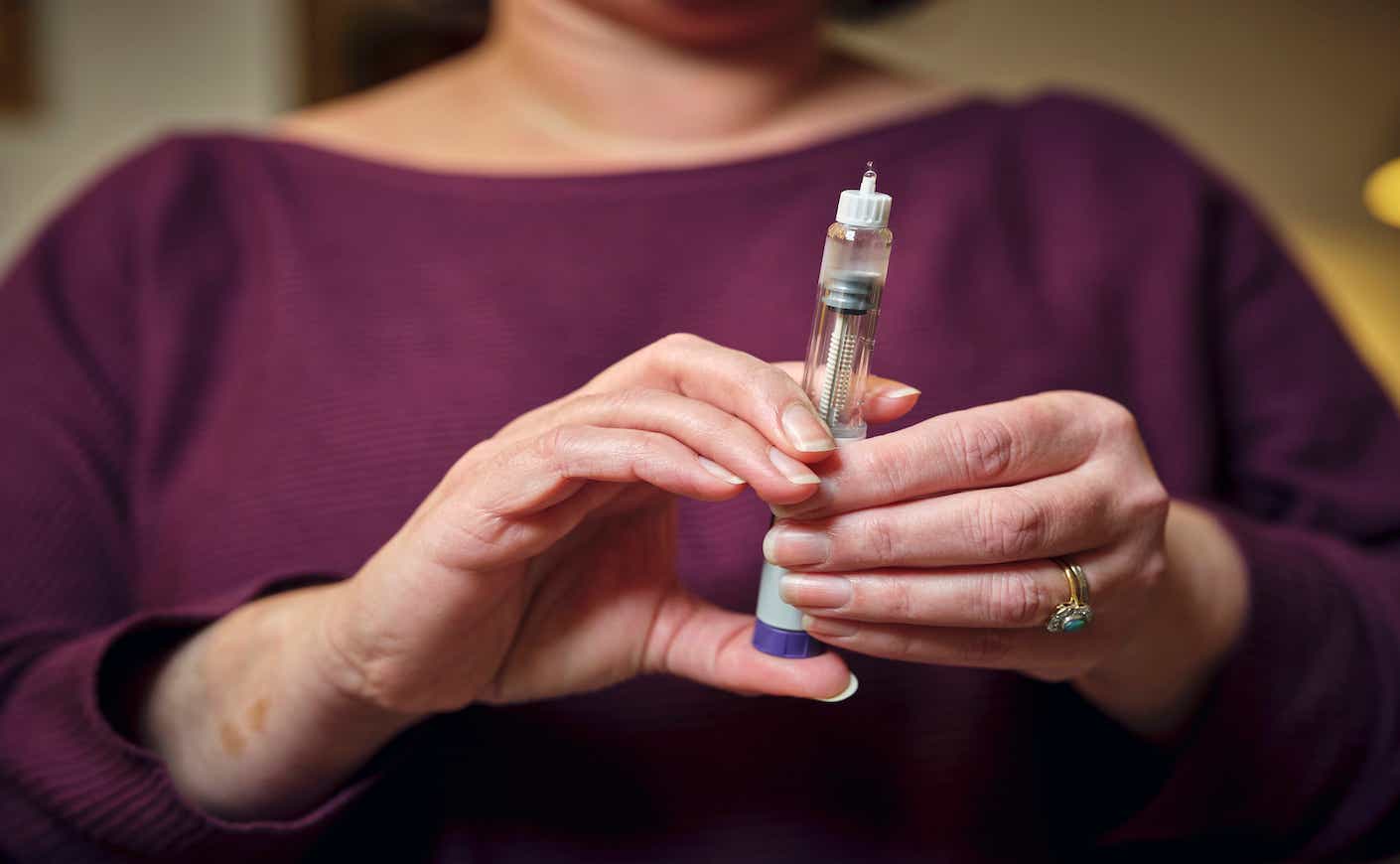
Last month, a woman came into my exam room for her annual physical. She's 53 years old, healthy, and active; she works full-time and takes care of her aging parents. Midway through our conversation, she said she wanted to talk about weight loss medication.
I asked what her goals were. She paused. "I don't really know," she said. "But I keep seeing these ads, and everyone's talking about it. I feel like maybe I should try it."
That conversation has stuck with me because she couldn't tell me why she wanted it. Wanting to lose weight is one of the most common things patients bring up, but these medications have become so commonplace, almost trendy, that simply getting on one has become the goal itself.
According to a recent KFF poll, one in eight American adults says they are currently taking a GLP-1 drug. The age group reporting the most usage was 50-64. At the same time, a study published in 2024 in the International Journal of Eating Disorders found that GLP-1 medications could exacerbate or contribute to the development or treatment of an eating disorder. As a physician, I can't help but connect the two and worry about how that might show up among my older patients, like the 53-year-old who inquired about GLP-1s for seemingly no reason other than it being marketed to her.
An often-missed population at risk of eating disorders
Eating disorders affect more than 30 million people in the United States. When most people picture someone with an eating disorder, they think of a teenager, often a young white woman.
But research shows that 13 percent of women over 50 have symptoms of disordered eating, and that number is rising. It makes sense when you think about what's happening at this stage: menopause changes your body in ways you can't control, your metabolism shifts, and weight that used to come off easily doesn't anymore. You're dealing with hot flashes, sleep problems, and brain fog. The overwhelm alone could trigger disordered eating, especially if you've battled it before. Now, there's a new lure, and it's heavily marketed to all populations. Brands spend hundreds of millions of dollars a year promoting GLP-1s, through celebrity transformations, before-and-after photos, and social media posts that framed dramatic appetite loss as a win rather than a potential weapon.

The message lands especially hard on women my age and older. We're told that aging bodies are problems to solve, that menopause-related changes are something to fix, that there is a pharmaceutical solution to what time has "done" to us.
This is hard to admit, but the truth is, we're trained to miss eating disorders in older women.
In medical school, the eating disorder cases we studied were almost always young white women. The textbooks showed underweight teenagers. The "classic presentation" we learned was anorexia in a high-achieving college student or bulimia in someone in their 20s.
So when a woman in her 60s talks about skipping meals, I might think she's managing her blood sugar. When she mentions exercising two hours a day, I might congratulate her on staying active. When she says she's not hungry anymore since starting a GLP-1, I might simply note it as a side effect. In older women, eating disorders can look like health consciousness and discipline during a difficult life stage.
Black teenagers are 50 percent more likely than white teens to have bulimic behaviors, but they're half as likely to be diagnosed or receive treatment. The same pattern holds for Black women as we age. We don't fit the picture doctors were trained to look for.
What GLP-1s have changed for eating disorder recovery
GLP-1 medications like Wegovy and Ozempic work by suppressing your appetite and slowing digestion. For people with diabetes or obesity, they can be genuinely helpful, and I've seen patients whose health improved dramatically.
But I've also seen something else. Women who spent their 20s and 30s fighting disordered eating, who finally made peace with food in their 40s, are now in their 50s and 60s, facing a new temptation: pharmaceutical appetite suppression. The control they worked so hard to let go of is suddenly available again, prescribed by a doctor, covered by insurance, and celebrated on social media.
My recently retired 64-year-old patient taking one of these medications told me she feels "in control" for the first time in years. She didn't initially recognize that the feeling she was chasing, the same feeling that had nearly destroyed her 30 years ago, was back, wearing a new name and a prescription label.
My recommendation
The fix isn't simple, but some parts are clear. Medical training needs to reflect the reality that eating disorders affect people across all ages, races, and backgrounds. Insurance companies should cover treatment, not only emergency intervention, when someone is already in crisis.
If something feels off, trust that. You know your body. You know when "healthy choices" start to feel like something else entirely. You know the difference between taking care of yourself and punishing yourself:
You start skipping meals to maximize results. You find yourself weighing in multiple times a day. You talk constantly about how little you're eating, with a mix of pride and anxiety that feels familiar in an uncomfortable way. You combine the medication with extreme calorie restriction that goes well beyond what's medically appropriate.
The physical signs matter too: dizziness that persists, hair loss, fatigue that interferes with daily life, and worsening muscle weakness.
You don't need to be in crisis to reach out, and you don't need to have all the answers before you make the call.
The National Alliance for Eating Disorders offers free virtual and in-person support groups, help finding providers, and a helpline staffed by people who will actually talk with you at allianceforeatingdisorders.com or 1-866-662-1235. The National Eating Disorders Association offers screening tools and provider directories at nationaleatingdisorders.org. And for those looking for culturally specific care, the BIPOC Eating Disorders Conference, founded by a psychiatric nurse practitioner and registered dietitian alongside a licensed dietitian nutritionist, maintains a directory of Black, Brown, and Indigenous specialists at bipoceatingdisordersconference.com/bipoc-providers.
And if you want to turn your connection to this topic into something more, in March 2027, a national advocacy summit is coming to New York City, bringing together leaders and advocates across medicine, research, policy, and media to develop real, actionable solutions around eating disorders. It's being organized by ALIGN33 Media, founded by a filmmaker with lived experience of an eating disorder, who is building a national platform focused on transforming how eating disorders are understood, treated, funded, and prevented. If this conversation resonates with you, that may be a room worth being in.
Bayo Curry-Winchell, MD, MS, is a board-certified family medicine physician, nationally recognized health advocate, and the founder of ClinciansWhoCare.com, a free resource for finding clinicians who truly listen and care. She is also the host of the Beyond Clinical Walls podcast that helps patients understand their health and navigate the healthcare system. To learn more, visit DoctorBayo.com.
