






Living in a rural area, close to the land, in rhythm with the seasons, and under a wide-open sky: this is a way of life many of my friends and neighbors in Genesee County understand. And it's a life they appreciate and, equally, feel a responsibility to protect. That sense of responsibility isn’t about any one task, but about the ongoing labor of paying attention, planning, and imagining.
We also feel that sense of responsibility when it comes to defending the place we live, especially when we recognize an injustice. And we're seeing this right now, as locals are speaking up and speaking out against a massive proposed data center complex that threatens our home.
In this age of AI, data centers are popping up in communities around the country. STREAM U.S. Data Centers proposes to build the state’s largest one at the WNY Science and Technology Advanced Manufacturing Park (STAMP) mega industrial site in Alabama, NY.
Data center developers, seeking "empty" land where they can build quickly, are targeting rural communities intentionally: They seem to expect these communities will present minimal opposition, allowing them to skirt precautions and accountability. This positions developers to leverage public goods, such as water and electricity, in order to generate private profits while harming our local environment, our health, and our way of life.
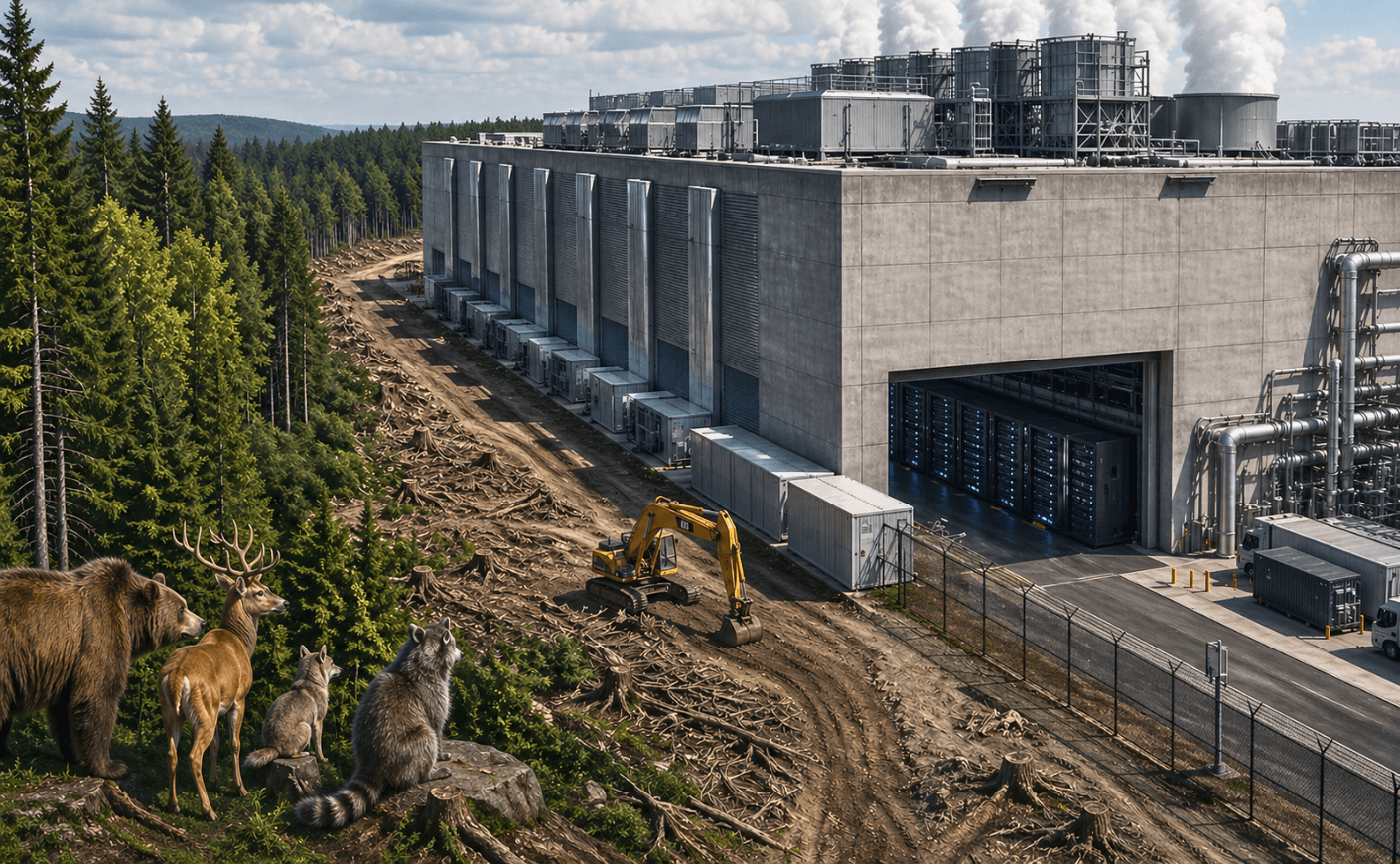
At this point, the impacts caused by data centers are well-known. They are resource-intensive, typically requiring vast amounts of electricity and water. They create 24/7 noise, including low-frequency sound, which affects both human and ecological health. Their generators spew air pollution. They produce large quantities of e-waste, which contains dangerous heavy metals. Their footprints create vast expanses of impervious surface, increasing runoff and causing flooding, erosion, water pollution, and long-term impacts to the local geohydrology. They suck electrons from the grid, causing increased blackouts and brownouts and leading to consumer rate increases. They are associated with the "data center heat island effect," which can impact ecological functioning within a 7-10-mile radius. They create very few jobs and have short lifespans, usually lasting only 10-15 years before they are mothballed.
Near where I live, STREAM is attempting again to build a data center at STAMP after withdrawing its initial application in response to a lawsuit by the Tonawanda Seneca Nation and the Sierra Club. Mere months later, in December 2025 — and now backed by private equity firm Apollo Global Management — STREAM submitted a new plan for a data center more than twice the size of the original. They're requesting $1.46 billion in tax abatements. Their first project met local opposition: since then, the opposition has only become more powerful and widespread.

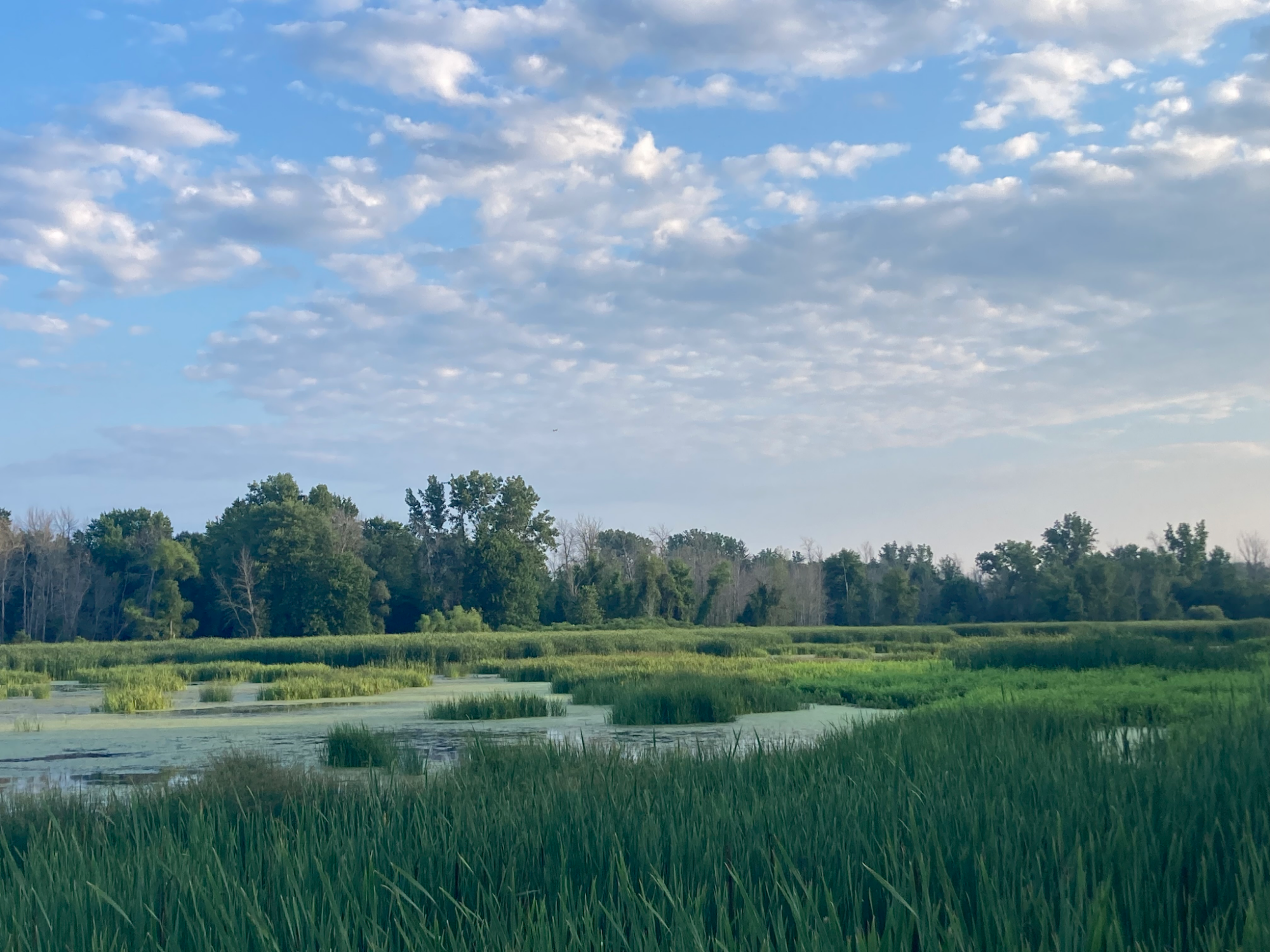
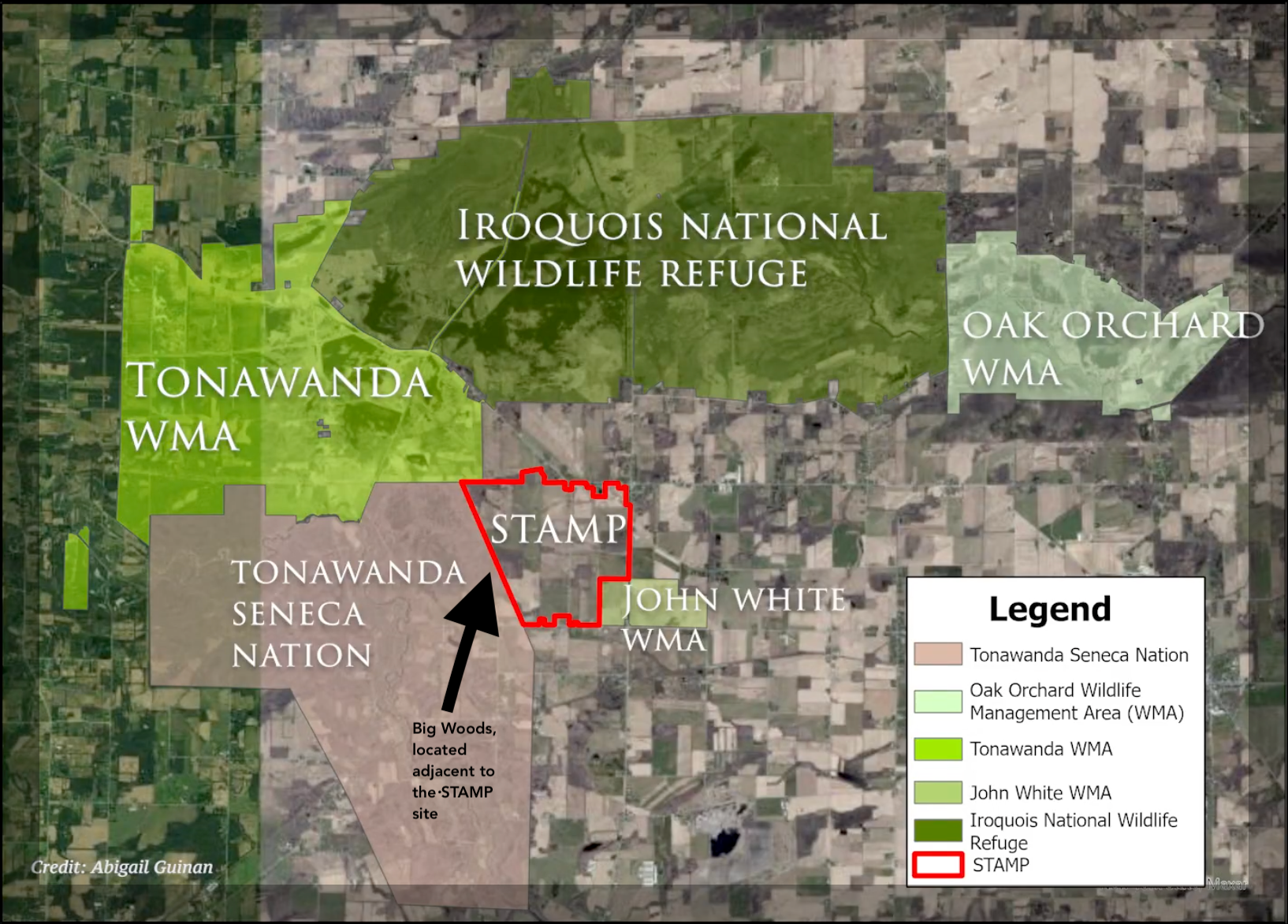
Wetlands and forest surround the proposed data center site, including the Tonawanda Wildlife Management Area, Iroquois Wildlife Refuge, and the Big Woods of the Tonawanda Seneca Nation. There's even a bald eagle nest (which you can watch online) in the Cayuga Marsh, just up the road from the site.
If approved, this data center would harm critical habitats, defying ardent opposition from more than 100 NYS social and environmental justice organizations. It would pull water from Lake Ontario via the Rochester area water treatment infrastructure despite the opposition of the Monroe County Legislature Majority Caucus, and discharge wastewater via a river that supports a $34 million dollar sportfishing and ecotourism industry. Genesee County already faces significant water infrastructure challenges without added strain from a data center. The facility would also rely on the construction of an onsite electrical substation that lacks key approvals from the NY Independent System Operator — i.e., the neutral body that manages our electrical grid. The one study on EMS service impacts from the STAMP mega industrial site was conducted in 2012, and its recommendations were never implemented. Emergency services for rural areas are often volunteer based and not designed to respond to these types of facilities.
The Genesee County Economic Development Committee (GCEDC) claims the environmental impacts are negligible and instead touts the promise of jobs and local economic benefits. This project claims the return on investment is twice the cost of the tax incentives offered. But a third-party assessment of the claimed benefits raises significant questions.
More than 200 residents attended a recent public hearing: Over the course of five and a half hours of testimony, only two people spoke in support of the center. Otherwise, speaker after speaker expressed outrage, heartbreak, fear. Residents also voiced concern for the surrounding ecosystem, impacts to utility costs, noise, light and air pollution, and increased road traffic. At a second hearing, held on April 19, local residents yet again challenged the PR put forth by GCEDC and STREAM — for five solid hours.
Many spoke in solidarity with the Tonawanda Seneca Nation, whose leaders and citizens also spoke to their right to maintain their way of life — not only for themselves but for the next seven generations. Speakers identified a general distrust around details of the planned project: an outdated environmental impact survey, lack of question-and-answer forums, no response to questions sent to the company, and a non-disclosure agreement between GCEDC and STREAM regarding the eventual Big Tech operator who will lease the facility from the developer. Who will be accountable when things go wrong?
Local residents have overwhelmingly rejected this project as yet another example of faraway corporations profiting at their expense. Shareholders who know nothing about Genesee County, and who feel no responsibility to this place, will make a quick buck while local residents are left holding the bag in the long term.
Across the country, plenty of other communities are stopping and pausing data centers. We, too, are asking that our county legislators take responsibility: wake up, pay attention, plan, and imagine. We have a right to demand future projects that are collaborative, evidence-based, and rigorous in their protection of the public resources and the spaces we hold dear.
These days, Governor Hochul is talking a lot about affordability for all NYers. Meanwhile, half of the subsidies for this project come from state tax revenue. (Research increasingly shows that tax incentives for data centers are not only controversial, but also unnecessary.) The Governor has refused to take a stance, calling it a “local issue.” Well, it’s not: This data center would raise electricity prices for all New York state residents. What if we invested these tax dollars in public goods, rather than generative AI backed by private equity?
Governor Hochul could set a powerful example by supporting New Yorkers and our shared futures — as well as the natural environment that can't consent to data-center development. Watch the eagles' nest livestream and tell me you don’t agree. Then tell Governor Hochul and all your elected representatives to stop the STAMP data center. Or demand a statewide pause on data centers entirely — and a future where people are heard over profits.
Emily Grant is a nurse and fourth-generation farmer in Western New York. A graduate of the University of Rochester, her work reflects a commitment to caring for both people and the planet.
