






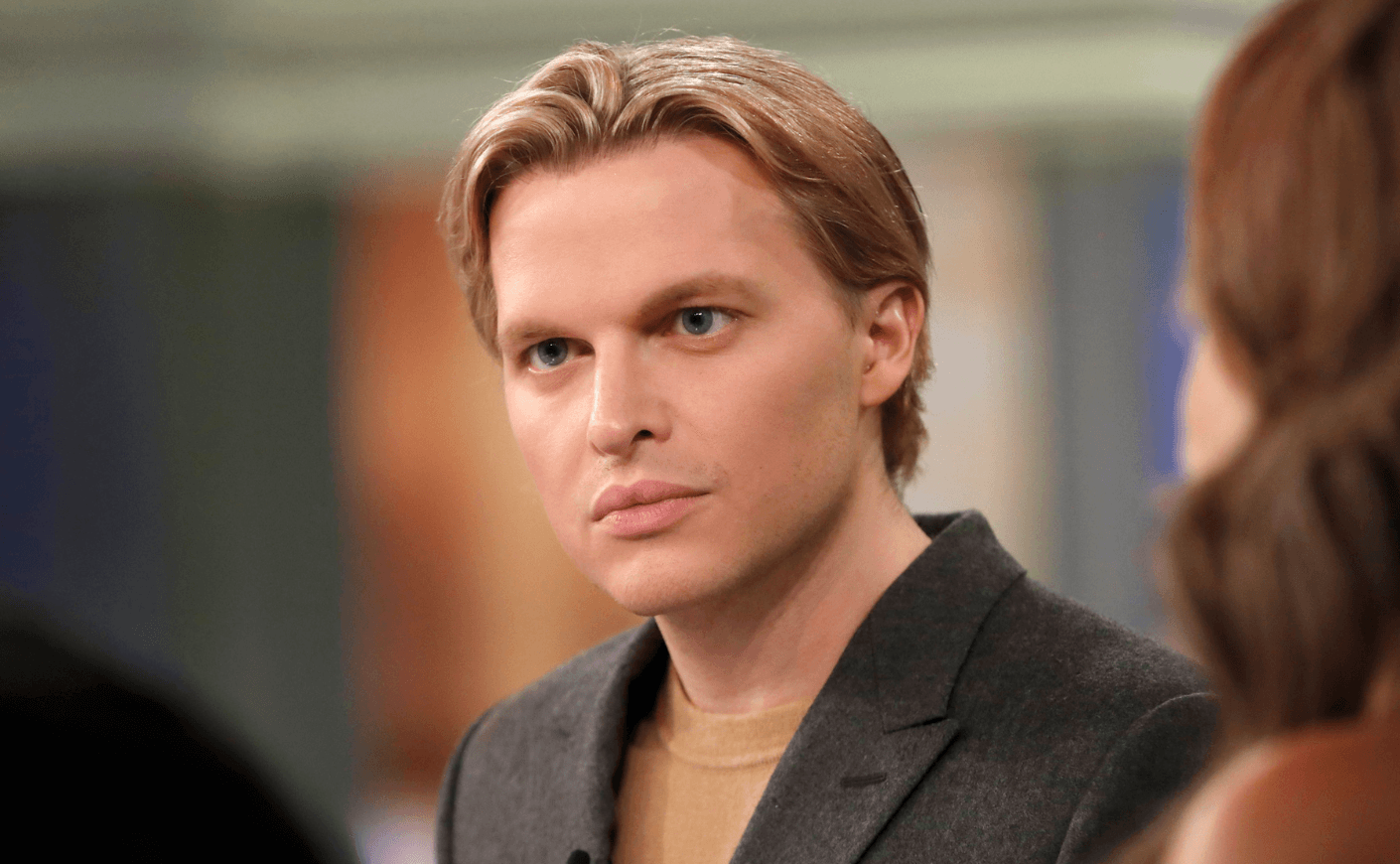
You probably know Ronan Farrow as the investigative reporter who exposed Harvey Weinstein’s sexual misconduct in 2017 — reporting that not only helped ignite the global #MeToo movement but also reshaped how institutions handle power and accountability.
Now, he’s turning his attention to a different kind of power center — one that’s less visible, but arguably just as consequential. In a new interview with Katie Couric, Farrow unpacked his latest reporting in The New Yorker, which examines the rise of Sam Altman and the broader culture shaping the artificial intelligence boom.
The real story, he suggests, isn’t just about one executive but rather what happens when transformative technology, enormous financial incentives, and limited oversight collide.
Here are some highlights from his conversation with Katie:
A more complicated figure
Altman has become one of the most influential figures in tech — a leader seen as both a visionary pushing AI forward at unprecedented speed and a lightning rod for questions about transparency, oversight, and whether the safeguards are keeping pace. With an estimated net worth of $3.3 billion, he sits at the center of one of the most valuable and fast-moving sectors in the global economy.
Drawing on interviews with more than a hundred people and hundreds of pages of internal records, Farrow paints a portrait of Altman that is at times deeply critical, and other times difficult to categorize. Some former colleagues described the entrepreneur as having “a consistent pattern of lying.” Others went further, calling him a “pathological liar,” while multiple sources used the term “sociopath” unprompted. Taken together, those accounts raise broader questions about credibility at the highest levels of an industry that is rapidly reshaping daily life.

The reporting also includes deeply personal allegations from Altman’s sister, Annie Altman, who accused him of sexual abuse — claims he has denied. Farrow presents the dispute as part of a broader effort to understand the CEO’s history and character, while acknowledging the limits of what can be independently verified.
“When my own family has been affected by allegations of sex crimes, you want to apply all due skepticism to the claim,” Farrow told Katie, alluding to the long-running, highly public allegations involving his estranged father, Woody Allen.
But Farrow's reporting resists a one-note conclusion: One former board member described Altman as someone who “believes the shifting realities of his sales pitches as he’s saying them,” suggesting something more complex than straightforward dishonesty — a leader whose narrative may evolve in real time.
That tension — between sharp criticism and a more ambiguous psychological portrait — is part of what makes the story harder to pin down, and, Farrow argues, even more important to examine.
A power struggle inside OpenAI
Farrow’s reporting zeroes in on a turbulent stretch from late 2023 through early 2026, beginning with a dramatic corporate crisis: Altman was abruptly ousted as CEO by OpenAI’s board in November 2023, citing a lack of candor in its communications with him.
The move set off days of chaos inside the company. Roughly 95 percent of OpenAI employees signed a letter demanding Altman’s return, while key allies — including executives at Microsoft — signaled support for the embattled CEO. Within less than a week, the board reversed course, reinstating him and reshaping its own leadership in the process.
For Farrow, the episode was about more than just internal drama.
“This was a moment where noble-minded people who wanted to champion the safety of this technology — and keep it as a nonprofit — ran headlong into the reality that it was becoming an incredibly valuable business,” Farrow tells Katie. “Many on the board were relatively junior and lacked experience in the cutthroat world of Silicon Valley politics. They fell silent, taking what some now acknowledge was bad legal advice not to fully explain the firing, instead issuing a euphemistic statement that he wasn’t sufficiently candid.”
The episode exposed deep internal divisions and raised broader questions about governance, transparency, and who ultimately holds power inside one of the world’s most important AI companies — tensions that have continued to ripple through the industry ever since.
“The main thing that happened here is that capitalism prevailed,” Farrow tells Katie. “There were people who didn't have persuasive arguments being made to them about the safety concerns, so profit trumped ethics.”
An industry built on hype?
Part of that story is also the culture surrounding the tech industry itself, which Farrow says is “built on hype, empty promises.”
“Valuations that skyrocket long before there’s a product that actually works for anyone,” he says, adding that we’ve entered an era where people treat a certain level of deception as “a cost of doing business.”
That dynamic wasn’t just theoretical — it played out in real time inside OpenAI, where questions about safety and transparency collided with the realities of scale, competition, and capital.
Ultimately, Farrow says his story isn’t just about one person: It’s about a system where incentives drive behavior — and where those incentives may be outpacing oversight. “When something is strongly incentivized by economics, the rest of us don't get the accountability and the oversight on the safety concerns that could affect all of us,” he notes.
The stakes, Farrow suggests, are unusually high: this isn’t just another tech cycle, but a technology that could reshape economies, information systems, and daily life. All of it points to a broader inflection point: As AI accelerates, the question isn’t just who’s building it, but whether anyone can keep them in check.
To get the full story, check out Katie's full conversation with Farrow to hear what didn’t make it into print.
