






Heart disease and stroke remain among the leading causes of death in the U.S. — a fact most of us know, and quietly avoid thinking about. But in this episode of Next Question, Katie tackles cardiovascular health head-on with Rhonda Patrick, Ph.D, a biomedical scientist and longevity researcher whose work focuses on how we can age with more strength, clarity, and independence.
Their conversation cuts through wellness noise and zeroes in on something both sobering and hopeful: Healthy aging isn’t just about adding another birthday candle to the cake every 365 days — it’s about slowing the rate at which our bodies decline. And at the center of that story is the heart.
Here are a few of the most compelling takeaways from their conversation:
The big reveal: Aging isn’t about years — it’s about rate of decline
One of the most eye-opening ideas Dr. Patrick introduces is the distinction between lifespan and healthspan.
Lifespan is simply how long you live. Healthspan is how long you live well — with physical strength, cognitive clarity, and independence. That’s why two people can be the same age but look and function very differently; it depends on how quickly their bodies are declining.
Modern biomarkers indicate that aging occurs at different rates. “That number that signifies how long you’ve been alive doesn’t actually tell us much,” Dr. Patrick explains. “What matters is how well your systems are functioning.”
The goal of longevity science, Dr. Patrick says, isn’t extending life at all costs. It’s about compressing disease into the very end of life, rather than spending decades managing chronic illness. “If disease happens at all, we want it to happen at the very, very end of our life, rather than the last 15 or 20 years.”
Genes are not our destiny
Dr. Patrick estimates that roughly 20 percent of how we age is genetic, while up to 80 percent is influenced by lifestyle and environment.
This doesn’t mean genes don’t matter. Family history can raise the risk of cardiovascular disease, cancer, or metabolic disorders. (Knowing your family history allows you to act earlier, screen more thoughtfully, and prioritize habits that matter most.) But even though some people may carry inherited risks, they can often be dramatically reduced — or delayed — through daily choices. “There are certain genes that regulate how well you handle the stress of aging,” says Dr. Patrick, “but how healthily you age really depends on your lifestyle.” Which habits regulate how well you’re aging? Dr. Patrick explains that they revolve around your diet, avoiding smoking and excessive alcohol consumption, maintaining a healthy weight, and staying physically active.
The closest thing we have to a “longevity drug”
If the episode has a centerpiece message, this is it: “Exercise is probably the most powerful thing you can do to slow the aging process,” Dr. Patrick says. “It moves the needle on cardiovascular disease, metabolic disease, neurodegenerative disease — all of it.”
She points to VO₂ max, a measure of cardiorespiratory fitness, as one of the strongest predictors of longevity. “People with the highest cardiorespiratory fitness live about five years longer than people with the lowest,” she explains — a difference comparable to quitting smoking.
The good news? Building this kind of fitness doesn’t require hours at the gym. New research using wearable activity trackers found that one minute of vigorous exercise delivered the same all-cause mortality benefit as four minutes of moderate activity. “You don’t want all your exercise to be at a pace where you can hold a conversation,” says Dr. Patrick. “You want moments where your heart rate is really up — where you’re working.”
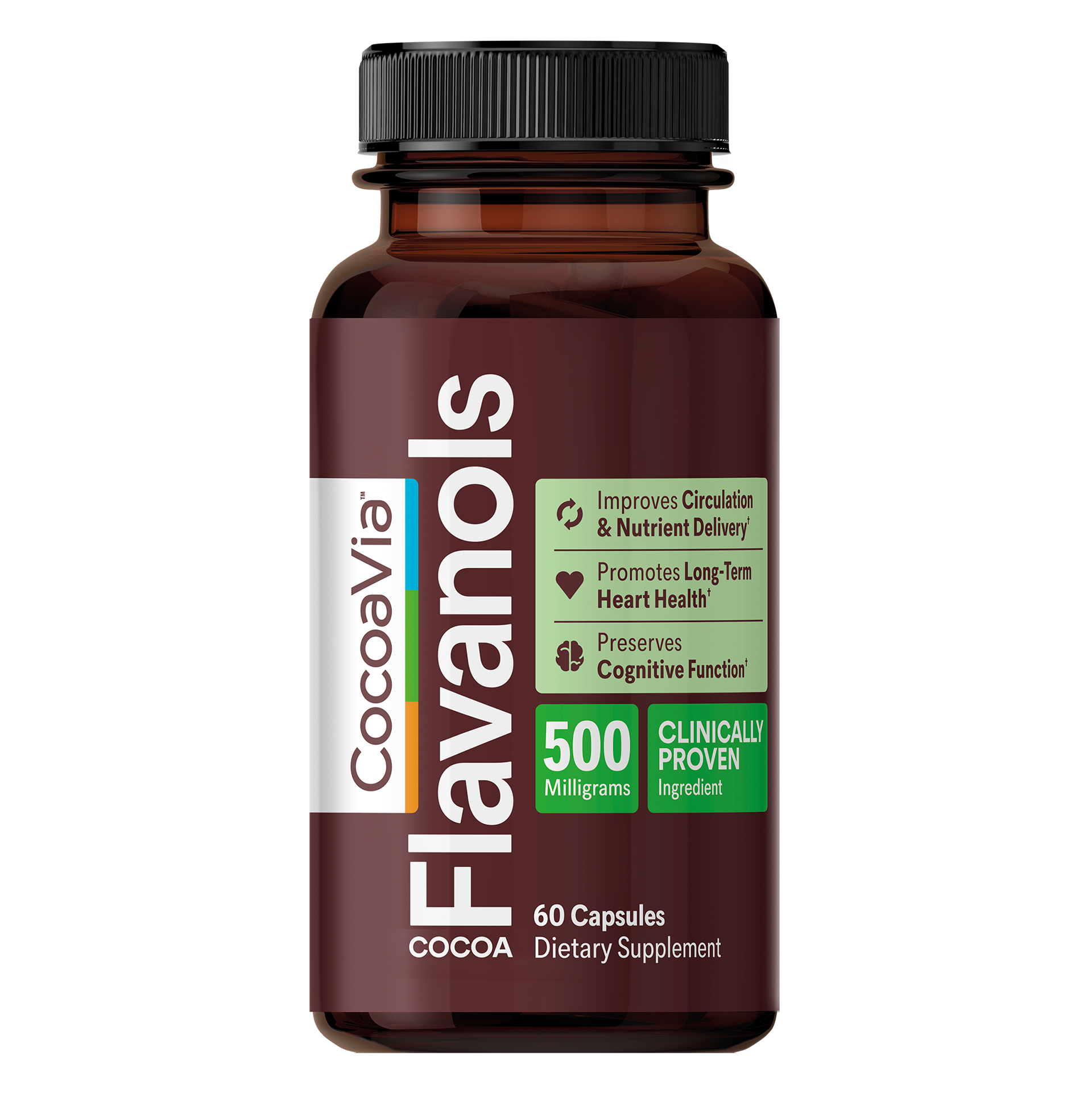
Those short bursts — jogging, spinning, interval training, even sprinting around with kids or pets — pack an outsized return. But cardiorespiratory fitness isn’t only about pushing harder; it also depends on how efficiently oxygen moves through the body. Cocoa flavanols, plant compounds naturally found in cocoa, have been shown to support blood flow and oxygen delivery, with research linking regular intake to VO₂ max improvements of up to 12 percent in adults over 55. Adding a cocoa flavanol supplement to your daily routine — like CocoaVia’s clinically studied 500mg Cocoa Flavanol Capsules — can be a simple way to support your heart performance alongside regular exercise, and help your body stay energized and adaptable with age.
Why the heart is the master organ of aging
If there’s one area Dr. Patrick believes deserves top priority, it’s cardiovascular health. “Your heart and vascular system are delivering everything your body and brain need, like oxygen, glucose, nutrients, and hormones,” she explains. “If that system isn’t working well, nothing else can work optimally.
That includes the brain: Dr. Patrick points to emerging research showing that the breakdown of the blood-brain barrier may be one of the earliest changes associated with Alzheimer’s disease, occurring decades before symptoms appear.
“These tiny blood vessels need oxygen and nutrients. When you’re not exercising, they don’t get enough. They start to fall off, and that’s when problems begin."
Exercise, she adds, is one of the few interventions shown to reverse aspects of cardiovascular aging. In a landmark study led by Dr. Ben Levine at UT Southwestern, previously sedentary adults in their 50s followed a structured, vigorous exercise program for two years. The result? Their hearts became less stiff and functioned more like those of much younger adults.
“It’s never too late,” Dr. Patrick emphasizes. “If you improve heart health, you improve brain health. You improve everything.”
Ultimately, longevity isn’t about chasing extremes or living to 150. It’s about preserving the ability to live fully and to move, think, and engage with life for as long as possible.
And if there’s a single place to start, Dr. Patrick makes things clear: Protect the heart first.
For a limited time, you can enjoy an extra 20 percent off in single, bulk, or subscription purchases of CocoaVia. Just use promo code KCM2026 at checkout. This offer is valid until December 31, 2026, on any single, bulk, or subscription order of CocoaVia products sold at cocoavia.com; Limited to one use per e-mail.
