




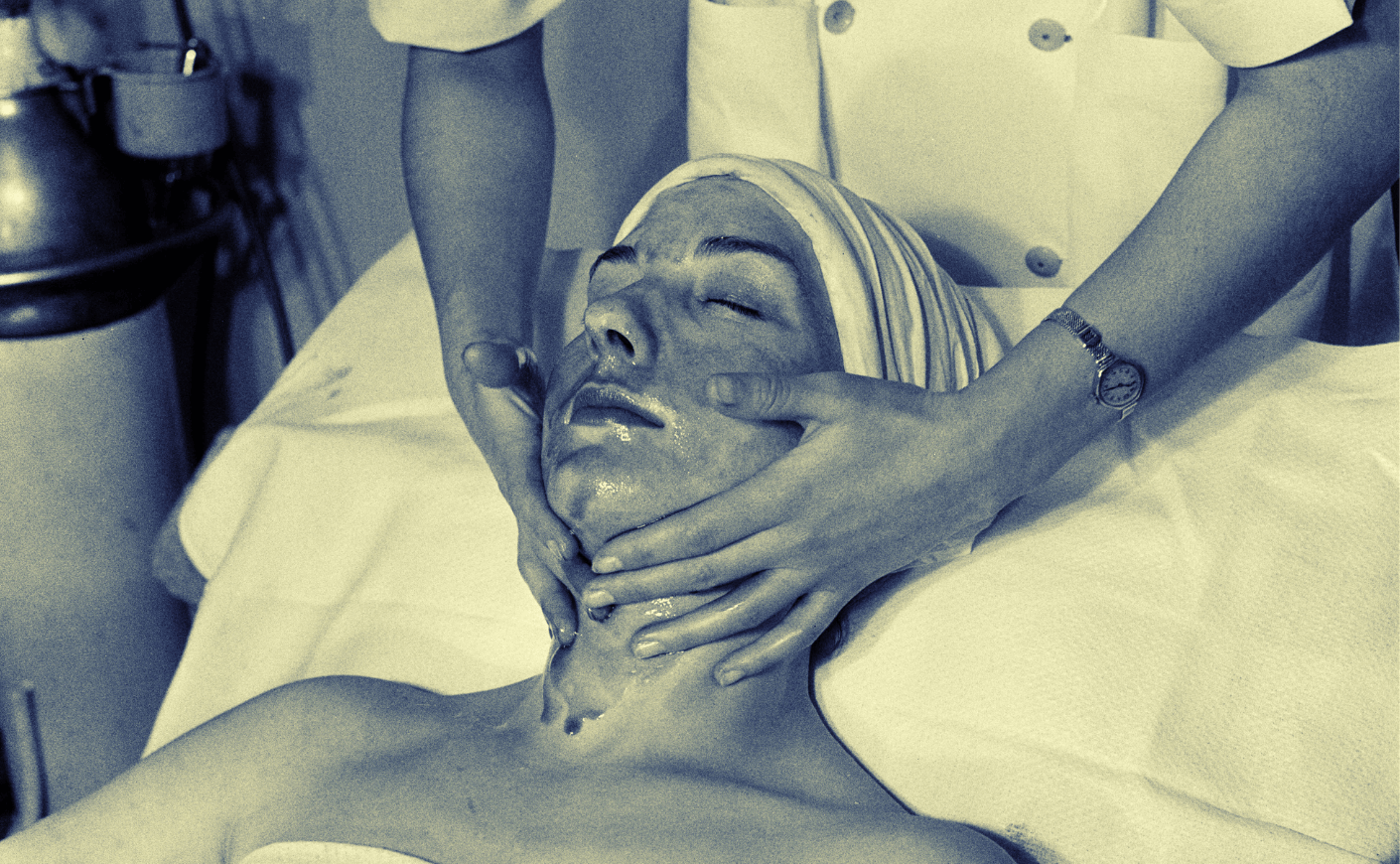
Facials occupy a strange place in the beauty universe: part self-care ritual, part pricey question mark. If your own routine is more “cleanse, moisturize, repeat… occasionally” than a 10-step regimen, it’s fair to wonder whether handing your face over to a professional now and then actually pays off. In this Q&A, longtime beauty editor Valerie Monroe — who admits she’s never quite been a facial devotee — turns to a dermatologist for clear-eyed guidance on whether facials do anything meaningful over time, how often they’re worth considering, and when you’re better off skipping the splurge altogether.
Q: I don't have an intense skincare routine; I cleanse and moisturize most nights…unless I forget. And I’m wondering if I can outsource my skincare from time to time. Do facials work over the long-term? How often should I have one? Is any kind of facial better than nothing?
A: When I was a civilian — meaning before I was formally inducted into the Beauty Editor Corps — I hated facials. Not only did I dislike a stranger getting intimate with my face (especially when that intimacy involved painfully pinching my pores), but also the unwelcome post-treatment disquisition about why I needed the products beckoning from the facialist’s shelves. As a beauty editor, the facials I submitted to were swagaliciously free, so I didn’t have to worry about protecting my wallet. Even so, I never really enjoyed them. I understand that some of you find facials relaxing; me, I’d rather have a footcial.
Because I’m biased against facials, I asked dermatologist Heidi Waldorf if she had wisdom to share. And of course she did.
First, she pointed out that there’s no definition of a facial; it may include a “deep” cleansing (whatever that is), extractions, massage, steaming, a peel, a moisturizer, and even treatment with an energy-based device.
So it’s important to figure out what you’re aiming to treat that your current skincare routine isn’t addressing. If you have acne, rosacea, pigmentation issues, or any other issues that aren’t improving, Waldorf says your first step should be to see a dermatologist, not an aesthetician. These conditions often require a prescription treatment. For example, comedones (blackheads and whiteheads) can be manually extracted — ouch! — by a facialist, but they’ll always return without consistent use of a retinoid. Sun damage presents both health and cosmetic concerns that need to be distinguished by a professional diagnosis. A dermatologist can advise you on prescription and over-the-counter topicals and whether other procedures, including facials, can benefit — or potentially worsen — your condition.
So before you get out your wallet, you’ll want to know exactly what the facial entails and how you can expect your complexion to look afterward. Some treatments can leave you glowy; others, blotchy (and unhappy). Waldorf advises patients to forgo extensive extractions because there are gentler ways to speed the process of eliminating blackheads with exfoliation and suction (like with the hydrafacial device). And a light glycolic and salicylic peel may be helpful for sun damage and acne but is most useful when it’s done regularly in a skincare routine. Also, combination treatments with light laser therapy, LED light masks, and other devices give longer-lasting results, says Waldorf.
You can see where this is going. “If you’re happy with your skin, there’s no reason to have a facial,” says Waldorf. “I’d also be wary of buying a multitude of skincare products an aesthetician recommends as necessary to complete your facial experience.
“I’m a 57-year-old cosmetic dermatologist with excellent skin and I’ve had a total of 2 or 3 facials ever. Given a lifetime of sun protection and not smoking, there’s nothing a facial is going to do to improve my skin temporarily or in the long run.
“When a spa opportunity arises, I choose a massage rather than a facial,” Waldorf says.
Though a spa opportunity doesn’t often arise for me, if it does, I’ll catch up with her in the sauna — after my footcial.
Reprinted with permission from the weekly Substack newsletter How Not to F*ck Up Your Face. Val Monroe spent 16 years as the beauty director at O, The Oprah Magazine and has been an editor at Ms., Redbook, Self, and Parenting magazines, among others, a contributing writer at Parents, Entertainment Weekly, The Cut at New York Magazine, and has written hundreds of articles for national publications; she’s currently a contributor at Allure Magazine.