



- Surround yourself with things that make you happy; break decorating rules and prioritize joy over trends.
- Don't limit colors: create your own palette, mix five or six hues, or start small with an accent wall or entryway.
- Shop broadly: Etsy, MoMA, vintage markets, Facebook Marketplace, Anthropologie, and custom pieces add personality and prevent monotony.
- Make low-cost, high-impact changes: swap fun knobs, bold accessories, under-cabinet LED lighting, rugs, and playful decor to uplift your kitchen and home.
Have you spent a lifetime surrounding yourself with minimalistic, safe home decor because you're afraid of seeming "tacky"? Do you gravitate toward eye-catching colors and vivid patterns, only to second-guess your sense of style and go for the trendy beige fabric instead? You might be sticking to the 60-30-10 color rule, which many designers have been advising novices for years. You pick a dominant color for 60 percent of a room, a secondary color for 30 percent, and an accent color for the remaining 10 percent. Deviating from these tried-and-true formulas can feel like too much of a rebellion or risk for a non-pro. A roadmap with rules can be comforting.
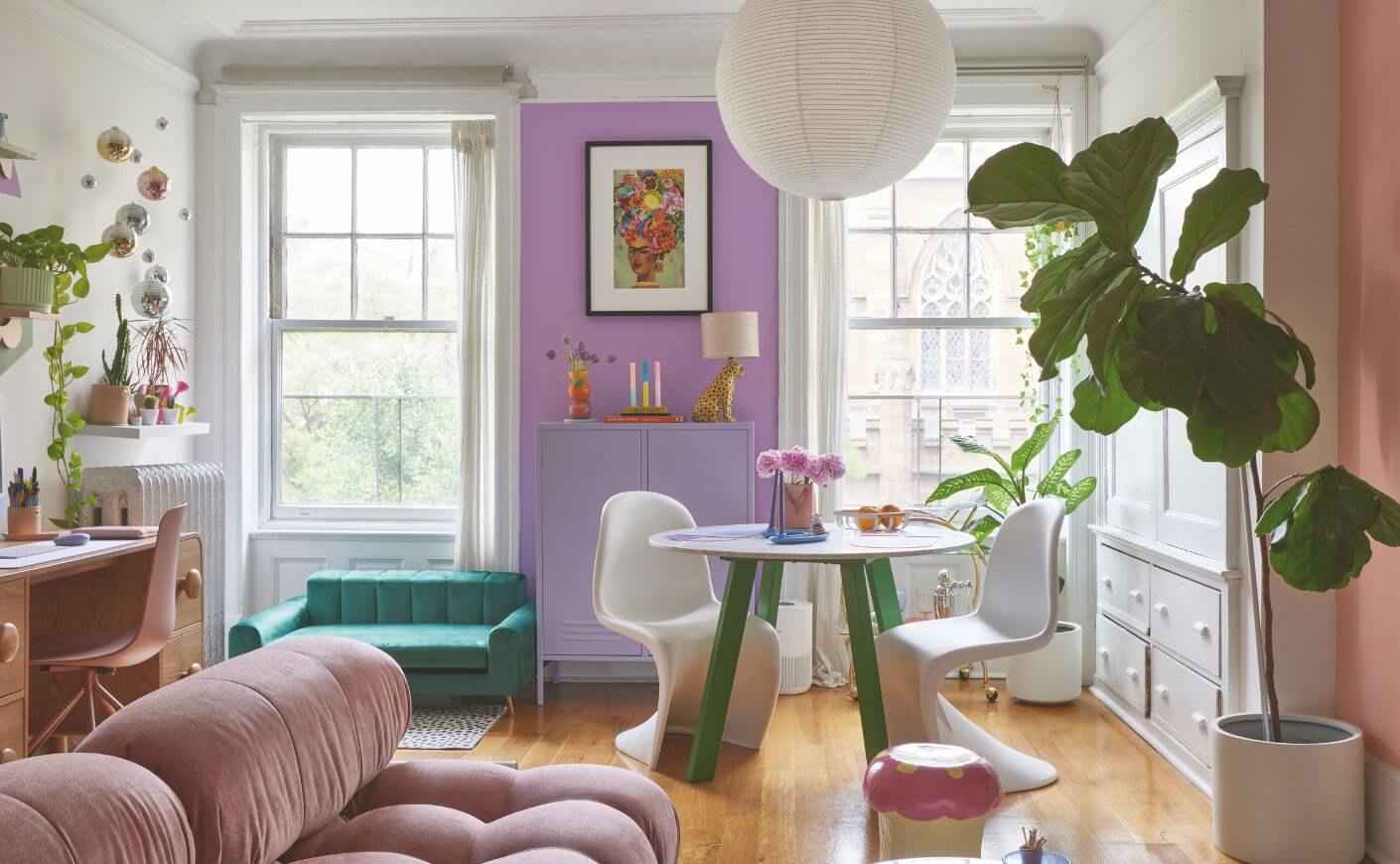
But increasingly, some interior designers are abandoning these expectations in favor of a maximalist approach that more fully reflects personality and individuality. "Dopamine design" is a trend focused on intuitively styling your home with colors, patterns, textures, and personal items that boost your mood and bring you joy — and if this means painting polka dots in your entryway, so be it.
There's some interesting science that might back it up, too: In one study, researchers found that when people looked at artwork or listened to music they found beautiful, a reward-related area of the brain became more active. While it didn't examine home decor specifically, it makes a case for surrounding yourself with furnishings you genuinely adore, regardless of the rules they break.
If you're open to experimentation but don't know where to start, we got practical advice from Maitri Mody, an interior designer and author. Mody's book, Dopamine Design: Creating a Home That Makes You Happy, is full of splashy, texturally rich inspiration rooted in artful pleasure.
Mody spoke to us about how to approach dopamine design if you've been avoiding color for too long, where to source your fun new furniture and decor, and how a few simple changes can transform your kitchen into your new favorite hang-out spot.
KCM: The phrase "dopamine design" has exploded in popularity in recent years. How do you define it?
Maitry Mody: Dopamine design means surrounding yourself with things that make you happy. It's about not having any rules — or breaking the rules. As long as it makes you happy, it's good design.
What's one decorating "rule" you think readers should feel empowered to break?
Limiting colors. Usually, you pick like two or three colors for a room. There's the main color, and then a couple of accent colors. In my spaces, I don't balance like that. I just mix as many colors as I like.
I get asked a lot how I mix so many colors and still make it look cohesive. I have a color palette, but I mix them freely. I think everyone should have their own palette: Know the colors that you love, and then mix them freely in a room. Don't stick to two or three colors. Mix five or six if you want.
Color plays a starring role in your work. For someone who loves the idea of a more vibrant home but feels intimidated, what's the easiest, lowest-risk place to start?
Start small. Start with an accent wall. When I started adding color, I had a studio, so it wasn't a huge space. I just painted one wall pink. Then I added checks to another accent wall.
Start by painting an entryway in a color that you like. Or try color drenching [an interior design technique in which you paint almost every surface in a room the same color]. It's not scary at all, because if you use primer and two coats of paint, you can go back to white. It's a little bit of work, but you can always turn anything back to white. That makes experimenting easier.
What are your favorite places to shop for vibrant decor?
I have a lot of stuff from the MoMA Design Store. I shop on Etsy because I like to find small, handmade things. I use eBay for vintage finds. I also love Facebook Marketplace. And I have quite a few things from Anthropologie.
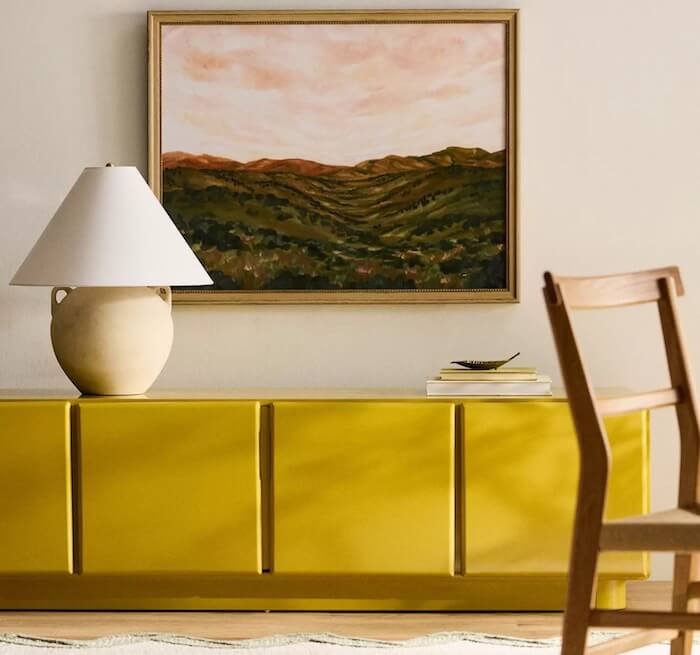
I like Tekla for bedding. Marimekko bedding is also really fun and colorful — people know them for their fashion, but their home stuff is pretty cool too. For more affordable and accessible options, H&M Home, Zara Home, and Les Composantes are great.
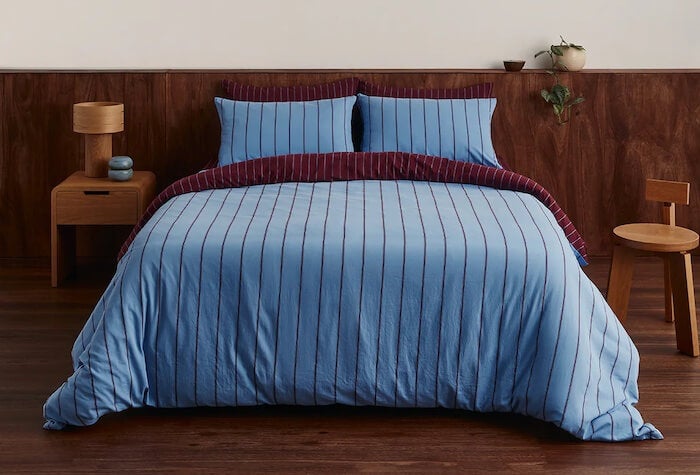
There's also this brand called Rad Furniture — they carry a red-and-pink chair that's so pretty; it's on my list. I'm going to save up for it.
I sometimes commission custom pieces if I want something quirky and unique. I have a custom-made pug coffee table.
If you're going to shop at three places for everything, then it's going to look very monotonous. My followers will ask, "Where do you shop?" And I reply, "I would have to write down a list of 50 brands because I shop at so many different places." I even buy certain items at Wayfair and Amazon.
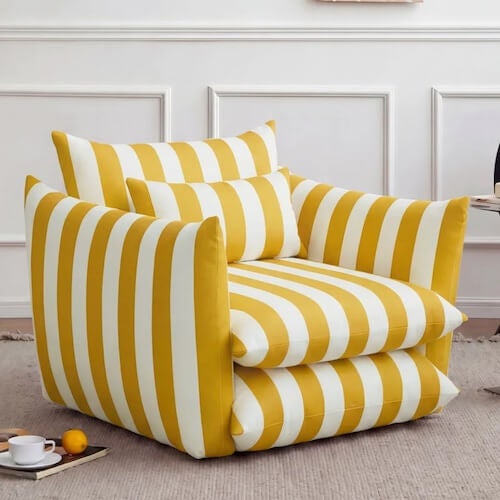
Many people are decorating on a budget. What's one high-impact, low-cost design change that can dramatically boost the mood of a space?
Instead of buying a lot of cheap stuff, look on Facebook Marketplace for designer pieces at a lower cost. I've found so many cool things at such a great price. Even places like Home Goods and TJ Maxx can be great, because they get all the surplus from stores like Anthropologie.
The kitchen is often called the heart of the home, but it can also become one of its most stressful spaces. What are some dopamine design principles that can make a kitchen feel calmer, happier, and more inspiring to cook in?
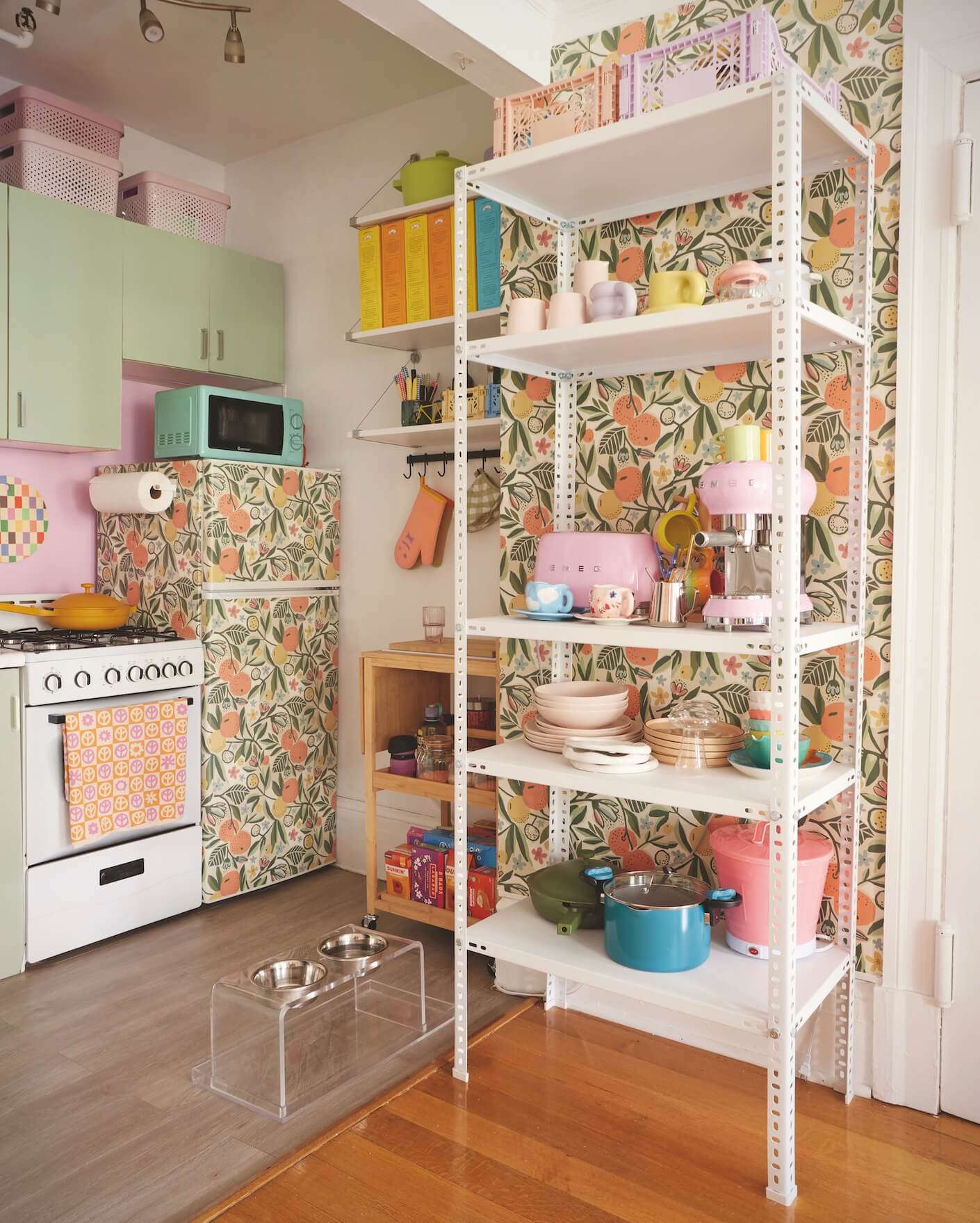
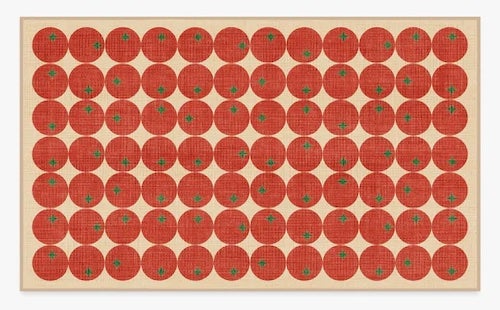
If you're designing a calm kitchen but still want a touch of playfulness, fun knobs are one way to add it. Get a few colorful, playful spice jars — I have Spice Village jars. Get a cute rug — I currently have a tomato-shaped one. Accessorize with small things like salt and pepper shakers, a butter dish, or an oil jar.
Is lighting an overlooked kitchen detail?
Yes. Little LED strips are so easy and renter-friendly. Place them underneath your cabinets so you don't always have to cook under bright lights. Even small, portable lamps are amazing. In my last kitchen, I would even project a movie onto the wall and watch while I was cooking. You can make the whole cooking experience a vibe with dim lights, a couple of candles, and maybe a film playing in the background.
What's one mindset shift you hope to inspire in people as they rethink the design of their home?
To not be afraid of color. People always say, "I love looking at color in your home, but I'm too afraid to add color to my home." Every home featured in my book is so colorful, so layered, and with colors and patterns — I hope that inspires people to break the rules. And color does not have to be garish and bright. If that's your style, then yes, you can do that. But color can also be calming or minimal — like just a pop of color in an otherwise white room. I hope people embrace that.