





The news that the Trump administration launched an operation in Venezuela, and captured former Venezuelan president Nicolás Maduro, shocked the world and drew concern and backlash — especially regarding the legality of Trump's actions. (President Trump didn’t receive authorization from Congress to launch the military operation.) U.N. Secretary-General António Guterres said he was “deeply concerned that rules of international law have not been respected with regard to the 3 January military action.”
But how do Venezuelan citizens feel? That depends who you ask. Andreína Chávez, a reporter based in Caracas, told Democracy Now that protestors in the capital city are currently taking to the streets, denouncing the “unjustified military aggression” by the U.S., demanding that President Maduro and his wife are "returned to Venezuela,” and “rejecting the narrative that Venezuela needed to be bombed in order to supposedly take down a drug trafficking organization.”
On the other hand, a number of Venezuelans around the world celebrated the news of Maduro’s capture in the immediate aftermath.
We spoke to a Venezuelan-born American citizen, who left their home country in 2010 due to government harassment, who says that the on-the-ground perspective isn't black and white. “When you talk to people in Venezuela, they say, ‘We’re so helpless that anything that feels like it's going to help us is welcome.” While no single individual can speak on behalf of an entire country, this person (who requested to remain anonymous for privacy) nonetheless shares a critical perspective.
I know people personally who got their windows shattered by explosions.
What was your initial reaction to the news?
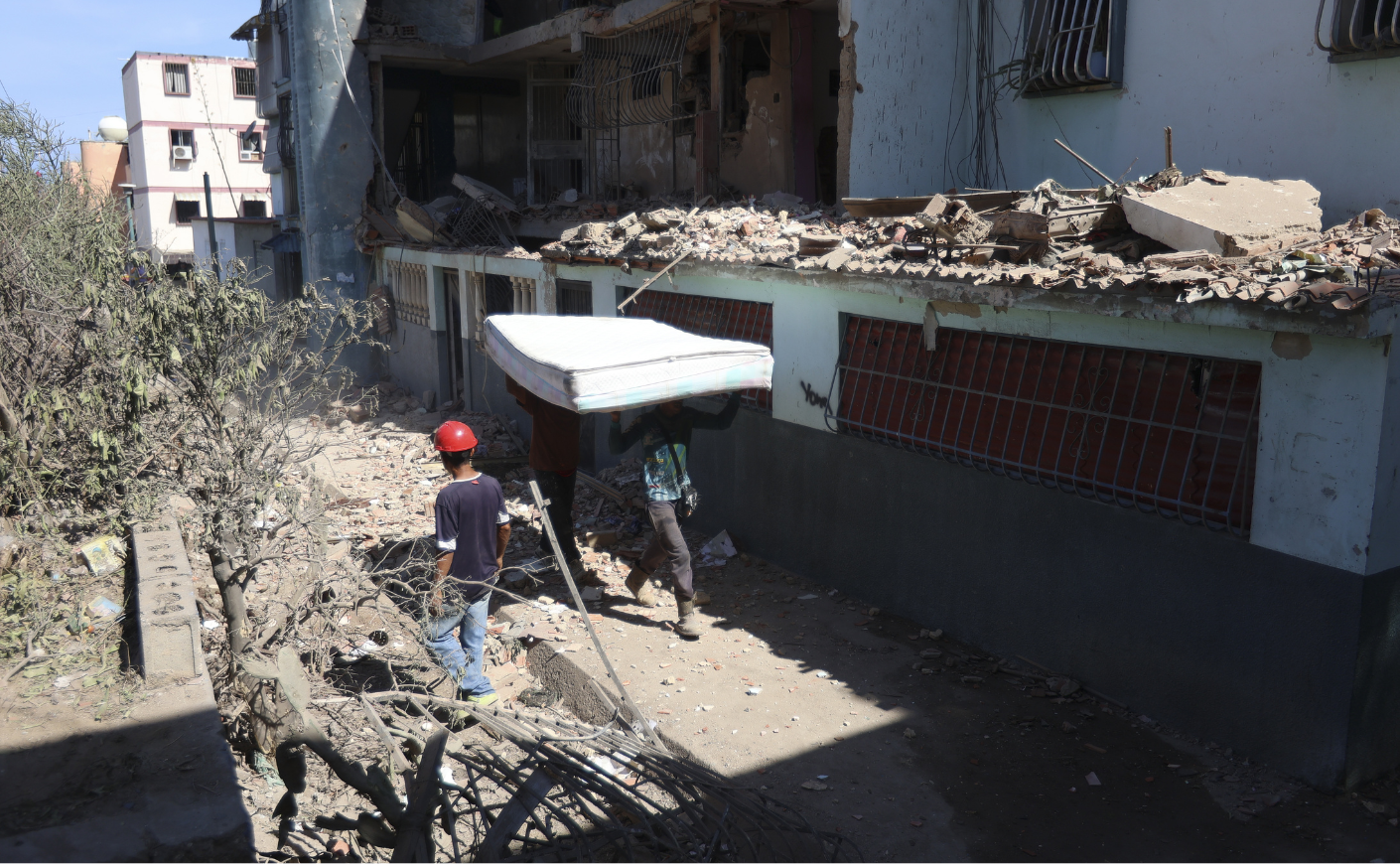
The operation was a surprise to people in Venezuela — and everywhere. People were expecting the U.S. government to strike land and probably bomb places they deemed to be housing narcotics or other threats. But the fact that they came in and took Maduro was a shock to everybody, as was the fact that it was a very loud operation. They bombed different places around Caracas. People were woken up around one in the morning by the sound of bombs. I know people personally who got their windows shattered by explosions. There was a lot of uncertainty at the time, and people were afraid of what would happen on the night of the operation.

What have you heard from people in Venezuela?
In theory, the same people who were in charge before this happened are in charge now. But there is a lot of hope that this is going to lead to a change, of course, due to the pressures of the U.S. government — not necessarily that the objectives of the Trump administration are to free the people of Venezuela. There might be different motives, but ultimately, the outcome is something that the people welcome.
Marco Rubio said over the weekend that you cannot ignore that Maduro’s people are the ones who control the country. They control the airports, the arms, the ports, the police, and the courts, so the Trump administration has to somehow engage with them in the transition. It cannot be done overnight, because that would be complete anarchy.
As a Venezuelan who has suffered from this regime, I feel that the people of Venezuela have done everything possible [to fight Maduro's command].
You have to take into account that this regime has been ruling for over 25 years, and over that period of time, they destroyed the country in many different ways — from institutions to the private sector to the government to oil production. On top of that, people are incarcerated for opposing the government or for being suspected of doing so. People are afraid.
So the country’s pretty much ruined, and people feel that a closer relationship with the U.S. could bring a lot of investment and opportunities for the people of Venezuela. Even though some other countries, like the U.S., will benefit from Venezuela's increased oil production, it will also definitely benefit the people who’ve been struggling for so long.
Are Venezuelans talking about the legality of Trump's actions?
I've seen some reports that this is an illegal operation because Trump didn't have congressional approval. But as a Venezuelan who has suffered from this regime, I feel that the people of Venezuela have done everything possible — from demonstrating on the streets to voting in elections and winning elections — and they've been tortured and killed. Elections have been stolen: Nearly 70 percent of Venezuelans voted against Maduro’s government in the last election. We're dealing with an organization that is there to stay for as long as they can, regardless of the legality. I think that the people of Venezuela received this intervention with hope, and welcome it.
The first priority is, how do we get out of this terrible situation? That's the feeling I think most Venezuelans have.
I think that any small effort to bring the rule of law and investments to the country will have a huge impact.
Are you concerned about the broader implications of the operation?
Trump has issued some threats to the Colombian President. I think Colombia is a completely different situation. Venezuela has less than a quarter of the average GDP of other South American countries — like Colombia, Ecuador, Brazil, Argentina, Chile, and Peru — but it’s faced an incomparable level of destruction. So I think that any small effort to bring the rule of law and investments to the country will have a huge impact.
Some other countries fear U.S. power and what Trump could do. But as a Venezuelan, because of how bad the situation has been, and for how long [the country] has been without real international support, I feel some hope about what the Trump administration has done. That doesn't mean that I have to agree with anything that Trump does in other areas, but for Venezuela at this time, I think it's going to be beneficial for the people — regardless of whether he's doing it for other reasons. His main goal is probably not the well-being of the people of Venezuela. But I think even if it’s through different objectives, we're going to get the result that we want, which is a prosperous country with some freedom and rights, where people aren’t afraid of saying anything against the government and being thrown in a cell, which is what has happened.
What was your reaction to Trump saying the U.S. will take control of Venezuela?
I didn't like hearing him say, "It's our oil” or “We're going to take control of the country,” but I want to believe he's saying that the U.S. has to spearhead this transition. They have to force these people to move toward an orderly state and reach a point where fair elections can be celebrated. And if that's the case, I think that's good. It's hard, because Trump says a lot of things that don't make any sense on a daily basis — or he says something, and then he backs down.
How did you feel about Maduro pleading not guilty?
He's going to have to face the process. I don't know exactly what evidence the U.S. has gathered against him, but in my personal opinion, these people are very, very bad.
