






President Trump held an Oval Office meeting on Venezuela on December 1 amid increased fears about the U.S. military presence (and action) in the Caribbean Sea. Here's where the two countries stand, and why tensions appear to be spinning out of control.
U.S. attacks on suspected drug boats
U.S. strikes on alleged drug trafficking boats in the region have now killed at least 95 people, and the legality of those attacks is under increased scrutiny. Lawmakers from both sides of the aisle have expressed serious concerns over a reported follow-up strike on a suspected drug-trafficking vessel in the Caribbean Sea in September.
The Washington Post reported that after a U.S. strike on a boat on Sept. 2, two survivors were seen clinging to the burning wreck via drone footage. Per Post sources, the U.S. followed up with a second strike that blew the men apart, to comply with an order from Defense Secretary Pete Hegseth to "kill everybody."
Lawmakers from both sides of the aisle have expressed concern that the second attack could constitute a war crime. “If that occurred, that would be very serious, and I agree that that would be an illegal act,” Rep. Mike Turner, an Ohio Republican, told CBS. Sen. Tim Kaine, a Virginia Democrat, told the network that the attack “rises to the level of a war crime if it’s true.”
“The law is clear,” Maine independent Sen. Angus King told CNN on December 1. “If the facts are, as have been alleged, that there was a second strike specifically to kill the survivors in the water — that’s a stone-cold war crime. It’s also murder.”
Per the Washington Post, Pentagon officials fear that the Trump administration plans to scapegoat military officials for Defense Secretary Pete Hegseth's alleged role in the killing of the two survivors. The Republican chairman of the Senate Armed Services Committee, Sen. Roger Wicker, has said that he expects his committee to have full access to footage of the strikes and that he will speak with Adm. Frank M. Bradley, who apparently ordered them, soon. Nevertheless, the news of the strikes and the domestic U.S. response has further shaken the legitimacy of Trump's already tenuous "anti-drug" campaign.

A whiff of hypocrisy
The stated goal of the U.S. military strikes on suspected cartel boats is to quash drug trafficking. However, it also seems clear that the Trump administration wants Venezuela's dictator, President Nicolás Maduro, who was indicted as a drug trafficker in 2020, removed from power. The picture comes into focus when the Trump administration's handling of Maduro and Venezuela is contrasted with his approach to dealing with apparently similar issues in Honduras.
The country's former president, Juan Orlando Hernandez, is currently serving 45 years in a U.S. prison for drug trafficking. However, after he wrote Trump a sycophantic letter addressing him as "Your excellency," and conveying his "highest respect, esteem, and blessings," Trump announced on Truth Social that he planned to pardon him. His rationale was that Hernandez "has been, according to many people that I greatly respect, treated very harshly and unfairly." But, as a Trump adviser speaking to Axios pointed out, it's hard to justify, given the situation with Maduro.
"But maybe this is a message to Maduro," they added. "If Trump is willing to take the heat by basically canceling this, he's telling Maduro he can do the same to him if he just plays ball."
Venezuela's leader remains defiant
The situation between Maduro and Trump is escalating rapidly. Last Thursday, Trump threatened that the U.S. would begin attacking suspected Venezuelan drug cartels on land "very soon." On Saturday, he announced that the country's airspace should be considered closed. He's also focused a lot of heat on Maduro personally.
The New York Times reported that Trump spoke to Maduro on the phone last week. According to Miami Herald sources, he told him: “You can save yourself and those closest to you, but you must leave the country now,” and offered safe passage for Maduro, his wife and his son “only if he agreed to resign right away”. The Venezuelan president reportedly countered by demanding a “global amnesty” for himself and allies.
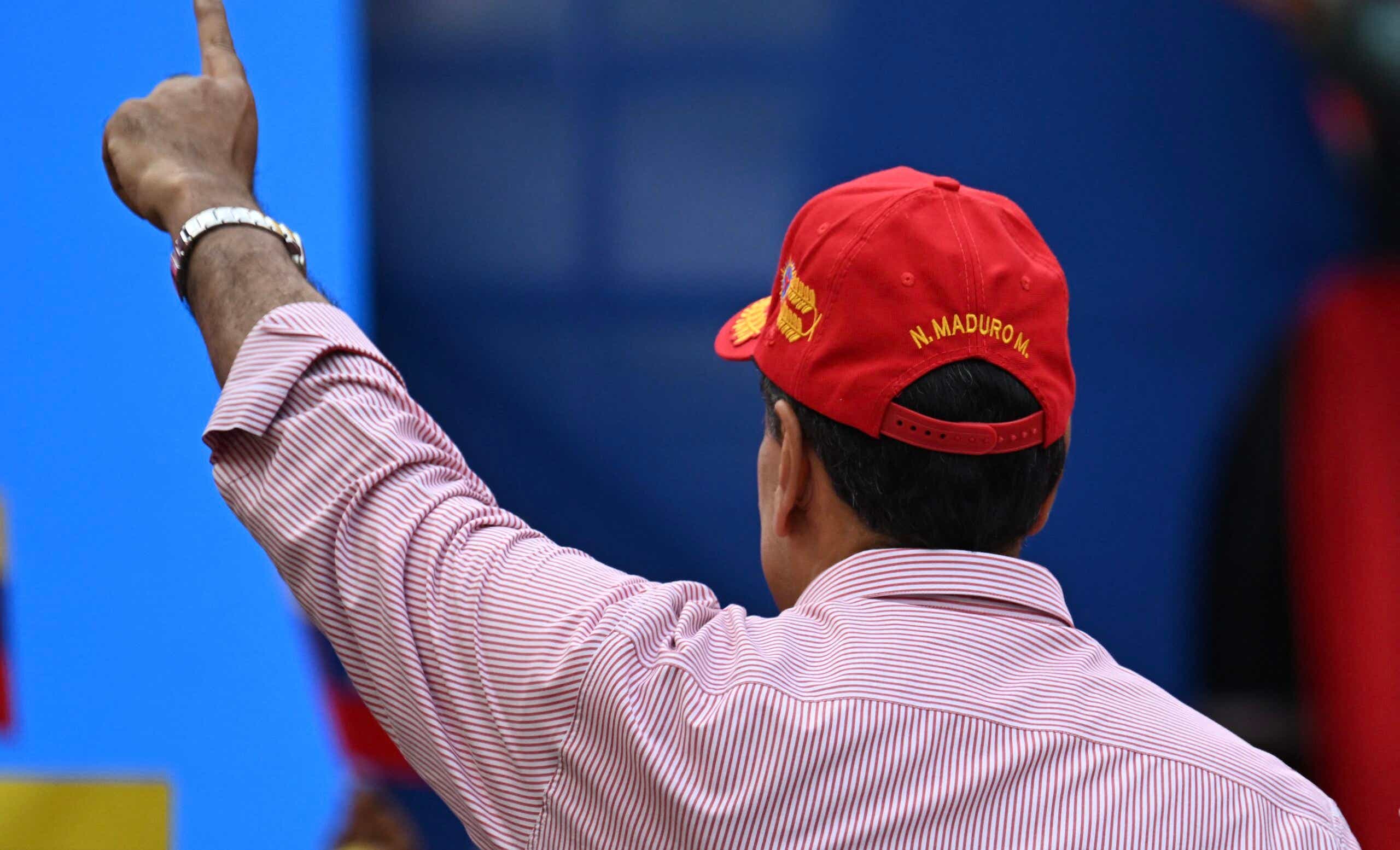
Maduro then appeared in front of a crowd in Caracas yesterday, declaring: “We do not want peace of slaves, nor do we want peace of colonies."
As the Wall Street Journal noted last week, Maduro is highly incentivised to stay put. A Journal source who "speaks often with senior Venezuelan government officials" said Maduro and his allies consider U.S. military threats a bluff. They also face serious criminal liability if they leave the country, including indictments in the U.S. for alleged cocaine trafficking and providing Colombian guerrillas with weapons (which they deny). If the regime changes, Venezuela’s military leaders could face prosecution over claims of drug trafficking and accepting payoffs from major industries. The International Criminal Court has been investigating alleged crimes against humanity by Venezuela since 2018. Throw in accusations from the opposition, the U.S., and other countries in Europe and Latin America that the 2024 election was fraudulent, and it's no wonder Maduro feels safer clinging to power.
Maduro's obstinacy puts Trump in a difficult position. If he doesn't follow through, he could be accused of making empty threats — a slight he's not tolerated well in the past. However, a full-scale U.S. invasion of Venezuela remains a deeply unattractive prospect.
