


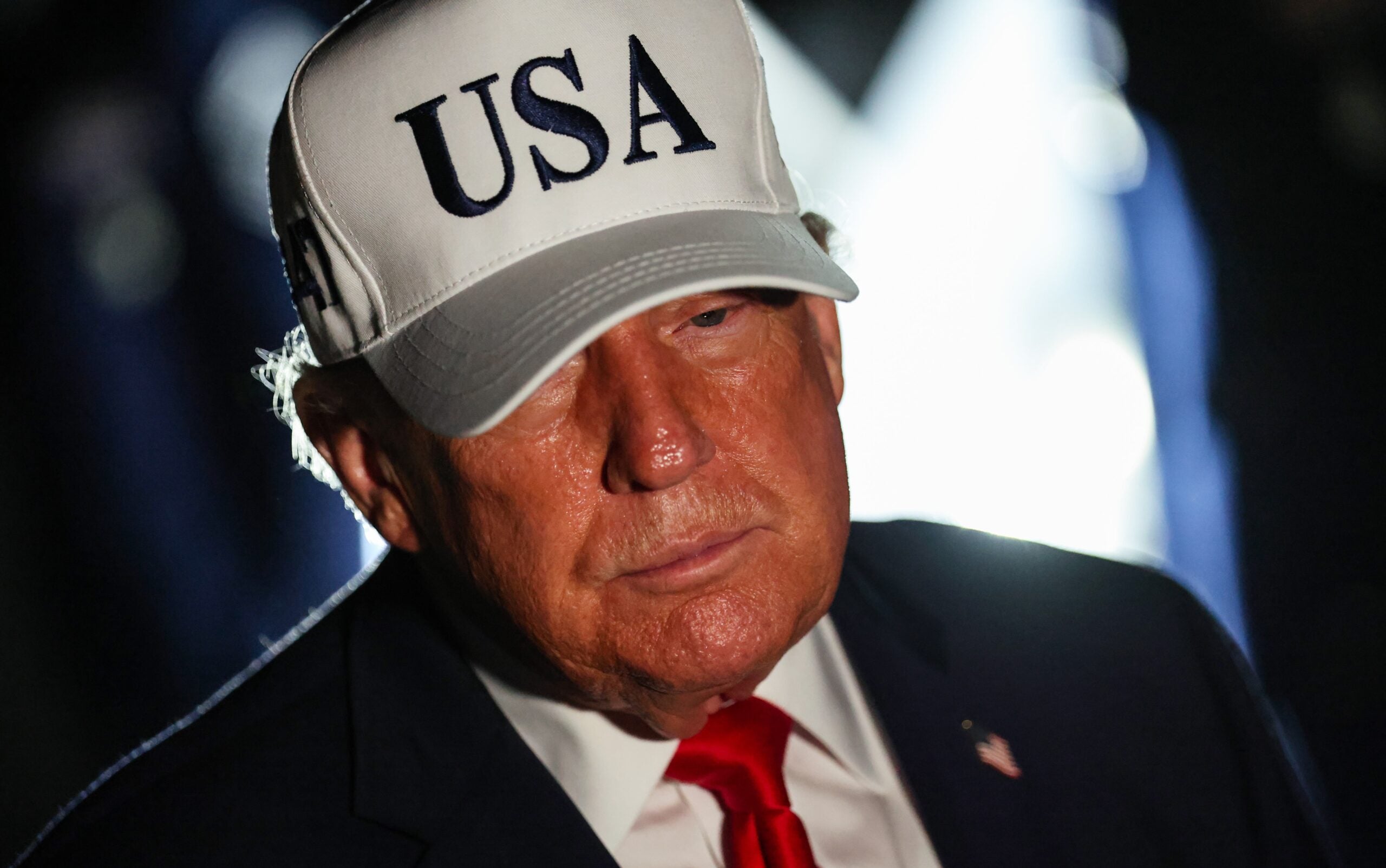
President Trump gave his most extensive interview yet about the Republicans' historic midterm loss to 60 Minutes on Sunday evening.
What went wrong
Trump cited the Iran war and high gas prices, apparently agreeing with Vice President JD Vance, who wasted no time in ascribing blame. He added that Israel was becoming increasingly unpopular in the U.S., and suggested poor communication was a factor.
He appeared regretful that Vance, who published an essay shortly after the midterms detailing the political fallout of the war (and little reference to his own role in supporting it), couldn't be more positive about the conflict, even while assessing its consequences. It seems that Trump would have appreciated some acknowledgment of Vance's involvement.
“The only thing I wish he would have said there — if he felt it, and you’d have to ask him about that — but if you had it to do again, would you do it? You know, he’s part of a decision-making process. And my answer is an emphatic yes,” he said.
He recalled a conversation he and Vance had before the post was published, but seemed to suggest that they'd not discussed its content in detail.
“He asked me, ‘What do I think?’ I said, ‘Write what you feel... By the way, what are you going to write?”

Trump also said he thought his deportation policy was “too tough," noting immigrants who'd been in the country ten-plus years without committing any crimes or were paying "good taxes." "A lot of people would say that it’s great. But a lot of people think it’s too tough," he said. It's an oddly timed revelation, given Trump's just made Stephen Miller, the architect of those draconian policies, his chief of staff.
He didn't walk back his position entirely, claiming that his approach "both helped and hurt," and that he'd support targeting rapists and murderers in the future. He said Americans gave him an “A+ for closing up the border” and “very high marks for getting the bad ones out.”
“I get hurt because we also took people that had good jobs, that created one violation, or breaking of the law, and that was that they came into the country illegally,” he acknowledged.
What next?
Trump suggested that he was open to working with the Democrats on a compromise regarding immigration. “Let the people that are here, and in some cases here for 10 and 15 years, work a deal for them,” he said. He added that he felt negotiations with the Democrats were "actually doable," and that some had already contacted him.
Asked whether he'd be able to resist name-calling for six months in order to reach a deal, he responded: "Very easily."
He also seemed open to the idea of implementing some checks and balances around the AI industry, something he's been deeply reluctant to do in the past. “I don’t mind guardrails,” he told 60 Minutes. “But I don’t wanna put us in a deep second position.”
Trump insisted that the U.S. had won the Iran war, and that it would be regarded by history as a "very good decision." He added that another attack was "highly unlikely," but depended on whether Iran was prepared to sign a "very strong agreement."
Can he ever forgive?
Asked by CBS correspondent Ross Douthat whether he could ever forgive his perceived political enemies, Trump was typically intractable.
“I think they were very bad people, and I dislike — I can use the word hate — I do hate some of my enemies,” he said.
Douthat pressed: “Mr President. You have had the most charmed and remarkable life of any American in my entire lifetime, and you are telling me that before the judgment throne of God you couldn’t find it in your heart to forgive some of your enemies? After all that’s been given to you? Come on, help me out here.”
Trump insisted: “I probably cannot do that, no, because I do hate some of my enemies and I always will.”
How's Trump feeling about 2028?
The president didn't commit to endorsing a successor in the upcoming White House race. Asked whether he'd name a candidate, he said, "Probably. Not necessarily."
He later added: “Maybe it would be better for me not to get involved.”
Asked to highlight potential names besides Vice President JD Vance, Trump praised Secretary of State Marco Rubio, saying he was doing a "fantastic job." He indicated that several senators were also strong contenders, but didn't name them.
When Douthat asked Trump how he'd like his presidency remembered in a sentence, Trump replied: “That I made America great again.”
