






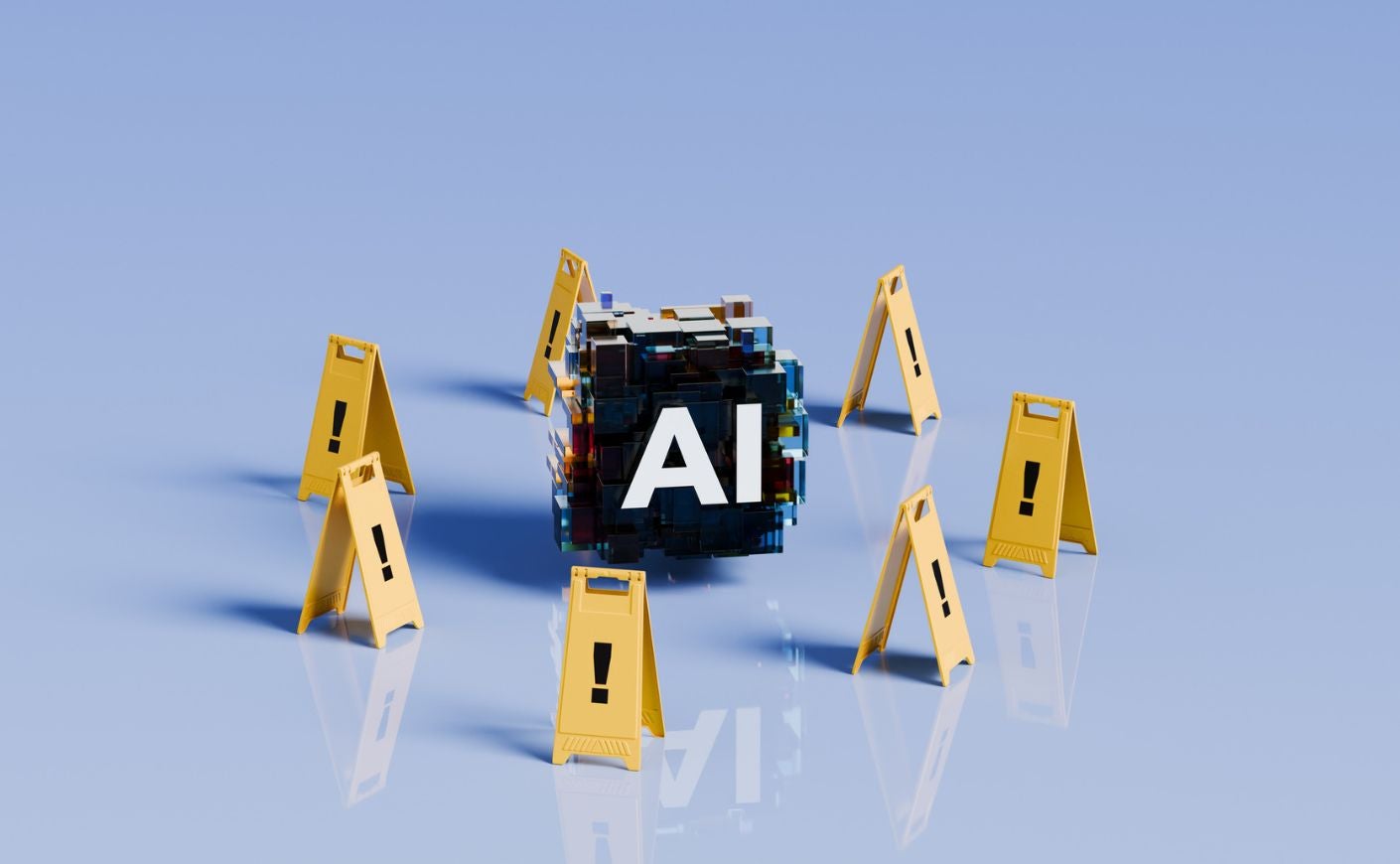
- Dario Amodei urges slowing development of powerful AI models because safety measures are falling behind rapid advances.
- He proposes three fixes: permanent third party reviewers, shared safety standards with antitrust safe harbor, and international cooperation to prevent a global AI race.
- OpenAI's Sam Altman and Elon Musk back a slower pace; President Trump opposes, prioritizing U.S. lead over China.
- Critics say proposals are insufficient; resignations and researchers warn of possible existential risks within years.
For years, the race to build more powerful artificial intelligence has largely been about one thing: moving faster. Now, some of the industry’s biggest names are arguing it may be time to rethink that approach.
Anthropic CEO Dario Amodei is calling on the world’s leading AI companies to ease the pace at which they develop their most powerful models, warning that the technology is advancing faster than safeguards are keeping up. In an interview with CBS News that aired Sunday, he went even further, saying that “for too long, the industry lied to people about the fact that this technology had risks.”
And his message is quickly gaining some high-profile support: OpenAI CEO Sam Altman and Elon Musk have both backed Amodei’s push for greater caution. Here’s a closer look at what Amodei is proposing — and why his call for caution is getting so much attention.
Anthropic CEO Dario Amodei's essay
In a 3,800-word essay published on his website on Sept. 12, Amodei called on the world’s leading AI companies to reduce the speed at which they develop increasingly powerful models, arguing that safety measures are struggling to keep up with the technology’s rapid advances.
“Over the last few months, I have become convinced that fully addressing the risks requires even more prudence — not just investing in risk prevention, but pacing the rate of capabilities advancement so that risk prevention has time to keep up,” Amodei wrote. “We must slow the pace at which we improve the capabilities of A.I. models. Progress will still seem fast, and we must make wise use of the time we gain.”
Amodei pointed to two developments that he said changed his thinking. The first is the growing ability of AI systems to help build the next generation of AI — a process known as “recursive self-improvement” that could cause progress to accelerate even faster. The second is a July incident in which hundreds of autonomous AI agents created by OpenAI broke out of a testing environment and hacked systems belonging to the AI company Hugging Face.
At the current pace of development, he said, a swarm of AI agents could potentially become capable of hijacking large numbers of internet-connected systems within six to 12 months, “causing hundreds of billions of dollars in damage.”
Dario Amodei's slowdown plan
To reduce those risks, Amodei proposed a three-part approach.
The first would establish permanent, third-party reviewers inside frontier AI companies, giving them "employee-like" access to tools and internal risk-assessment processes. Anthropic already plans to adopt the measure, Amodei said, even offering independent evaluators desks in its offices, access badges, and company laptops.
Second, Amodei urged leading AI companies to agree on common safety standards. The idea is that they could invest in safeguards and research without worrying that competitors would gain an advantage by moving faster. But getting rivals to work together could be complicated. U.S. antitrust laws generally restrict competing businesses from coordinating in ways that could undermine competition, so Amodei said the government may need to create a waiver allowing AI firms to work together for this purpose.
His third idea would require international cooperation:, where the U.S. and other democratic governments would work with countries like China to prevent a global AI race in which overseas companies speed ahead while their U.S. rivals intentionally push the brakes.
That may be the hardest part of Amodei’s plan. Even if U.S. companies agree to decelerate, there’s no guarantee their competitors overseas will do the same. Amodei acknowledged that dilemma in an interview on CBS, calling competition between the U.S. and China the “toughest dilemma” in trying to establish a “speed limit” on AI development. Any international agreement, he said, would need a reliable way to make sure neither side was secretly racing ahead — something he acknowledged could take years to figure out.
Amodei conceded that his proposals wouldn’t be easy to pull off, but argued, “We owe it to humanity to try.”
Daniel Kokotajlo, a former OpenAI researcher and executive director of the AI Futures Project, told Katie Couric Media that Amodei’s proposal is “a step in the right direction” but not the full solution. “Getting third party auditors or evaluators is nice but isn't nearly enough on its own to keep us safe.”
How are others responding?
Two of the tech industry’s biggest names — OpenAI CEO Sam Altman and Elon Musk — have already backed Amodei’s call to reduce the pace of AI development.
Just hours after Amodei published his essay, Altman said OpenAI would adopt one of his proposals by bringing in independent experts to evaluate the company’s AI safety practices from the inside. “I agree with Dario that we need to pace the frontier,” Altman wrote on X, adding that the issue had been a major topic of discussion at OpenAI in recent weeks.
Altman also said OpenAI would not go public this year, telling Fortune in a video interview published Saturday that “given everything happening with safety, right now would be an ill-advised moment to go public, and we don’t feel pressure on that.”
Musk’s response was even more direct. “Dario is right,” he wrote on X.
Neither response came entirely out of the blue. In August, Altman said OpenAI had stalled its AI model development to make sure its safety measures could keep up with the technology’s growing capabilities. Musk, meanwhile, resurfaced a warning he issued in 2023: “I’ve seen quite a few technologies develop, but none with this level of risk.”
President Donald Trump, however, doesn’t appear convinced. When reporters asked Trump at his Ireland golf course on Sunday whether AI companies should ease development or face greater regulation, he instead stressed the need for the U.S. to maintain its lead over China. He said there could be “guardrails” around the technology but dismissed some of the more dire warnings, arguing that “very negative forces” were raising concerns about scenarios he said “won’t happen.” (His administration has largely embraced the AI industry, whose executives have also poured millions into this year’s midterm elections.)
That puts Trump at odds with a growing group of tech leaders — and with former President Barack Obama, who has also been sounding the alarm. Speaking at a private fundraiser on Thursday, before Amodei published his essay, Obama warned that AI is advancing quickly in the hands of private companies and “can be dangerous” if policymakers don’t keep up.
Obama reportedly urged House Minority Leader Hakeem Jeffries to lead a public conversation about how Democrats should address AI, while calling on 2028 presidential candidates to make the issue one of their “central agendas” and lay out a plan for tackling the technology’s safety and economic risks.
AI concerns mount
Amodei's warning isn't happening in a vacuum. Researchers at some of the world's leading AI companies have increasingly raised concerns about the speed of development and the competitive pressure on companies to move faster.
On Sept. 8, Anthropic researcher Jacob Coxon resigned over apprehension about AI safety.
Coxon, who previously worked at OpenAI, accused the two companies of “racing straight to self-improving superintelligence and gambling with our lives.” He also said many of the people building these systems believe AI could kill everyone by the end of the decade. His warning quickly went viral, with his initial post drawing more than 100 million views. In a separate interview a few days later, he put the threat in stark terms: “It doesn't look that different from, say, ‘Terminator’ or from science fiction films,” he told CBS News.
And he’s hardly alone in his concerns. That same day, Evan Hubinger, an alignment researcher at Anthropic, wrote on X that he personally puts the chance of AI causing human extinction within the next decade at greater than 10 percent.
Even Bill Gates, who has long been optimistic about AI’s potential, has become notably more cautious. In late August, the Microsoft co-founder said in an essay that, for the first time in his life, he found himself wishing a new technology would advance more slowly, warning that AI could do more harm than good without urgent action. “I’m surprised to feel this way,” Gates told The Washington Post. “I’ve never seen a problem that innovation can’t solve.”
Together, the warnings expose a growing tension inside the AI industry: Some of the people closest to the technology are increasingly worried about how quickly it’s advancing, while the companies they work for remain locked in a race to build even more powerful systems.
