







At a time when many Republicans have pulled back from climate action, former Sen. Bill Frist has emerged as one of the GOP's most prominent voices arguing for a different approach.
Before entering politics, Frist built a national reputation as a heart and lung transplant surgeon. He was elected to the U.S. Senate in 1994, becoming the first practicing physician elected to the chamber in more than six decades, and he later rose to Senate majority leader, helping shepherd landmark healthcare legislation and leading Republicans during the Clinton and George W. Bush administrations.
Nearly two decades after leaving Congress, Frist remains deeply involved in healthcare and public policy. He serves as chair of the global board of The Nature Conservancy, co-chairs the Bipartisan Policy Center's Health Project, and serves on the boards of several healthcare organizations and companies, including Monogram Health. Through those roles, much of his recent work has focused on an issue he believes has become unnecessarily politicized: climate change.
But Frist doesn't think America's biggest obstacle is convincing people that this major environmental shift is happening. (In fact, 72 percent of Americans believe global warming is legitimate, according to recent polling from the George Mason Center for Climate Change Communication and Yale Program on Climate Change Communication.) Instead, he believes the country has spent decades framing the issue in ways that make it harder to build consensus.
"We've turned climate change into an ideological debate," Frist tells Katie Couric Media. "That's what has made it so difficult."
For too long, he says, climate change has been framed primarily as a story of sacrifice: drive less, fly less, eat differently, pay more for energy, or accept fewer choices. Whether or not every one of those perceptions is accurate, the cumulative message many Americans hear is that climate action will have a negative impact on their own personal experience.

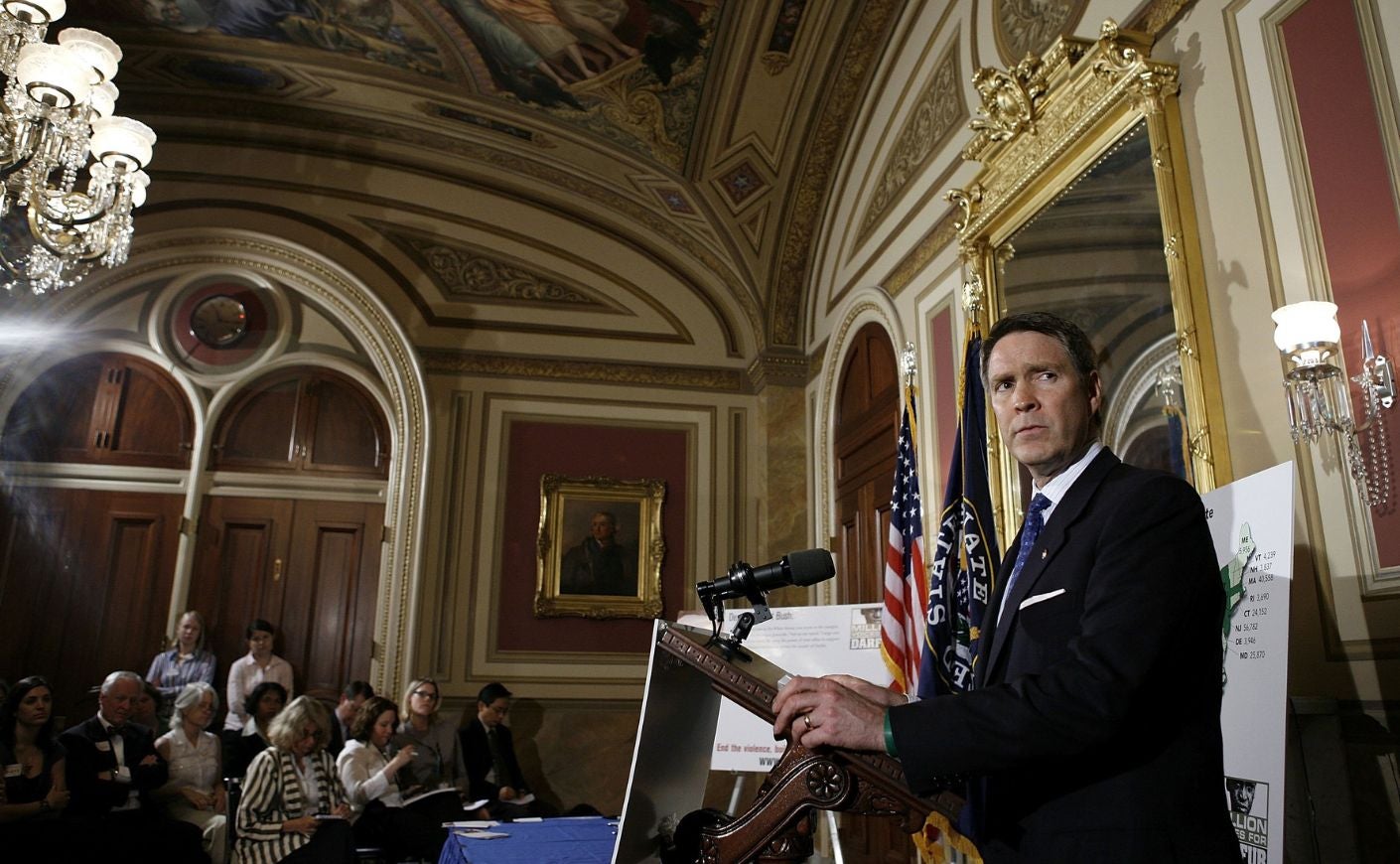
"The cumulative message many Americans hear is that climate action will make their lives more expensive, less convenient, and less secure," Frist says.
He also questions the effectiveness of leading with long-term catastrophic projections, arguing that people are more likely to engage when the conversation centers on the tangible impacts they're already seeing and experiencing.
"Everyone cares passionately about their health, their partner's health or the future health of their children," he explains. "That shared concern brings people back to the table."
Rather than focusing on distant scenarios, Frist points to the ways climate change is already affecting Americans' well-being, including dangerous heat and worsening wildfire smoke. "You don't need to start with an alarmist [headline, like] 'the world's going to be underwater in 30 years,'" Frist says.
After beginning the conversation in an easier-to-digest way, he believes it's easier to build support for policies that protect children's health, invest in resilient infrastructure, ensure reliable and affordable energy, and accelerate innovation — areas where Republicans and Democrats can find common ground, even if they disagree about broader climate policy.
The rapid growth of artificial intelligence is a prime example. As AI and data centers drive up electricity demand, Frist believes the country has an opportunity to unite around building a cleaner, more reliable, and more resilient energy system.
“The most durable climate policies will not ask Americans simply to give something up,” he tells us. “They will offer something better: healthier communities, lower costs, greater energy security, stronger local economies, and a more resilient nation.”
At the same time, Frist acknowledges that making these improvements has become more difficult under the Trump administration, which he says is "clearly slowing progress." While he supports the administration's emphasis on advanced nuclear power and affordable energy, he points to the U.S.'s withdrawal from the Paris climate agreement and its rollback of federal climate initiatives as setbacks that have made it harder to sustain national momentum. Still, he remains optimistic.
"An administration can slow progress, but it cannot erase all this momentum that's been achieved with technology, with markets, with community support, with human innovation," he says.
Much of that effort, Frist argues, now extends well beyond Washington. He says businesses are continuing to invest in cleaner technologies while states modernize electric grids, utilities expand energy storage, and communities adapt to increasingly frequent extreme weather, regardless of which party controls the White House. And there's evidence of that: Companies such as Microsoft have continued investing in carbon-free energy and other low-emissions technologies.
For Frist, that reflects the same philosophy that guided him throughout his career in medicine. Progress begins by recognizing the problem, relying on evidence and continuing to search for practical solutions.
And if the country can begin talking about climate change in ways that connect with people's everyday lives instead of their political identities, he believes Americans may find they have more common ground than they realize.
Eager for more thoughtful conversations about the world's wonders and how to protect them? Sign up for Ripple Effect, Katie Couric Media's biweekly nature newsletter.
