






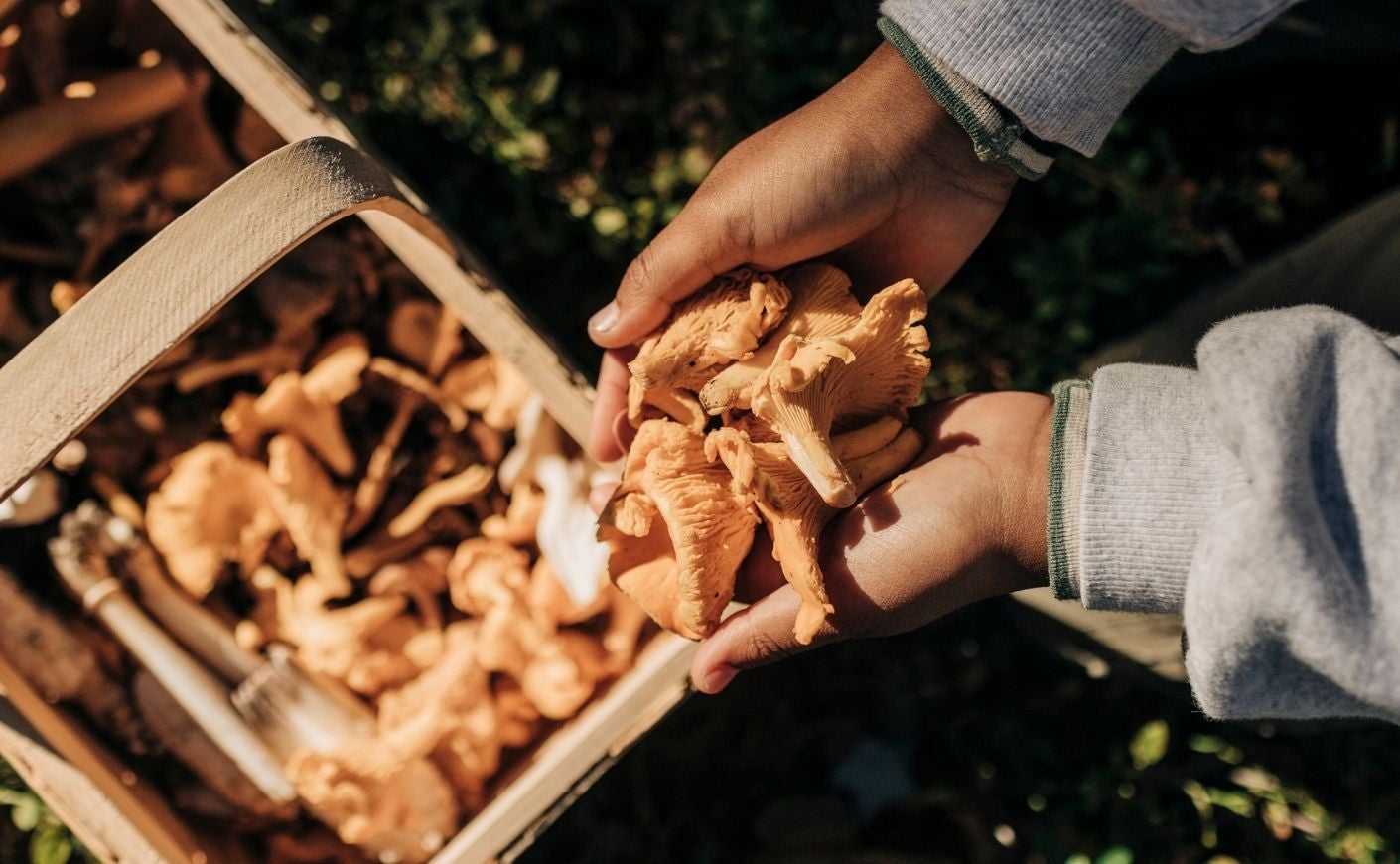
Many of us walk right past plants growing in our own neighborhoods without ever wondering what they are. Alexis Nikole Nelson sees something entirely different: a world of wild foods hiding in plain sight.
Known to millions of followers as the “Black Forager,” Nelson shows people just how much of the natural world around us is edible — from wild greens and mushrooms to berries and flowers. Now, she’s bringing that knowledge to her first book, Happy Snacking, Don’t Die!, a guide to foraging and vegan cooking out Sept. 22. But there’s a deeper lesson behind her joyful approach: The more closely you pay attention to the natural world, the more you notice when it starts to change.
Katie Couric Media spoke with Nelson about what foraging has taught her about climate change, the complicated history of gathering wild food, and why joy can be a powerful tool for getting people to care about the planet.
Katie Couric Media: On your platforms, you make foraging feel really joyful and accessible. But collecting your own food from the earth can be intimidating to people used to getting everything at a store. Why do you think that is?
Alexis Nikole Nelson: There are a lot of plants out there! And people think they have to be at my level immediately to pursue this as a hobby. That can feel very intimidating. Start by identifying the first handful of plants you see closest to your home, and slowly but surely expand your range of reference.
How do you take pollution into consideration when foraging?
People are everywhere, and where we gather in large numbers, pollution tends to follow — whether it’s runoff from cars or road salt. I personally avoid foraging along highways or particularly busy streets [because those plants won't be safe to consume].
If you’re foraging near a golf course, you also have to be mindful of herbicides and pesticides, because it takes a lot of chemical maintenance to keep the grounds looking so flat, green, and pristine.

Of course, farms don’t exist in a bubble, either. They’re often located alongside highways — not in some pristine world without pollution or passing cars. A lot of it comes down to educating yourself [on what a chemical-exposed plant looks like], using your eyes and making thoughtful choices.
Are you seeing plants emerge earlier, stick around longer, or appear in new places?
Being a forager gives you a boots-on-the-ground view of climate change. I’m seeing plants emerge weeks earlier than they did just three to five years ago. One popular native allium used to appear in early April; this year, it started poking through the ground in mid-March.
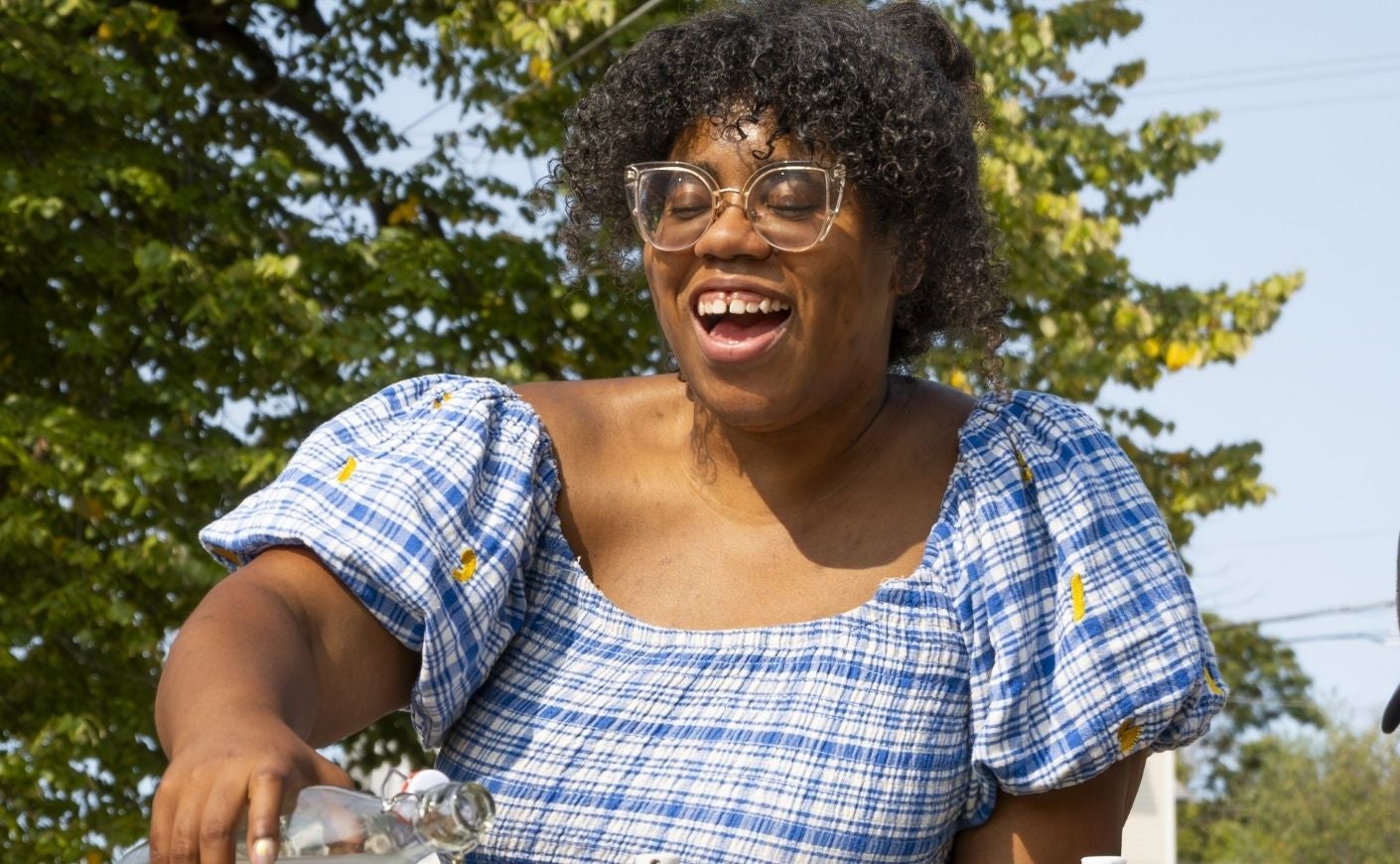
The forager in me is happy that I can harvest fresh greens in November. But the environmentally conscious part of me thinks, “We probably should’ve had our first frost by now. I shouldn’t be gathering lambsquarters [aka wild spinach] a week or two before Thanksgiving.”
This summer has been especially unpredictable. Some plants are early, others are late, and increased rainfall after a multiyear drought has shifted when things fruit and ripen. I recently visited a family in Massachusetts, where I usually gather beach plums in mid-September, and found myself eating them straight from the shrub in early August.
Not everyone realizes how unusual that is because they don’t have the same frame of reference. But the more you forage, the more attuned you become to your local environment and the more you want to protect it.
What happens when earlier ripening disrupts the animals and ecosystems relying on those foods?
It’s very easy, when you’re coming from an anthropocentric, very people-centered view, to say, “Oh, so you get to have a snack a month earlier than you would have otherwise. Who cares?” But what I’m often thinking about are the animals that also rely on those foods.
Take migratory birds. If a food they rely on ripens early, the birds may not have started migrating toward that food yet. But when a bird leaves Canada in September to head south for the winter, it has a mental map of all the different foods it has historically found along the way.
If it arrives and those foods are no longer there, that can be extremely detrimental. Missing even a few shrubs where birds would normally find fruit — the sugary food they need for what is essentially an endurance sport — could lead to precipitous declines in bird populations.
You talk about the history of foraging within Black and Indigenous communities in your book. What gets left out when it’s presented simply as a trendy hobby?
When foraging is seen only through the lens of being cool and trendy, you get places like Noma, where people pay hundreds or even thousands of dollars to eat beautifully prepared foods made from things they could pick outside for free.
It makes foraging seem like an activity set aside for the upper crust, which is crazy because many people in the United States stopped foraging in the 20th century precisely because it was viewed as a poor person’s activity. Meanwhile, many Indigenous and Black families continued pieces of that culture. My dad’s family, for example, moved from the South to Ohio right before he was born and maintained traditions like making poke salad with pokeweed greens every spring.
At the same time, people of color are still more likely to be viewed with suspicion while doing something outdoors that isn’t immediately identifiable. We also see Indigenous groups barred from their ancestral homelands after those lands are designated as parks, leaving them unable to participate in foodways passed down for generations.
Do you think your upbeat approach can get people to care about environmental issues that might otherwise feel daunting?
That’s why I always try to lead with joy. It can feel overwhelming to hear only negative news about the climate or what’s happening in your own neighborhood. I want to show people that there are still wonderful things out there — things we’ve yet to learn about and can joyfully protect because they’re worth protecting. We’re not past the point of no return, and sometimes that message is more effective at inspiring action than focusing only on the bad. But I think we need both.
You spend a lot of time outdoors. What's something that nature has taught you?
Nature has taught me that so many things are more resilient than you think — yourself included. I think, and admittedly cry, a lot about the American chestnut, a tree that once dominated the eastern United States but became functionally extinct in the time between my grandfather’s birth and now. A blight unknowingly brought in from abroad spread across its entire growing range over just a few decades.
A tree that was once the primary source of calories for many animals — and a major source of income for people, especially in Appalachia and places like southern Ohio, where I’m from — almost completely disappeared. But there’s still hope that we may someday reintroduce the American chestnut.
I’m also inspired by the communities and animals that persevered and adapted after such a monumental loss. That doesn’t mean we should ever be okay with losing nearly an entire species. But our ability — and nature’s ability — to ask, “What can I do right now to make the best of the situation I’m in?” is really inspiring and admirable.
This interview has been edited and condensed for length and clarity.
