


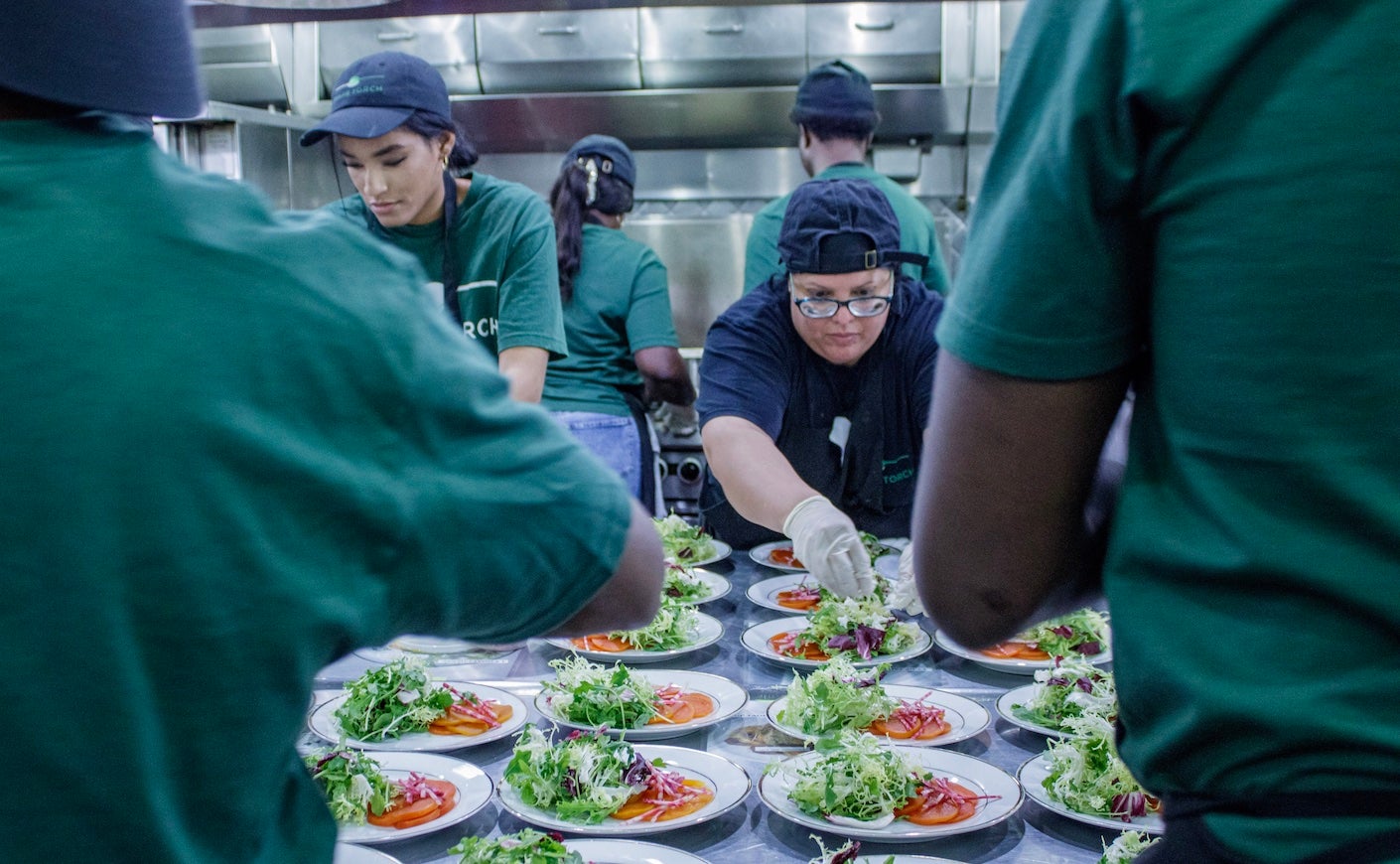
You know I love a good meal, especially when there’s a good story behind it. At Emma’s Torch, there’s a whole kitchen full of them. Founded by Kerry Brodie, the nonprofit provides paid culinary training and career support to refugees, asylees, and survivors of human trafficking, helping them build new lives while sharing a taste of the places they’ve called home. I supported the organization during my Going There book tour, and recently joined restaurateur Danny Meyer for a conversation at its 10th-anniversary gala. At a time when the immigration debate so often reduces people to numbers and political talking points, Kerry’s work offers a welcome reminder of the individuals behind the headlines — and what they bring to our communities. I asked her about starting over, the students who’ve stayed with her, and what Americans misunderstand about welcoming their newest neighbors.
If you feel inspired, you can donate to their efforts right here. And if you're lucky enough to live close to one of their cafes, I highly recommend you experience the food in person.
Katie Couric: Before Emma’s Torch, you worked in public policy. How did that transition come about?
Kerry Brodie: I started Emma’s Torch approximately a decade ago, with a simple idea: that through food, we could help refugees, asylees, and survivors of human trafficking build new lives and launch meaningful careers.
That idea took shape while I worked at the Human Rights Campaign and volunteered at a local homeless shelter in Washington, D.C. During that time, I began thinking about how food can bring people together, build bridges, and create opportunities.
I had no background in restaurants, but I was drawn to the hospitality industry and the opportunities it could offer people who were new to this country. I wanted to find a way to combine my background in advocacy with something more tangible, where we could help people build careers while also bringing communities together. That was really the beginning of Emma's Torch.
What’s a dish a student has cooked that you still think about — and what did learning the story behind it teach you about that person?
One that comes to mind is a student who wanted to make fumbwa, a dish from Central Africa, but couldn't find the traditional greens she needed here in the United States.

She worked with our chefs to explore other types of produce that might work instead, learning about ingredients available here while also teaching our team about the dish and its significance to her.
It was such a wonderful example of how much we all learn from one another at Emma's Torch. Our students are learning new culinary skills and techniques, but they're also bringing their own knowledge, traditions, and experiences into our kitchens. The best moments happen when those two things come together.
Tell us about a graduate whose story shows what starting over in America actually looks like — from their first day in your kitchen to where they are now.
We have so many graduates whose stories I could share, but I think Niran is a particularly lovely example of what can happen when someone is given the opportunity to build a career and pursue their dreams.
After graduating from Emma's Torch, Niran began pursuing a career in the culinary industry, gaining experience and developing her skills. She eventually took that experience and her passion for food and started her own business, Noura Chocolates!
I love Niran's story because it shows that our students' ambitions go far beyond finding their first job. We hope Emma's Torch can be a starting point, giving students the skills, confidence, and connections to pursue whatever comes next. Seeing Niran go on to build something of her own has been a joy and a wonderful reminder that our graduates decide what success looks like for them.
What do you wish Americans understood about refugees that gets lost in the immigration debate?
I wish more Americans understood that welcoming refugees isn't just an act of generosity. It makes our country stronger.
Emma's Torch is named after Emma Lazarus, whose words are inscribed on the Statue of Liberty. I think we've lost sight of something fundamental in her message: that welcoming the stranger has always been part of what makes America great.
So much of the immigration debate focuses on what people coming to this country might need from us, rather than what they bring with them. Our students arrive with skills, experiences, traditions, and an incredible determination to build new lives. They become our colleagues, neighbors, business owners, and friends. They contribute to our communities in ways that go far beyond the jobs they hold.
I get to see this every day at Emma's Torch. Welcoming refugees isn't just about changing their lives. It's about recognizing how much richer and stronger our own communities become when we make room for one another.
Has an experience at Emma’s Torch challenged one of your own assumptions?
When I started Emma's Torch, I think I assumed it would be much harder to convince people to get involved. I thought we would have to work really hard to persuade employers to take a chance on our students, or to get guests to understand why our mission mattered.
What I've learned is that most people genuinely want to make a difference. They just need an opportunity to do so. We see it in our employer partners, who open their doors to our graduates; in our guests, who choose to spend their time and money in our cafés; and in the countless people who have supported Emma's Torch along the way.
That's been one of the loveliest surprises of building Emma's Torch. There's so much generosity and goodwill in our communities, and sometimes all it takes is creating a way for people to put it into action.
What’s a cooking technique, ingredient, or kitchen habit you’ve picked up from a student that you wish every home cook knew about?
I think one of the loveliest things I've learned from our students isn't a particular cooking technique, but the importance of experiencing food with all of our senses. The smell of spices toasting, the colors of a dish coming together, the taste of something that reminds you of home. Food is about so much more than what ends up on the plate.
Our students have reminded me how deeply connected food is to memory, family, and tradition. A familiar smell or taste can transport you to another place or time, and sharing that experience with someone else can be incredibly meaningful. I think we could all benefit from slowing down a little and really taking it all in, rather than just rushing through our next meal.
