






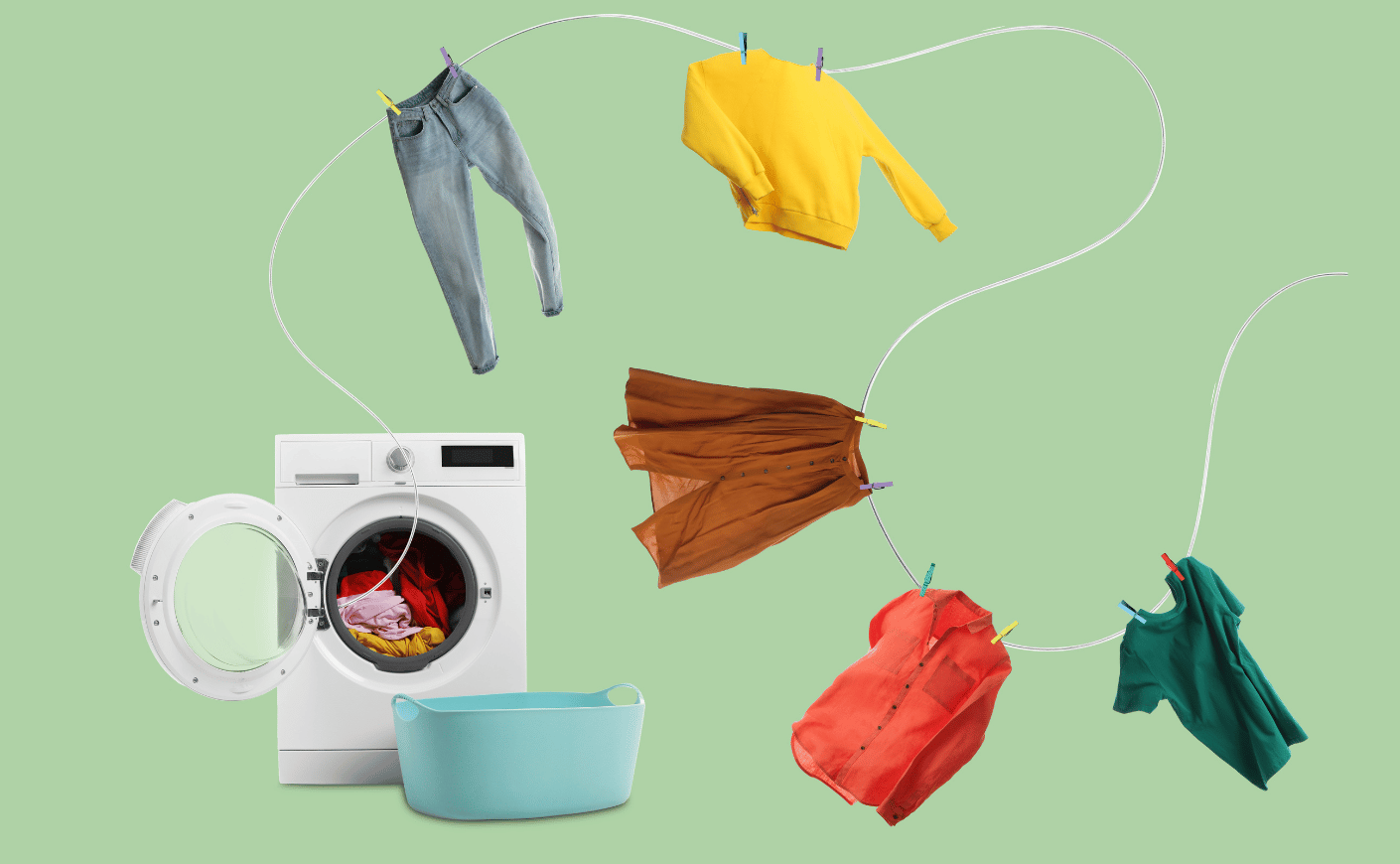
In the aftermath of a severe storm, communities first focus on immediate needs like safety, shelter, food, and clean water. But as the next phase of recovery begins, small moments, like taking a hot shower for the first time or getting clean clothes back, can offer a powerful sense of comfort and normalcy.
That sense of normalcy can take time to restore. After a disaster, many communities are left without electricity, running water, or access to everyday essentials for days, sometimes weeks. That’s why our partners at Procter & Gamble work with organizations around the world, including Cincinnati-based Matthew 25: Ministries, to help communities recover. Together, they provide essential products and services that help restore comfort, hope, and everyday routines. And thanks to a major new expansion, they're about to reach far more Americans than ever before.
How a decades-long partnership is expanding disaster relief across the U.S.
P&G’s commitment to disaster relief stretches back more than a century — starting with flooding in its hometown of Cincinnati in the early 1900s. Today, that same dedication to showing up for communities when it matters most continues through long-standing partnerships and programs like Tide Loads of Hope.
Matthew 25: Ministries first partnered with Procter & Gamble in 2012 and has operated the Tide Loads of Hope program since 2015 — a fleet of mobile laundry units that arrive in disaster-affected communities and offer free wash, dry, and fold services to impacted families and first responders. Since its launch following Hurricane Katrina in 2005, Tide Loads of Hope has completed more than 100,000 loads of laundry for impacted families and first responders — all free of charge.
In 2023, Walmart joined the collaboration, adding mobile shower and bathroom units to the disaster relief fleet. And this June, the three organizations announced a significant expansion: seven new combined shower-and-laundry trailers, plus two restroom-only units, strategically positioned at regional hubs across the country. The ambitious goal? To be within an eight-hour drive of 90 percent of the mainland U.S. population when operational.
Claude Zukowski, senior director of global community impact at P&G, has watched this partnership grow from a small pilot into a national disaster relief network. She says the expansion is a direct response to a sobering reality: “When we started this program, two or three major deployments a year were kind of the average. But today, these disasters are impacting more and more communities in larger ways.” According to Climate Central, the past three years have had the highest number on record of billion-dollar disasters in the U.S.

Finding comfort after crises
Zukowski says that once the most immediate needs, such as food, shelter, and water, are met, many families enter a transitional phase in which the focus shifts to regaining daily routines as local facilities and services are gradually restored.
“Many communities will still be without electricity or water, or stores may not all be open," she says. “Having a warm shower or access to laundry services can really make a difference as people begin to get back to the routines of everyday life.”
Clean clothes, it turns out, are about much more than cleanliness — they can help restore dignity, comfort, and a sense of normalcy in the wake of a crisis. After a tornado, for example, many people have only what they were wearing when it hit, or a few items they were able to recover from the wreckage. The importance of those pieces goes far beyond the practical.
“Being able to take the items that are meaningful, wash them, and give them back means a lot to people,” Zukowski says. “Kids want to go back to school and people want to go back to work, and having clean clothes makes that possible.”
What it looks like when relief rolls in
The Tide Loads of Hope trucks are hard to miss. They show up in affected communities, set up in accessible locations, bring their own generators and water if needed, and get the word out that services are free and open to residents and disaster responders alike. Families can drop off two loads of laundry per day and have them washed, dried, and folded within 24 hours.
Meanwhile, anyone in the community can walk up and use the mobile shower units. Alongside these services, P&G and its nonprofit partners like Matthew 25: Ministries distribute essential supplies and personal care kits stocked with trusted everyday products like Head & Shoulders, Old Spice, Pantene, Charmin, Always, Pampers, Olay, and Gillette, directly into neighborhoods.
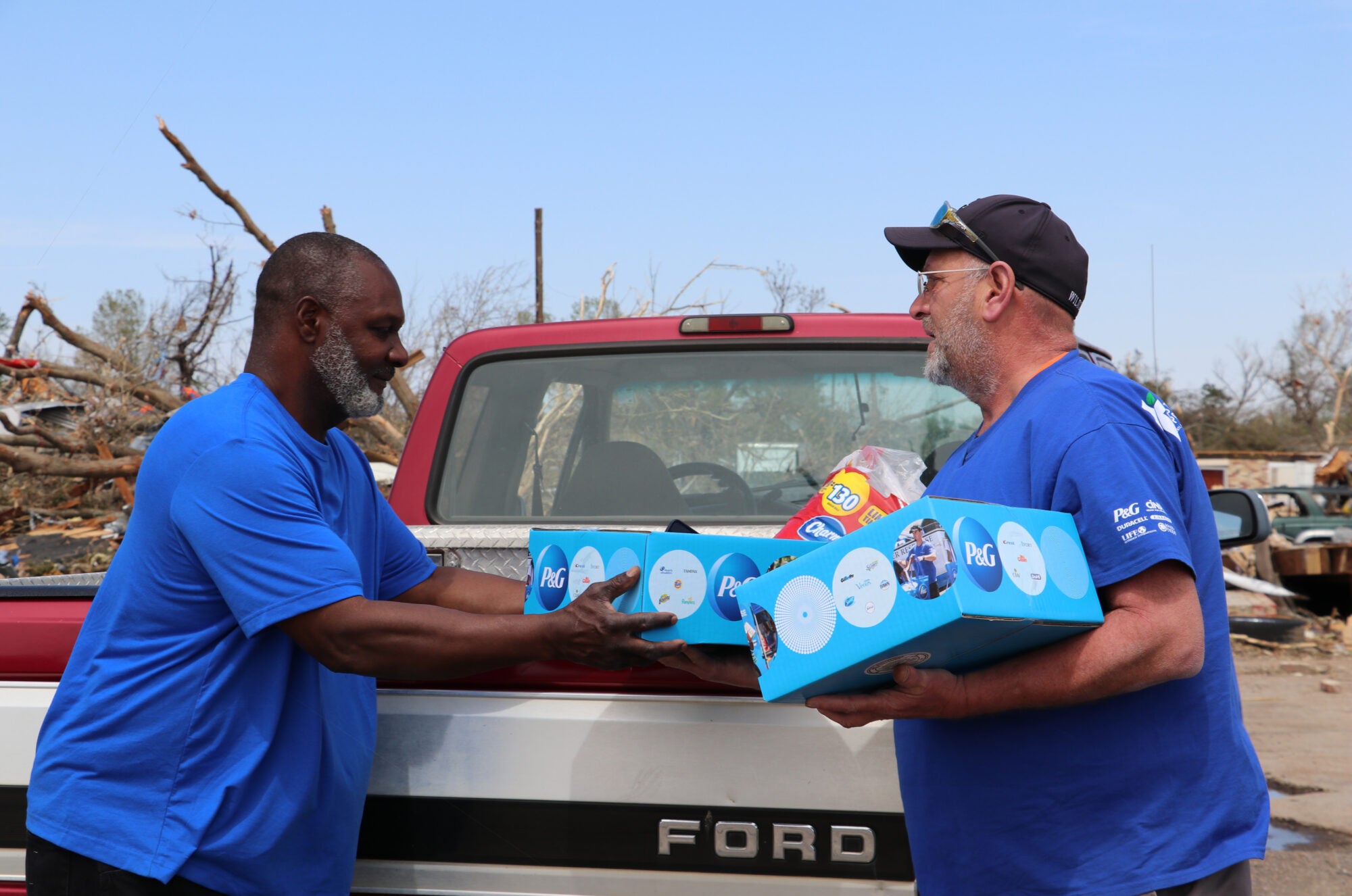
For Zukowski, one story captures why it all matters. "Somebody described seeing the Tide Loads of Hope truck in their community as a welcome beacon of hope," she says. "Just knowing that somebody had come to help support them during their time of need. We give laundry, but oftentimes we also give hugs, because we know that people are going through really difficult times."
That moment of hope — of feeling seen and supported during recovery — is what the P&G Disaster Relief Program is built around.
And that kind of on-the-ground presence is something the expanded disaster relief fleet is designed to make possible in more places, faster than before. The new vehicles are all-in-one trailer units equipped with washers, dryers, and shower stalls, mobile enough to follow community needs as they evolves.
"If we're in an area and find that the community is recovering or services are being restored," Zukowski says, “we can reposition the vehicles to another area where they're more critically needed."
Why getting help to people faster matters
The early days of Tide Loads of Hope looked very different. The initiative launched with one massive tractor-trailer outfitted with around 32 washers and dryers — impressive, but not always practical.
"It takes a lot of effort to set up a vehicle that size, and it didn't really make sense if we only needed to be in the area for a couple of days," Zukowski says. Over time, the P&G disaster relief fleet evolved into a more mobile range of small, medium, and large vehicles, allowing multiple units to be deployed simultaneously across different locations or combined for larger-scale disasters.
The new expansion takes that logic further, pre-positioning units in cities across the country based on where they can quickly offer the most impact. It's a disaster preparedness strategy that required looking at disaster frequency, population density, and geography all at once — making sure the trucks aren't sitting in the path of the disasters they're meant to respond to, but close enough to get there quickly when called. The goal is to be able to help more communities even faster than before.
As Zukowski is quick to point out, it's certainly a team effort. "It's not something any one organization, community, or company can do alone," she says.
The expanded fleet is expected to be fully operational by June 2027.
To learn more about Matthew 25: Ministries and how to support their work, visit m25m.org. To learn more about P&G's Disaster Relief program, visit https://us.pg.com/community-impact/disaster-relief/.
