






Hungary’s most consequential election in decades has just delivered an important victory for democracy and accountability.
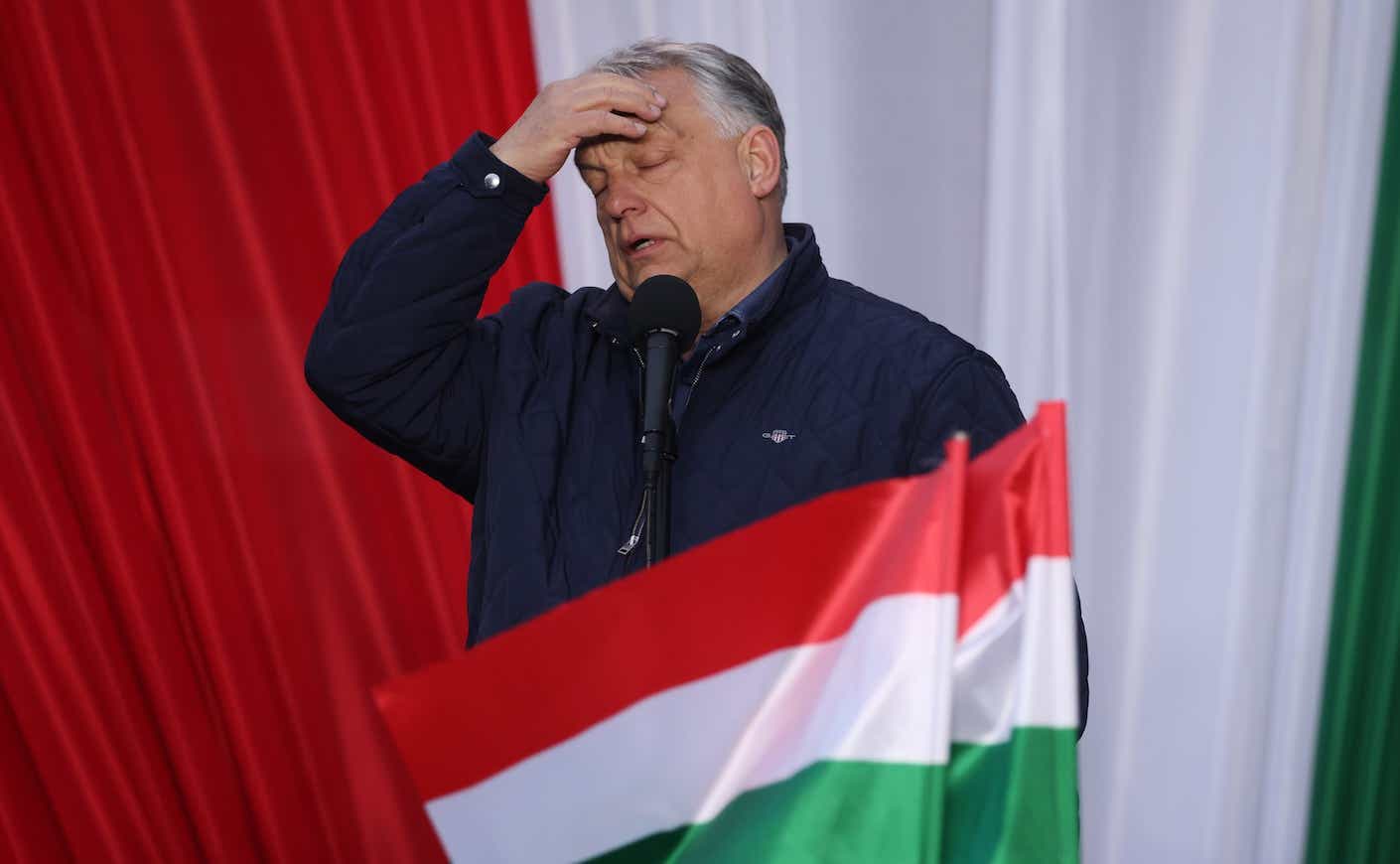
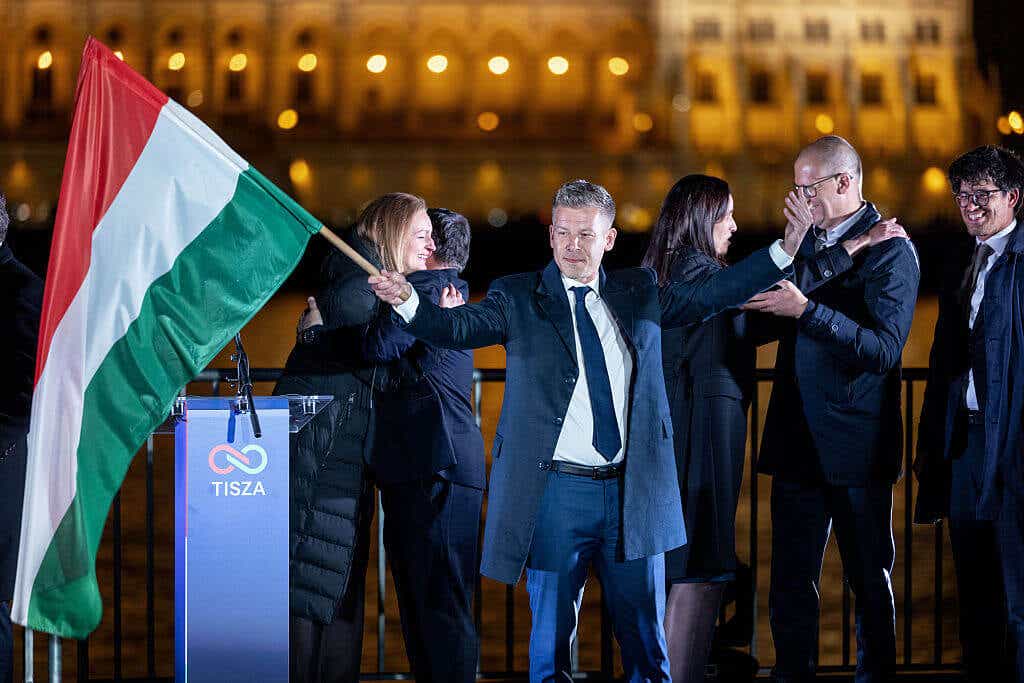
For Hungarians, opposition leader Péter Magyar’s emphatic defeat of Prime Minister Viktor Orbán and his ruling Fidesz Party ends 16 years of corruption and quasi-authoritarianism.
The outcome will also be felt widely, from Moscow to Washington and beyond.
In a contest characterized as a referendum on whether Hungary should pivot west or continue its authoritarian drift, Magyar’s victory is a stern rebuke to the dark, transnational forces of nativism, division, and the politics of resentment that have become part of mainstream political discourse.
Perhaps the most surprising thing about the election was not the turnout (more than 74 percent, shattering previous records), or even the result (a two-thirds supermajority for Magyar’s Tisza party, winning at least 138 of 199 parliamentary seats).
Both had been predicted for some time, and Orbán’s soft authoritarianism had always left the door ajar for a possible opposition victory at the polls.

Rather, the biggest surprise might have been Orbán’s immediate concession. He didn’t try to manufacture a crisis or use his security services to hold onto power. Given the strength of anti-government sentiment in Hungary, such a move could have led to a “color revolution” — the type of massive street protests seen previously in Ukraine, Georgia, and other countries.
This could have turned bloody. Liberal Hungarians, and the European Union more broadly, will be heaving a collective sigh of relief.

Why Orbán was suddenly vulnerable
Having won office, Magyar will need to move quickly but also carefully to bring change, so as not to alienate too many former Fidesz voters.
He has already asked President Tamaś Sulyok to resign, along with other Orbán loyalists. The Tisza supermajority in parliament is important here. It will be required for constitutional amendments to dismantle the architecture of Orbán’s authoritarian state.
Fortunately, this will be easier in Hungary than fully fledged autocratic systems. Indeed, Orbán’s longevity can somewhat be attributed to the fact that his brand of authoritarianism was only partial.
Certainly, it had the structural elements of an autocracy. That included widespread, government-controlled gerrymandering to ensure Fidesz victories, and the cynical diversion of state funds to cities and provinces controlled by Orbán’s political allies.
In addition, the nationalized media ecosystem was heavily supportive of the government, although alternative voices kept debate alive via foreign-owned news organizations.
But Orbán’s success also came from facing weak and easily fragmented or co-opted oppositions. Magyar — a former Orbán ally — ran a disciplined campaign that nullified the electoral advantage for Fidesz.
Ultimately, though, when voters have a choice — even a constrained one — they will eventually reject governments that rely on blame and victimhood to mask their inability to offer people a better future.
Under Orbán, Hungary was consistently ranked the most corrupt nation in Europe. In 2025, it ranked last in the EU on relative household wealth. It had also suffered rampant inflation and economic stagnation after Russia’s invasion of Ukraine in 2022.
Video footage of country estates built by Hungary’s elites, complete with zebras roaming the grounds, perfectly symbolized the popular outrage with wealth inequality.
A setback for Putin, Trump, and right-wing populism
Hungary’s new start also sends a powerful message to other nations. Clearly, the biggest loser from the election is Vladimir Putin’s Russia, which had hastily tapped Kremlin powerbroker Sergey Kiriyenko and a team of “political technologists” to assist Orbán.
Under Orbán, Hungary was the strongest pro-Kremlin voice in the EU. It regularly stymied aid packages for Ukraine, tied up decision-making on the war in bureaucratic processes, and held the European Commission to ransom by threatening hold-out votes.
In fact, just days before the election, Bloomberg published a transcript of a phone call between Orbán and Putin from October 2025, in which Orbán compared himself to a mouse helping free the caged Russian lion.
This came on the back of revelations that Orbán’s foreign minister, Péter Szijjártó, and other Hungarian officials had regularly been leaking confidential EU discussions to Moscow.
Another loser from the Hungarian election is the Trump White House.
The pre-election Budapest visit by US Vice President JD Vance to shore up support for Orbán was breathtakingly hypocritical. Vance farcically demanded an end to foreign election meddling, while engaging in precisely that. The White House then doubled down, with Trump promising on Truth Social to aid Orbán with the “full Economic Might of the United States.”
Now, though, Trump is very publicly on the losing side. And like the debacle of his Iran war, he tends to chafe at losing.
The election also shows that US foreign interference campaigns are not invulnerable, though the White House will doubtless continue excoriating Europe. The Trump administration’s view that Europe is heading for “civilizational erasure”, necessitating US efforts to “cultivate resistance” and “help Europe correct its current trajectory,” is documented in its 2025 National Security Strategy.
But the broader movements representing what Russian journalist Mikhail Zygar calls the “Putinization of global politics” have been repudiated by Hungary’s election result.
Under Orbán, Hungary was a hub for ultraconservative voices. Think tanks like the MAGA-boosting US Heritage Foundation and Hungary’s Danube Institute regularly held prominent dialogues bemoaning Europe’s capitulation to wokeism.
The Hungarian iteration of the Conservative Political Action Conference (CPAC), sponsored by the American Conservative Union, was a key calendar for Western right-wing politicians and commentators, including former Australian Prime Minister Tony Abbott, Reform UK leader Nigel Farage, and former Fox News host Tucker Carlson.
China will also be keenly watching Magyar’s new government, especially since it has viewed Hungary as a soft entry point to the EU. The large-scale investment in electric vehicle manufacturing, especially battery production, are part of a growing Chinese business footprint in the country.
For Beijing, the question will be whether Magyar seeks to sacrifice this lucrative investment to burnish his European credentials.
What about the winners?
In addition to Hungarians outside Orbán’s orbit of elites, the EU will welcome the news that it remains an attractive force.
Ukraine, too, may find it easier to secure European assistance. At the very least, smaller Ukraine detractors like Slovakia will have to choose between acquiescing quietly or thrusting themselves uncomfortably into the open.
Yet, although Hungary’s result is promising, the world is still trending towards illiberalism.
And with the US midterm elections fast approaching, far-right American politicians, including Trump himself, will be studying Hungary’s lessons closely. If they conclude that Orbán’s brand of authoritarianism was too soft, a more hardline path looms as an ominous alternative.
Matthew Sussex, Associate Professor (Adj), Griffith Asia Institute; and Fellow, Strategic and Defence Studies Centre, Australian National University
This article is republished from The Conversation under a Creative Commons license. Read the original article.
