






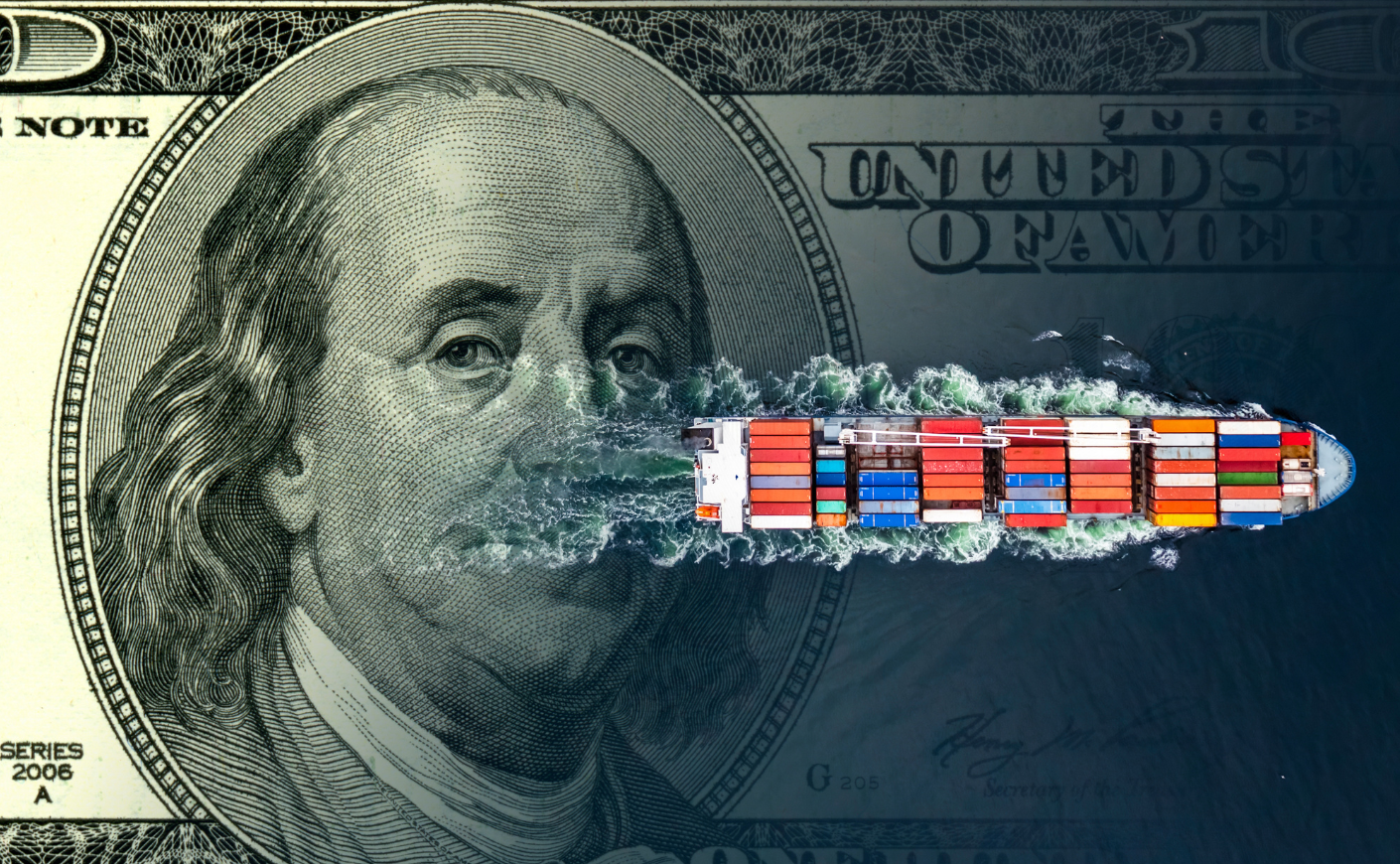
A year after rolling out sweeping global tariffs, the Trump administration is starting to reverse course.
Following a Supreme Court ruling in February that struck down the policy, officials began accepting applications from businesses seeking to reclaim more than $166 billion, kicking off a massive and potentially messy refund process. Monday marked the first phase of a new digital system designed to return the money.
The early numbers are staggering: As of April 9, about 56,000 importers had already completed the steps needed to receive electronic refunds — representing roughly $127 billion, or more than three-quarters of the total eligible. In all, more than 330,000 importers paid the tariffs in the first place, spanning some 53 million shipments.
How the refund process works
The government launched a new online system — known as the Claims Administration and Processing Environment (CAPE) — where businesses can apply to get their money back.
But this isn’t an automatic reimbursement. Companies have to build their case, pulling together years of import records, tariff payments, and other documentation to show what they’re owed.
The process could be especially burdensome for smaller companies that may not have the resources to navigate the paperwork-heavy system, raising the risk that some businesses could leave money on the table. Jay Foreman, CEO of toymaker Basic Fun, told Reuters he was ready at 8 a.m., setting up a “war room” to upload more than 500 files.

For now, the process is rolling out in phases, with only certain tariffs eligible in the initial round. The system will only fully process refunds for entries that are either unliquidated or were liquidated within the past 80 days. According to The Guardian, businesses with goods caught up in legal disputes, anti-dumping investigations, or other unresolved customs processes won’t be able to file claims yet, meaning some companies could be waiting longer just to apply.
Even for those who can file now, it’s not exactly a quick turnaround. Officials say it could take anywhere from 60 to 90 days to review claims and issue payments, but that timeline could stretch as more applications flood the system.
“A refund process that takes several months to complete doesn’t solve the cash flow problem that it is supposed to fix,” Brad Jackson, co-founder of After Action Cigars in Rochester, Minnesota, told the Associated Press.
Who gets the money — and who doesn’t
At first glance, the answer seems simple: The companies that paid the tariffs get the refunds. But in practice, it’s more complicated.
The money is going back to importers — the businesses charged the tariffs at the border, including manufacturers, distributors, and retailers across a wide range of industries. Some of the biggest names stand to gain the most: Walmart could receive about $10.2 billion, while Target is expected to get roughly $2.2 billion back, according to a Citi analysis.
For many of these companies, those costs were baked into pricing over time. That’s where the disconnect comes in. Economists broadly agree tariffs are often passed on, at least in part, to consumers in the form of higher prices. In other words, while companies wrote the checks to the government, shoppers likely absorbed some of the cost at the register.
There’s no legal requirement for companies to return that money to customers. Still, a few have signaled they might. FedEx, for example, says it will try to return funds in cases where it acted as the importer of record but passed duties on to clients. Costco has also suggested it could share the benefit through lower prices, even as it faces a class-action lawsuit from shoppers arguing refunds should be returned more directly.
Legal and political fallout
The refunds are only part of the story. The Supreme Court’s decision was a major setback for the administration, putting limits on how far a president can go in using emergency powers to reshape trade policy. But it also set off a new wave of questions — and potential lawsuits.
Some trade lawyers say the refunds themselves could create fresh legal risk for companies. For example, if businesses that passed tariff costs on to customers by raising prices decide to keep the refunded money, they could face claims from customers over those those higher prices they paid. A January analysis from Harvard Business School’s Pricing Lab found tariff pass-through added about 0.76 percentage points to the Consumer Price Index by October 2025. As attorney Stefan Reisinger put it to CNBC: If companies get refunds, what are the chances they get sued by customers?
At the same time, the policy itself may not be gone for long. Administration officials are already looking at other ways to bring tariffs back — including Section 301 investigations, which are used to target unfair trade practices. Treasury Secretary Scott Bessent said last week that the process is underway, raising the possibility tariffs could return at similar levels as soon as this summer.
That has importers on edge. Many say they’re still trying to unwind the last round of tariffs, and now they could be facing a new version of the same policy, just under a different legal framework.
All that to say, the refunds may be starting, but the bigger fight over tariffs is just getting started.
