






One year after Donald Trump’s second inauguration, a pattern emerges. Across dozens of executive orders, agency memos, funding decisions, and enforcement changes, the administration has weakened federal civil rights law and the foundations of the country’s racially inclusive democracy.
From the start, the U.S. was not built to include everyone equally. The Constitution protected and promoted slavery. Most states limited voting to white men. Congress restricted naturalized citizenship to “free white persons.” These choices were not accidents. They shaped who could belong and who could exercise political power, and they entrenched a racial political majority that lasted for generations.
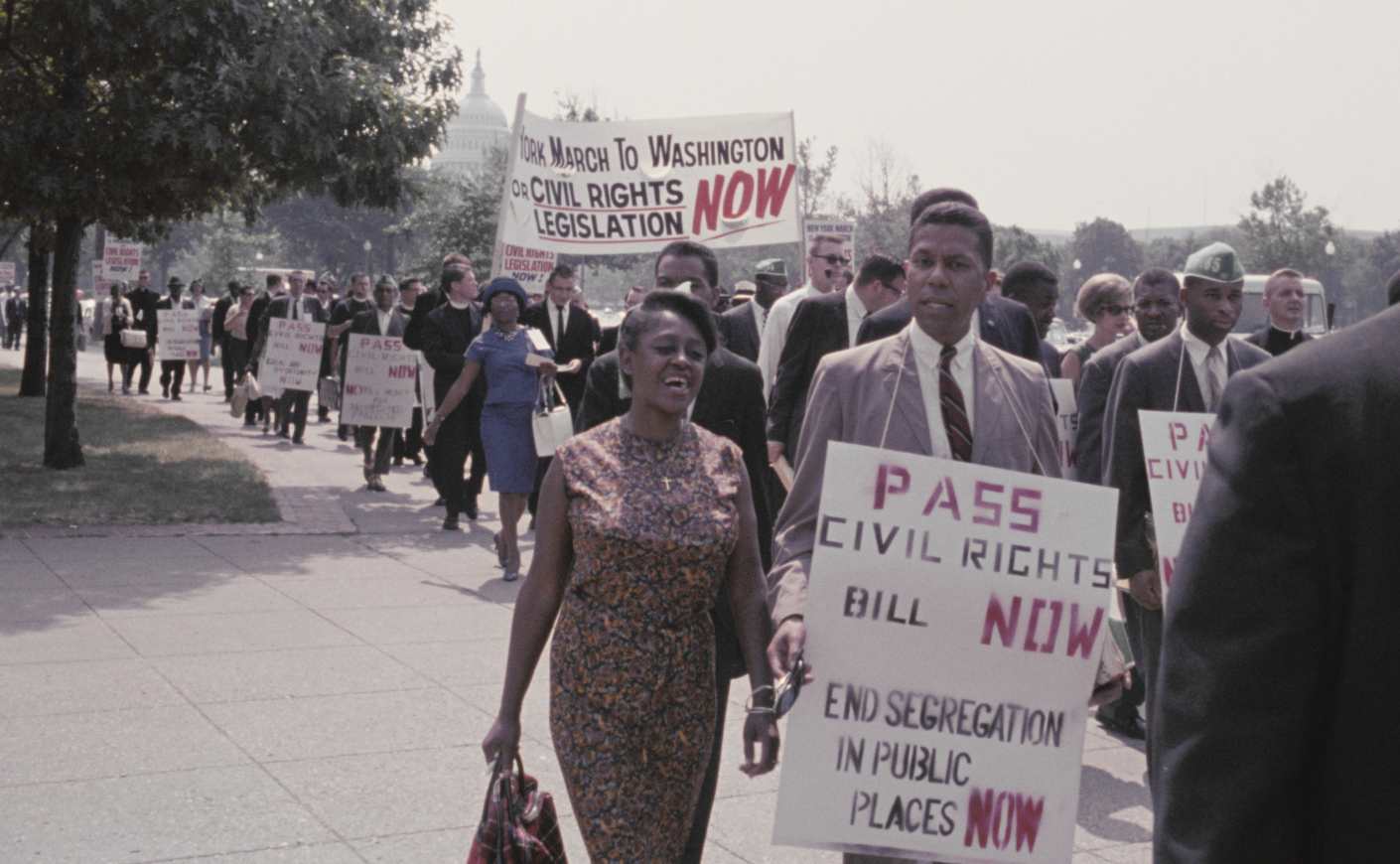
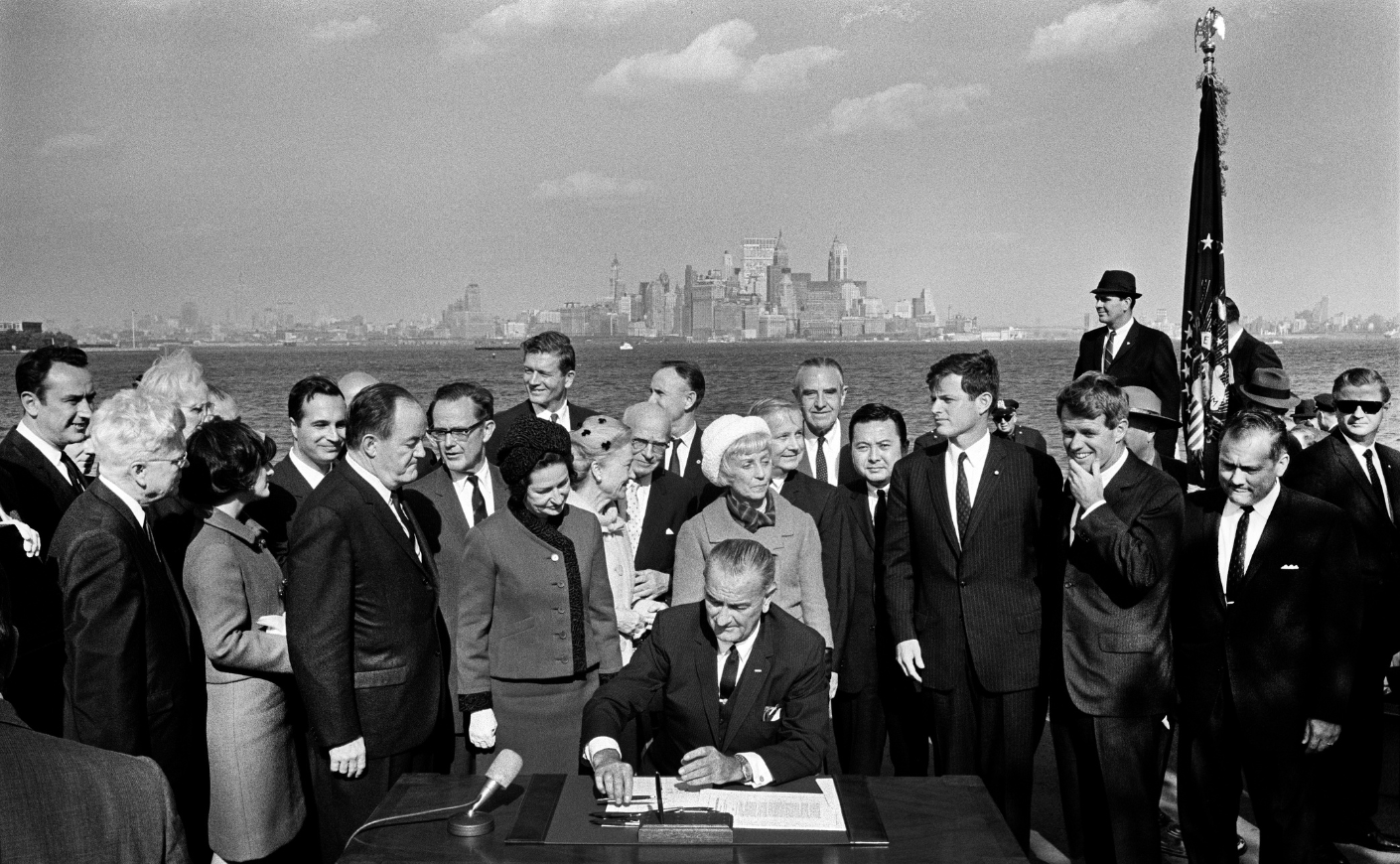
That began to change in the 1960s. After decades of protest and pressure, Congress enacted laws that prohibited discrimination in employment, education, voting, immigration, and housing.
Federal agencies were charged with enforcing those laws, collecting data to identify discrimination, and conditioning public funds on compliance. These choices reshaped U.S. demographics and institutions, with the current Congress “the most racially and ethnically diverse in history,” according to the Pew Research Center. The laws did not eliminate racial inequality, but they made exclusion easier to see and harder to defend.
The first year of the second Trump administration marks a sharp reversal.
Cumulative retreat
Rather than repealing civil rights statutes outright, the administration has focused on disabling the mechanisms that make those laws work.

Drawing on over two decades of teaching and writing about civil rights and my experience directing a GW Law project on inclusive democracy, I believe this pattern reflects not isolated administrative actions but a cumulative retreat from the federal government’s role as an enforcer of civil rights law.
Over the past year, the president and his administration have taken a series of connected actions:
- On its first day in office, announced the end of all federal diversity, equity, and inclusion programs, including diversity officers, equity plans, and related grants and contracts.
- Shut down or sharply cut funding for federal programs aimed at reducing inequality, including offices focused on minority health, minority-owned businesses, fair federal contracting, environmental justice, and closing the digital divide in broadband.
- Warned schools that diversity programs could jeopardize their federal funding, opened investigations into colleges offering scholarships to students protected under DACA — the Obama-era policy providing deportation protection for undocumented immigrants who came to the U.S. as children — and signaled that colleges risk losing federal student aid if their accrediting agencies consider diversity.
- Revoked security clearances and access to federal buildings for employees at law firms with diversity policies. The FCC investigated media companies for promoting diversity and threatened to block mergers by companies with similar programs, leading several companies to drop their initiatives.
- Issued a government-wide memo labeling common best practices in hiring, admissions and other selection and evaluation processes — such as compiling diverse applicant pools, valuing cultural competence, considering first-generation or low-income status, and seeking geographic and demographic representation — as potentially legally suspect. The memo warned that federal funding could be cut to schools, employers, and state and local governments using such practices. Federal prosecutors reportedly investigated federal contractors that consider diversity, characterizing such initiatives as fraud.
- Weakened enforcement against discrimination by ordering agencies to stop using disparate impact analysis. That kind of analysis identifies disparities in outcomes, assesses whether they are justified by legitimate objectives, and intervenes when they are not. The Department of Justice, the EEOC, the National Credit Union Administration, and other agencies complied and dropped disparate impact analysis. Because algorithmic systems typically operate without explicit intent, eliminating disparate impact analysis reduces federal agencies’ ability to detect and address discriminatory outcomes produced by increasingly automated government and private-sector decision-making.
- Rescinded an executive order that barred discrimination by federal contractors, required steps to ensure nondiscriminatory hiring and employment, and subjected contractors to federal compliance reviews and record-keeping. This weakened a key mechanism used since 1965 to detect and remedy workplace discrimination.
- Eliminated data used to track inequality, including rolling back guidance encouraging schools to collect data on racial disparities in discipline and special education. The administration also removed data used to identify racial disparities in environmental harms.
- Dismantled or sharply reduced civil rights offices across federal agencies, including the Department of Homeland Security, the Social Security Administration, and the Department of Education. About three-quarters of lawyers in the Justice Department’s Civil Rights Division left.
- Pressured the Smithsonian to remove exhibits about racial injustice, restored Confederate monuments and military base names, and barred schools and teacher training programs from including material the administration labeled divisive, such as unconscious bias.
- Declared English the nation’s only official language, repealed a requirement that federal agencies provide meaningful access to government programs and services for people with limited English proficiency, and prompted the General Services Admininistration and the departments of Justice, Education, and other agencies to scale back language-assistance requirements and services.
- Attempted to limit birthright citizenship guaranteed by the 14th Amendment, and adopted practices that treat ethnicity and non-English accents as legitimate reasons for immigration stops.
The pattern is hard to miss
Taken together, these shifts have practical consequences.
When agencies stop collecting data on racial disparities, discrimination becomes harder to detect. When disparate impact analysis is abandoned, unfair practices with no legitimate purpose go unchallenged. When diversity programs are chilled through investigations and funding threats, institutions respond by narrowing opportunity. When history and language are recast as threats to unity, truth, and freedom of speech and thought are suppressed and undermined.
Administration officials argue that these steps are needed to prevent discrimination against white people, promote unity, ensure “colorblind equality,” and comply with a Supreme Court decision that struck down affirmative action in college admissions. But that ruling did not ban awareness of racial inequality, or neutral policies aimed at reducing it. Many of the administration’s actions rely on broad claims of illegality without providing specific violations.
The selective nature of enforcement is also telling.
Books about racism and civil rights were removed from military libraries, while books praising Nazi ideas or claiming racial intelligence differences were left untouched. The administration suspended admissions of refugees — over 90 percent of whom have been from Africa, Asia, and Latin America in recent years — but then reopened the refugee program for white South Africans.
One year in, the pattern is hard to miss.
The administration is not simply applying neutral rules. It is dismantling the systems that once helped the U.S. move toward a more open and equal democracy. It is replacing them with policies that selectively narrow access to economic, cultural, and educational participation.
The result is not simply a change in policy, but a fundamental shift in the trajectory of American democracy.
Spencer Overton is a professor of law at George Washington University.
This article is republished from The Conversation under a Creative Commons license. Read the original article.
