






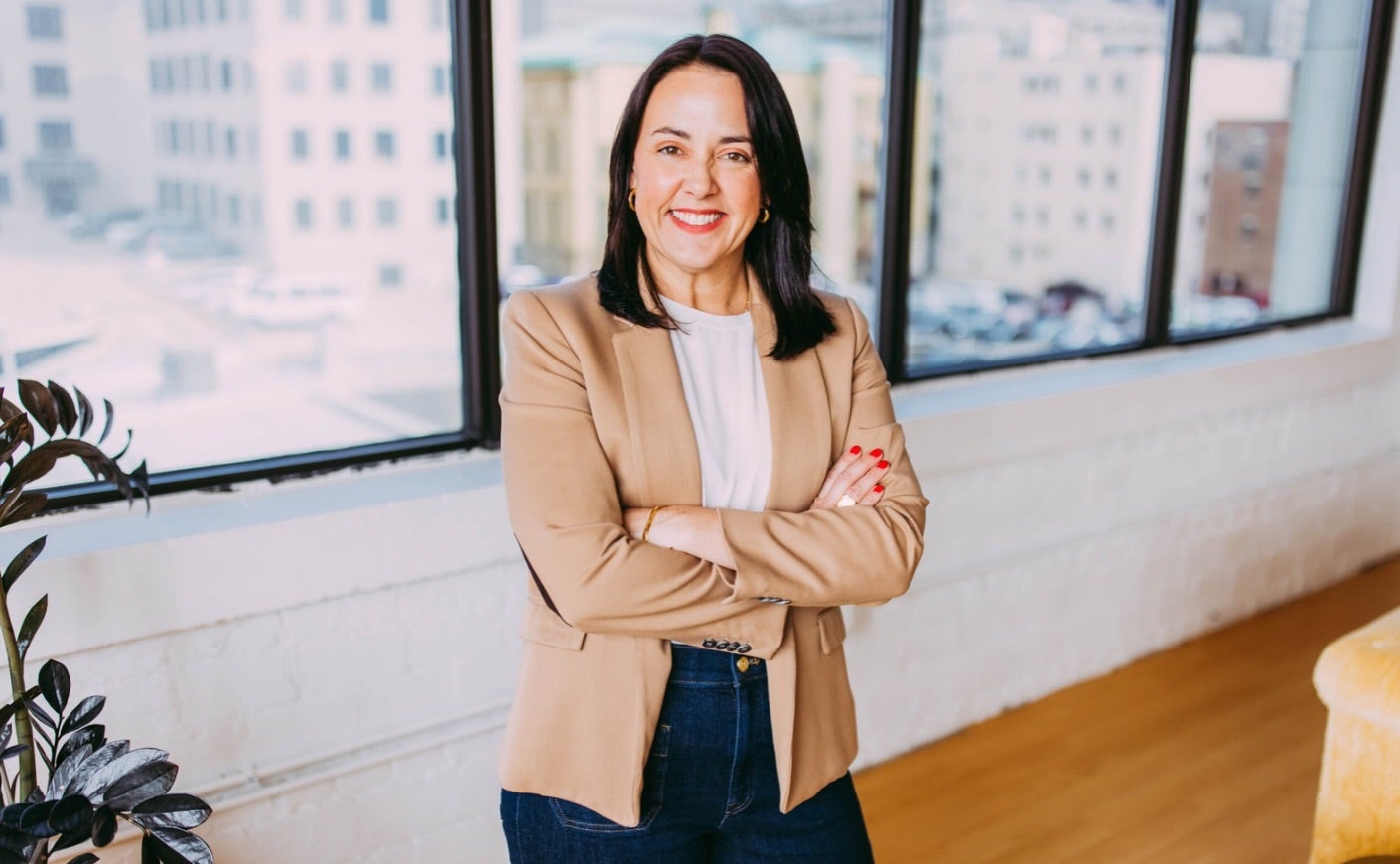
- Denise Powell, co-founder of Women Who Run Nebraska, is running for Nebraska's open 2nd Congressional District seat.
- If elected, she would become Nebraska's first person of color in Congress, and the first woman to represent her district.
- She's focused on voters' affordability concerns: childcare, housing, healthcare, and rising costs tied to tariffs.
- Her near-fatal ectopic pregnancy shapes her defense of reproductive healthcare and alarm about shrinking access and dangerous hurdles.
Nebraska Democrat Denise Powell has spent years helping other women run for office. Now, she’s the one with her name on the ballot.
Powell co-founded Women Who Run Nebraska in 2017 after attending the Women’s March in Washington, D.C. This year, she’s running for the open House seat in the state’s 2nd Congressional District, where she faces Republican Omaha City Councilman Brinker Harding.
If elected, Powell would make history as the first woman to represent the district and the first person of color Nebraska has sent to Congress. But when we spoke, she was focused largely on the issues she says she hears about from voters every day: the cost of childcare and housing, access to healthcare, and frustration with a political system many people feel isn’t working for them.
We asked Powell about what Democrats need to do differently, her own life-threatening pregnancy experience, the rise of AI, and how she thinks her party can rebuild trust with voters.
Katie Couric Media: Affordability remains one of voters’ biggest concerns. If Democrats take back the House, what should they do first to actually bring down costs for families?
Denise Powell: Affordability is the number one thing people want to talk about. For different people, that means healthcare, housing, childcare, or elder care.
We’ve been hearing a lot from small business owners and farmers affected by the tariffs. I heard a story today about a guy — a Republican — who had to close down his shooting range because the cost of ammunition spiked so high. Getting a handle on this rollercoaster tariff policy is going to be really important.

Donald Trump remains the dominant figure in the Republican Party. What has his second term shown you about what Democrats should be doing differently?
The second term is an opportunity for Democrats to home in on the harm the administration is doing. It’s easier to connect the dots between the administration’s policies, what I would label as overt corruption and misprioritization of resources, and what’s happening to American families.
People see that the president is billions of dollars richer than when he came into office, while people can’t put food on the table. When he’s prioritizing ballrooms, painting statues gold, and retrofitting Qatari jets, that’s going to frustrate people.
You’ve spoken publicly about nearly dying from an ectopic pregnancy 14 years ago. How did that experience shape your views on abortion restrictions and reproductive health care?
In that moment, I realized how split-second decisions can lead to really damaging consequences. In my case, they were thinking about moving me to a different hospital, but experts from our women’s hospital said, "She can’t be moved. We have to come down to her." So I was already in a hospital being treated by doctors who weren’t specialists in this work.
That just goes to show that every pregnancy is different, and pregnancy can be really complicated. An hour more, and I might not be standing here today. I would’ve left behind my husband and a 2-year-old child.
There is no government official who knows more about what’s right for a woman and her body than a woman and her doctor. I’m just so grateful that my doctors didn’t hesitate and were able to save my life. I’m very worried about the consequences for people in our state and in other states, especially as we see more and more cuts to our healthcare system. People are already struggling to access the care they need, and creating more hurdles for them to jump through is going to be really, really dangerous.
The Trump administration has floated policies aimed at encouraging Americans to have more children, including proposals to support families with a stay-at-home parent. What policies do you think would make it easier for Americans to start and raise families?
If we want to support moms and encourage people to grow their families, we should be doing more to address our shortage of childcare providers. It costs $33,000 a year to send two kids to daycare in Nebraska. Folks just can’t keep up. If you don’t have a safe place to send your child, a place you can afford, there’s no way you can get out and work or volunteer or contribute to society however you choose to.
It also has to do with the cost of housing and healthcare. I hear that from a lot of young people. They’re not looking for their first home because they don’t think they can afford one. They’re not looking to start a family because they don’t see a world in which they can afford it.
AI is advancing faster than Congress has been able to regulate it. Do you think Washington needs to step in — and what guardrails would you support?
It's important that we continue to lead in this space, but not without taking into consideration the broader impacts on our community. That’s where guardrails come in — independent investigations, more transparency, and proposals like requiring a kill switch.
We also have to look at AI through the lens of how it impacts working families. I hear from a lot of young people who are worried about a world where advancements in AI mean jobs are changing.
If elected, you’d make history as the first woman to represent Nebraska’s 2nd District and the first person of color Nebraska has ever sent to Congress. What would that mean to you?
When I’m out in the community or at a parade and I see little girls who recognize me from TV or a mailer, they may not know what party I am or what my platform is. They just know that there’s this woman doing this thing. That means a whole heck of a lot. I’ve been advocating for women getting elected to public office for the last decade. I never thought I would be the one to run. Having a chance to do this and represent our state this way is pretty meaningful.
What do you say to voters who are unhappy with Republicans but aren’t convinced Democrats would make their lives better? How does the party earn back their trust?
I ask them what’s keeping them up at night. There’s power in getting face-to-face with somebody, introducing yourself, and reassuring people that you hear them, you see them, and you’re going to do everything possible to make their lives better.
We’re in this unique moment where I’ll go out to the rural part of our district and talk to 70-year-old conservative Republicans, and then I’ll go into more urban parts and talk to 20-year-old Democrats, and they’re talking about a lot of the same things.
Everything is too expensive. Seniors are worried about losing their Social Security. They’re bagging groceries because they can’t make ends meet. They can’t pay their prescription bills and housing costs. And I’m talking to young people who are saying, “I don’t know how I’m ever going to find a job in this economy. I’m never buying a house. I can’t afford healthcare.”
That’s how we start rebuilding trust, because it’s not guaranteed — it’s earned. The only way you earn that trust is by doing the things you promised to do.
This interview has been edited and condensed for clarity and length.
