






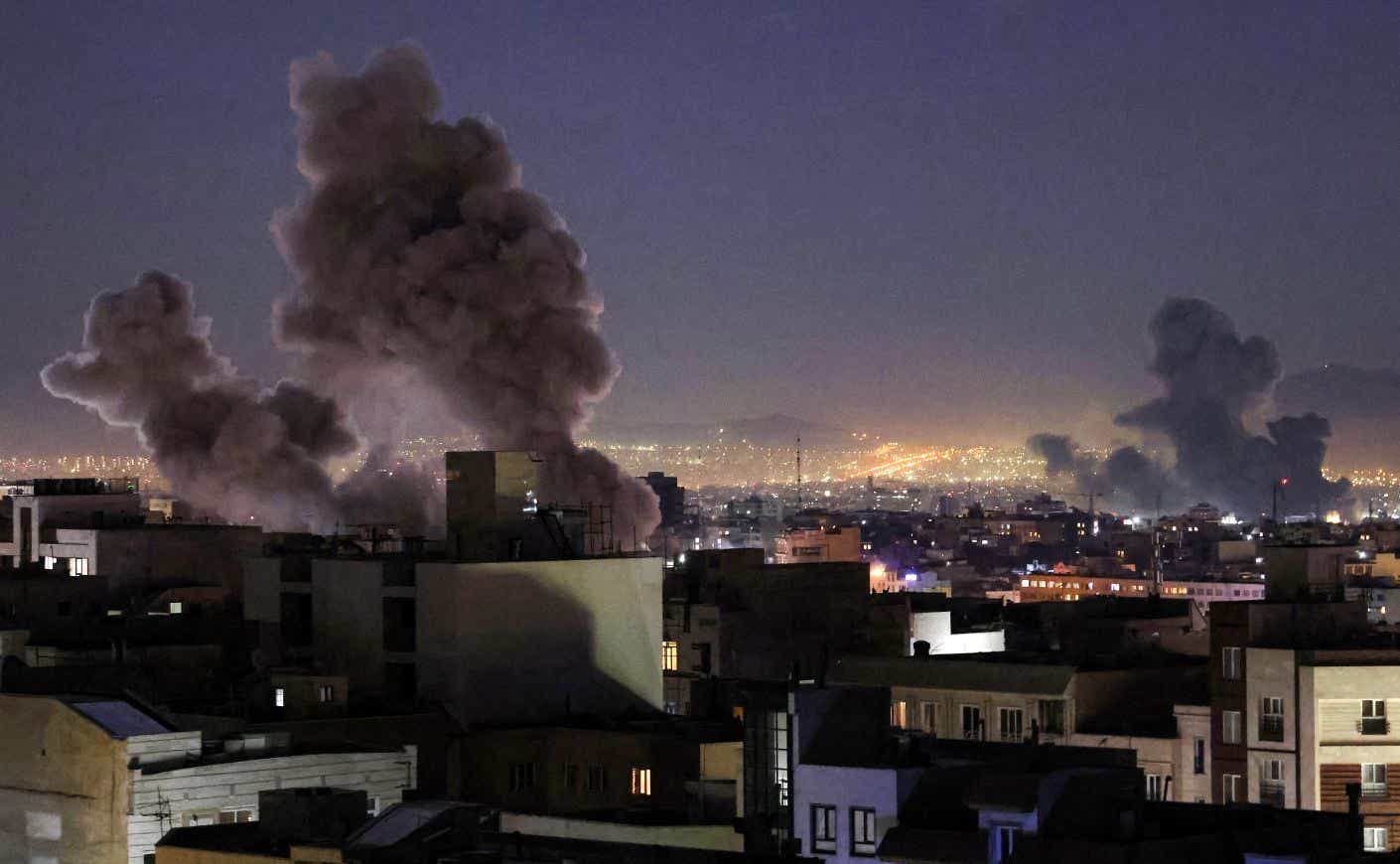
The United States and Israel launched a coordinated military operation against Iran early Saturday. The strikes, dubbed “Operation Epic Fury,” mark one of the most significant direct confrontations between the two nations in years.
On Capitol Hill, the response has been swift — and deeply divided. A small but vocal group of Republicans, including Kentucky Rep. Thomas Massie, have joined Democrats in criticizing the lack of congressional authorization. Meanwhile, some Democrats — including Pennsylvania Sen. John Fetterman — have voiced support for President Trump’s actions.
Now, lawmakers are preparing for votes on war powers resolutions, with a procedural vote in the Senate expected as soon as Tuesday and a House vote potentially coming Thursday, setting up what could become the next major constitutional showdown.
Here’s what happened — and how leaders are responding.
What happened in Iran?
After months of planning, the United States and Israel launched coordinated strikes early Saturday, hitting what U.S. officials described as strategic sites tied to Tehran’s military and nuclear infrastructure.
According to the Pentagon, the strikes targeted Revolutionary Guard command centers, air defense systems, missile and drone launch sites, and military airfields. One early strike reportedly hit near the offices of Iran’s Supreme Leader, Ayatollah Ali Khamenei, who Iranian state television later confirmed was killed. Israeli officials said dozens of senior military leaders also died, including the head of the Islamic Revolutionary Guard Corps and Iran’s defense minister. Iranian state media reported more than 200 total deaths.

In a video posted to Truth Social, Trump described the “major combat operations” as a response to Iran’s nuclear ambitions and other security threats, from missile development to support for militant groups. The action came days after a third round of U.S.-Iran negotiations in Geneva ended without progress — a setback Trump had publicly criticized. He later urged Iranians to “take over” their government, calling it “probably your only chance for generations.”
Iran retaliated by launching missiles and drones toward Israel and targeting U.S. military installations in Bahrain, Kuwait, and Qatar. Three U.S. service members were killed and five others were seriously wounded in the counterstrikes, according to U.S. Central Command.
Before the operation began, White House Press Secretary Karoline Leavitt said Secretary of State Marco Rubio briefed most members of the “Gang of Eight,” the bipartisan group of congressional leaders typically notified about major national security actions, including Speaker Mike Johnson and House Democratic Leader Hakeem Jeffries.
But it remains unclear how widely lawmakers were consulted beyond that group — an issue quickly becoming a flashpoint on Capitol Hill.
How are lawmakers responding?
Many Republicans rallied behind the president. Johnson and Senate Majority Leader John Thune praised Trump for confronting what they described as Iran’s nuclear and regional threats. More hawkish voices went further, with South Carolina Sen. Lindsey Graham calling the operation both necessary and justified, and Arkansas Sen. Tom Cotton saying the “butcher’s bill has finally come due” for the Iranian regime.
But a smaller group of Republicans broke ranks. Kentucky Rep. Thomas Massie questioned whether the strikes required congressional authorization, arguing that the Constitution gives Congress — not the president — the power to declare war. Sen. Rand Paul echoed those concerns, saying that while he had “sympathy for the plight of the Iranian people,” he would “oppose another presidential war.”
Most Democrats framed the strikes as an unauthorized escalation. Senate Minority Leader Chuck Schumer and House Minority Leader Hakeem Jeffries criticized the administration for bypassing Congress, and Rep. Jim Himes, the top Democrat on the House Intelligence Committee, said, “everything I have heard from the Administration before and after these strikes on Iran confirms this is a war of choice with no strategic endgame.”
Others, including New Jersey Rep. Josh Gottheimer and Pennsylvania Sen. John Fetterman, diverged from many Democrats to support the strikes as a necessary step toward regional peace.
Lawmakers in both chambers are now preparing votes on war powers resolutions that would direct the president to remove U.S. military forces from hostilities against Iran unless authorized by either a declaration of war or another specific authorization for the use of military force.
What does the Constitution actually say?
The strikes were launched without a formal vote in Congress, reviving a long-running constitutional debate over who has the authority to take the country into armed conflict.
The Constitution divides war authority between Congress and the president, but it does not specify where one power ends and the other begins. While Article I gives Congress the ability to declare war and control military funding, Article II names the president commander-in-chief. Over time, presidents on both sides of the aisle have argued that the commander-in-chief clause allows them to launch limited military action without prior approval, particularly in response to threats.
Amy Austin Holmes, an instructional associate professor at the Bush School of Government and Public Service at Texas A&M University, tells Katie Couric Media that the constitutional structure may appear straightforward on paper, though its real-world application has proven far less defined.
"Constitutionally, Congress holds the power to declare war, and the President is not authorized to initiate hostilities unilaterally except in response to an imminent threat," she says. "But in practice, presidents of both parties have taken military action without prior congressional approval — from President Obama’s 2011 strikes in Libya to President Trump’s strikes over the weekend in Iran."
That tension is exactly what Congress tried to address in 1973, in the aftermath of Vietnam. Lawmakers passed the War Powers Resolution as a check on presidential authority. The law requires presidents to consult with Congress “in every possible instance” before introducing U.S. forces into hostilities, notify lawmakers within 48 hours if troops are deployed without authorization, and end those operations within 60 days unless Congress declares war or grants specific approval.
Still, the limits have not always constrained presidents. Both Republican and Democratic administrations have questioned whether the withdrawal requirement is constitutional, arguing that it infringes on executive authority as commander-in-chief.
That reality underscores the stakes of the coming votes. Even if a war powers resolution clears both chambers, it would likely face a veto from Trump. And without two-thirds majorities in the House and Senate, Congress would be unable to override it.
Still, the votes would force lawmakers to go on record. And in an election year, that political record may matter as much as the constitutional debate itself.
