






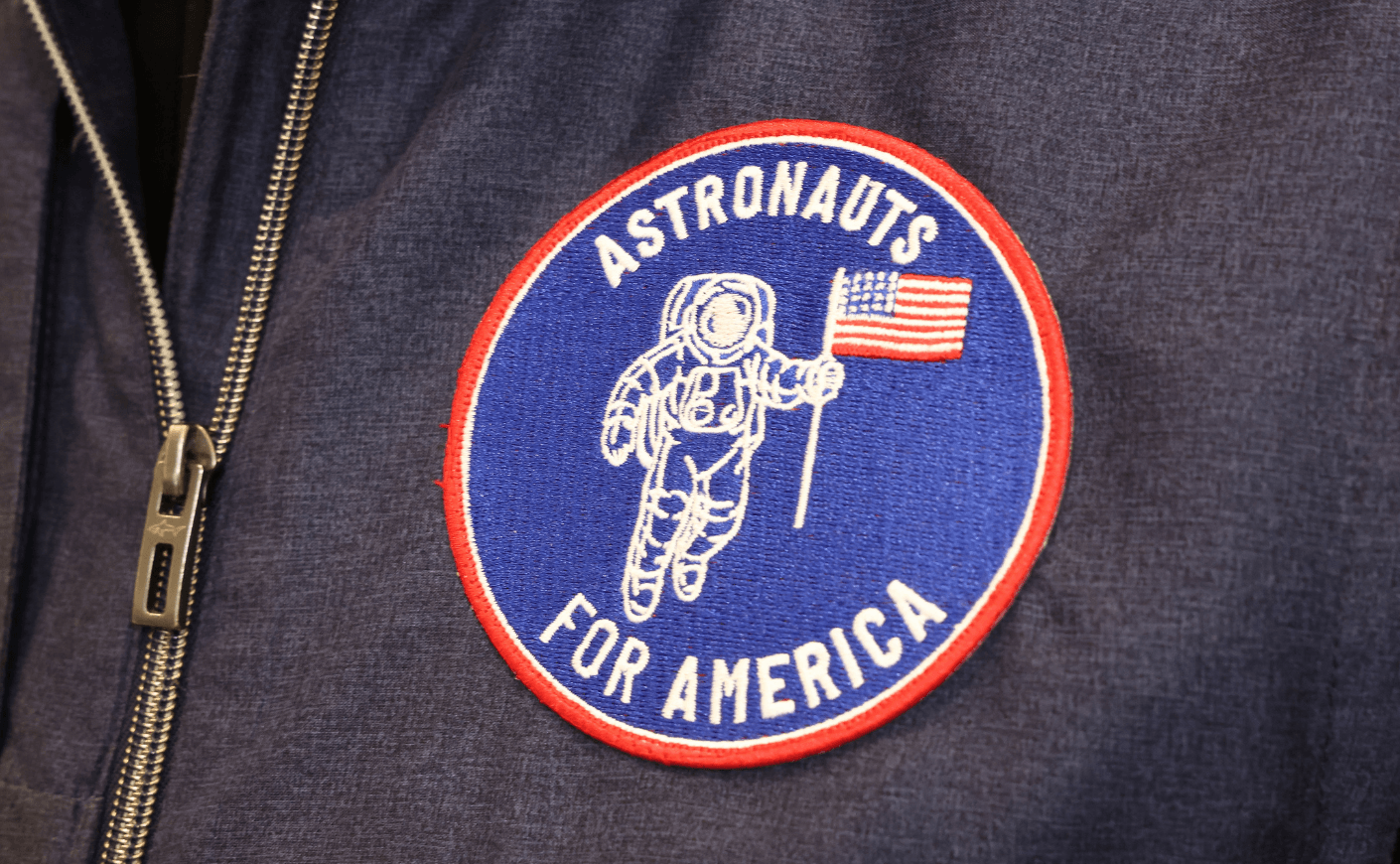
When astronauts launch into space, politics tend not to be top of mind. In fact, the success of a mission depends on other factors: trust, teamwork, and a shared commitment to the overall plan, even when opinions differ. Now, more than 100 former NASA astronauts say those same principles are urgently needed here on Earth. They've come together to form Astronauts for America, a new nonpartisan organization that aims to advocate for constitutional principles, civic engagement, and evidence-based leadership.
We spoke with former NASA astronaut Cady Coleman — author of the book Sharing Space — about why she believes this moment called for action, whether astronauts should weigh in on politics at all, and what lessons spaceflight might offer a deeply divided nation.
Some critics will inevitably argue that astronauts should stick to space, not politics. What's your response to people who believe efforts like this risk politicizing NASA's legacy?
Over my 24 years at NASA, I flew three missions to space, including almost six months on the International Space Station. During that time I flew with more than 20 other astronauts and never knew — or needed to know — their political affiliations. We shared a common mission and accomplished great things together, regardless of our differences.
When we become NASA astronauts, we swear an oath to defend the Constitution. That commitment doesn’t stop after leaving the Astronaut Corps. We feel a unique responsibility to ensure that America remains a place of opportunity and democracy and lives up to its highest ideals for another 250 years.
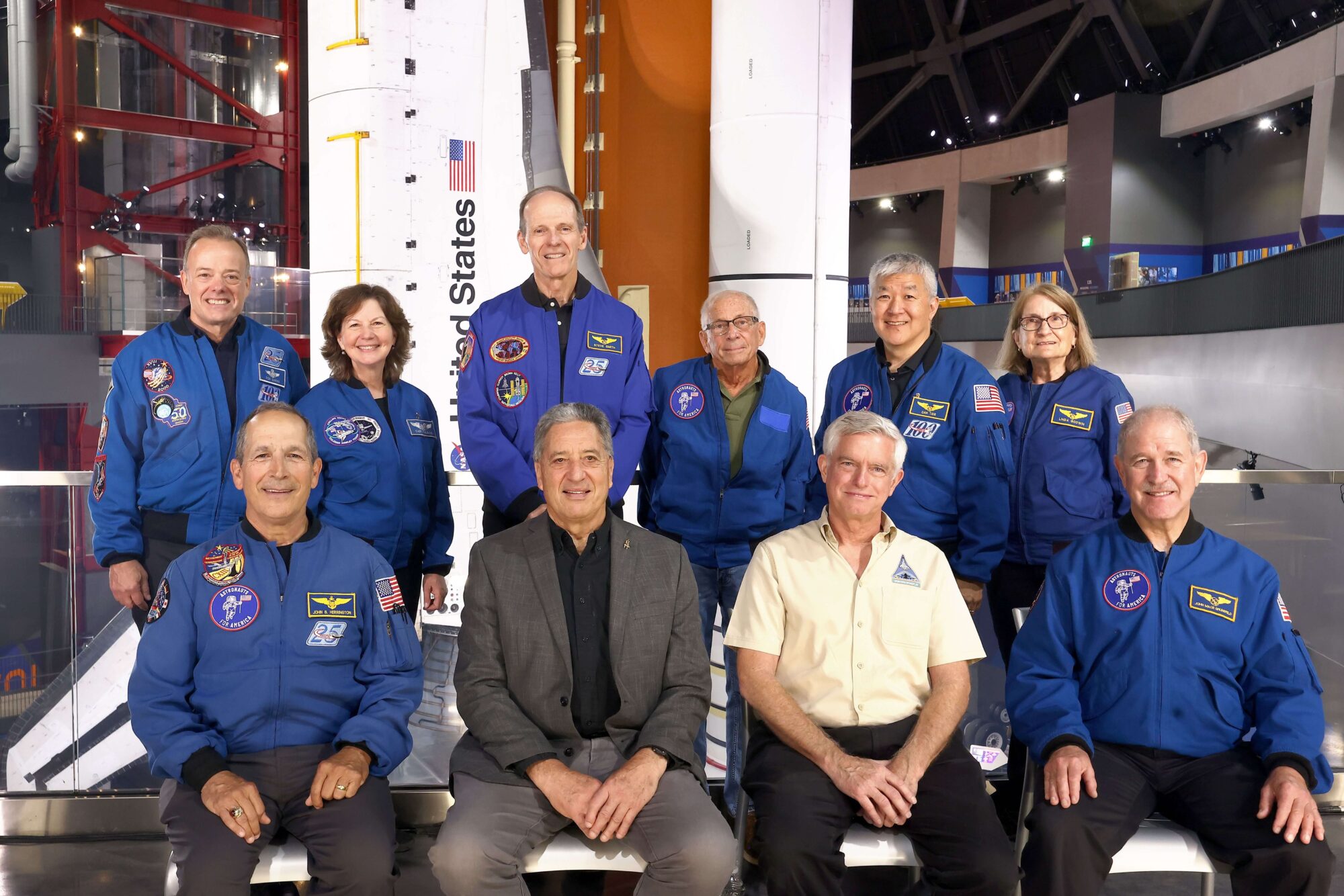
That’s why over 100 of my fellow astronauts — including Republicans, Democrats, and Independents — have joined together to form a nonpartisan organization to fulfill that commitment: Astronauts for America (AFA). Today, our country is the mission. We know that America works best when our leaders support the Constitution and rule of law, when our elected officials respect science and truth, when every American feels empowered to participate in the democratic process. We’re raising our voices to defend those values.
The organization plans to release candidate scorecards. Which specific standards or metrics will you use to evaluate candidates, and how do you ensure that process remains credible across the political spectrum?
Our scorecards will evaluate elected officials based on how well their actions align with our constitutional principles, not whether they align with a specific political party. Scorecards will show how incumbents and candidates stand on commitment to scientific evidence, ability to work across the political spectrum to achieve shared goals, and fealty to the rule of law and the Constitution. Through these scorecards, we hope to educate American voters about their leaders and to support leaders committed to civic and science-based leadership.

Education is one issue that I’m personally committed to. I’m the product of the American K-12 public education system and then I attended MIT on a ROTC scholarship, and UMass Amherst for graduate school. I was so fortunate to have that education and that support. So, I'll be interested in seeing how candidates of all parties prioritize education and increase access to quality education for every American.
At AFA, we’re mobilizing Americans to join us in this work and become our crewmates. We want to encourage them to think critically about their representatives and candidates and to hold them to account. As a scientist, I’m committed to supporting leaders whose policy positions are guided by evidence and truth. AFA will help educate and inspire Americans to do the same. Together, we can build a long-term civic infrastructure that encourages sound leadership.
NASA missions succeed because everyone is working toward a shared objective, regardless of personal differences. Looking at today's political climate, what lessons from the astronaut corps do you think are most urgently needed in American civic life — and are there any that don't translate?
I’ve incorporated many lessons from my time in the Astronaut Corps into my daily life. Topmost on my mind right now are: commitment to service; demonstration of sound, evidence-based judgement; and patriotism, which includes being willing to speak out when we know something isn’t right. These are hallmarks of the Astronaut Corps. As astronauts working together in space, it’s very clear to us that mission success requires the ability to work across differences and that down here on the ground, that ability will benefit the country we all love.
Related to that, in spaceflight, we all bring unique talents and resources, and the same goes for those in our communities and in government. When we can identify where our own weaknesses are and others’ strengths lie, we can combine forces to tackle challenges and build a stronger civic environment.
On the Space Station, we fulfilled our mission and worked together successfully by finding points of connection. We bonded over family, food, music, and the shared awe we felt when looking back at our Earth. We want to encourage Americans to find ways to connect together that allow all of us to harness cooperation and truth, and in doing so, to overcome division.
Many Americans are deeply skeptical of institutions and of experts: Why do you think astronauts are uniquely positioned to help rebuild public trust?
As NASA astronauts, we’re entrusted with certain responsibilities: responsibility for mission success, our crewmates’ safety, and for upholding American values. When I strapped myself into a rocket and left Earth, I represented everyone in our country, and in fact, everyone on our planet. As astronauts, we don’t take the public’s trust for granted, and that’s precisely why we came together to launch this organization.
Most of us have spent decades honoring the faith our country has placed in us. We don’t shy away from a challenge. Rebuilding trust in democracy and strengthening civic engagement is no easy feat, but we’re inspired by the thousands of crewmates across America who have already reached out to us, shared messages of inspiration, and pledged to help us on this mission.
The recent Artemis 2 mission is a perfect example of the inspiration and hope that a space mission — sending four humans around the Moon — can bring to our country. A space mission is incredibly complex and it takes thousands of people across numerous public and private organizations. Artemis 2 was clear evidence that our institutions and experts, working together, can accomplish the seemingly impossible. It’s one of the reasons that I — and many other people across our country — were left feeling more hopeful about our potential to work across differences. It’s that kind of energy and cooperative spirit that AFA can spark.
What would success for Astronauts for America actually look like five years from now?
To us, success means Americans embracing the importance of our constitutional principles and dedicating themselves to actively participate in civic life. It means more leaders publicly committing to uphold evidence-based governance. It means that our crewmates feel empowered to speak out when their elected officials aren’t representing them.
We want to remind our fellow Americans of the importance of voting and making your voice heard. Our aim is to build durability and to reaffirm our shared principles so that our children and grandchildren can live the American dream just as we were able to do as astronauts.
Astronauts for America launched with more than 100 former astronauts — a broad coalition. Were there difficult conversations behind the scenes about whether this was the right move, and was there anything that nearly kept the organization from getting off the ground?
Just like many organizations getting off the ground, we’ve had disagreements about how best to fulfill our mission. Astronauts For America is composed of Democrats, Republicans, and Independents. So we certainly don’t agree on every kitchen table issue or aspect of foreign policy. But those differences haven’t prevented us from finding our way forward guided by our desire to stand up for the foundational American principles that we share.
It can be difficult to raise your hand and speak up when you see something wrong. We’ve all watched as partisan polarization has weakened trust in our institutions and caused rifts in our society. We represent a group of concerned citizens, all former military or civil servants, who are dedicated to using our voices to defend the constitutional principles that undergird this great nation.
When we stepped out to the launch pad for a mission, we all wore the American flag on our spacesuits. Today, as Astronauts For America, we are reaffirming our love of our country and its values by standing up together and speaking out, and hopefully inspiring others to do the same.
On 7/20, the anniversary of the Apollo 11 Moon Landing, AFA held an event at the California Science Center to announce their upcoming get out the vote tour of colleges across the US. Here is video from an interview following the event featuring Cady along with astronauts Charles Bolden (former NASA Administrator) and Rusty Schweickart. You can find more coverage of the event on the AFA website.
And you can follow Cady online on Instagram, on X, on Facebook, and on LinkedIn.
