






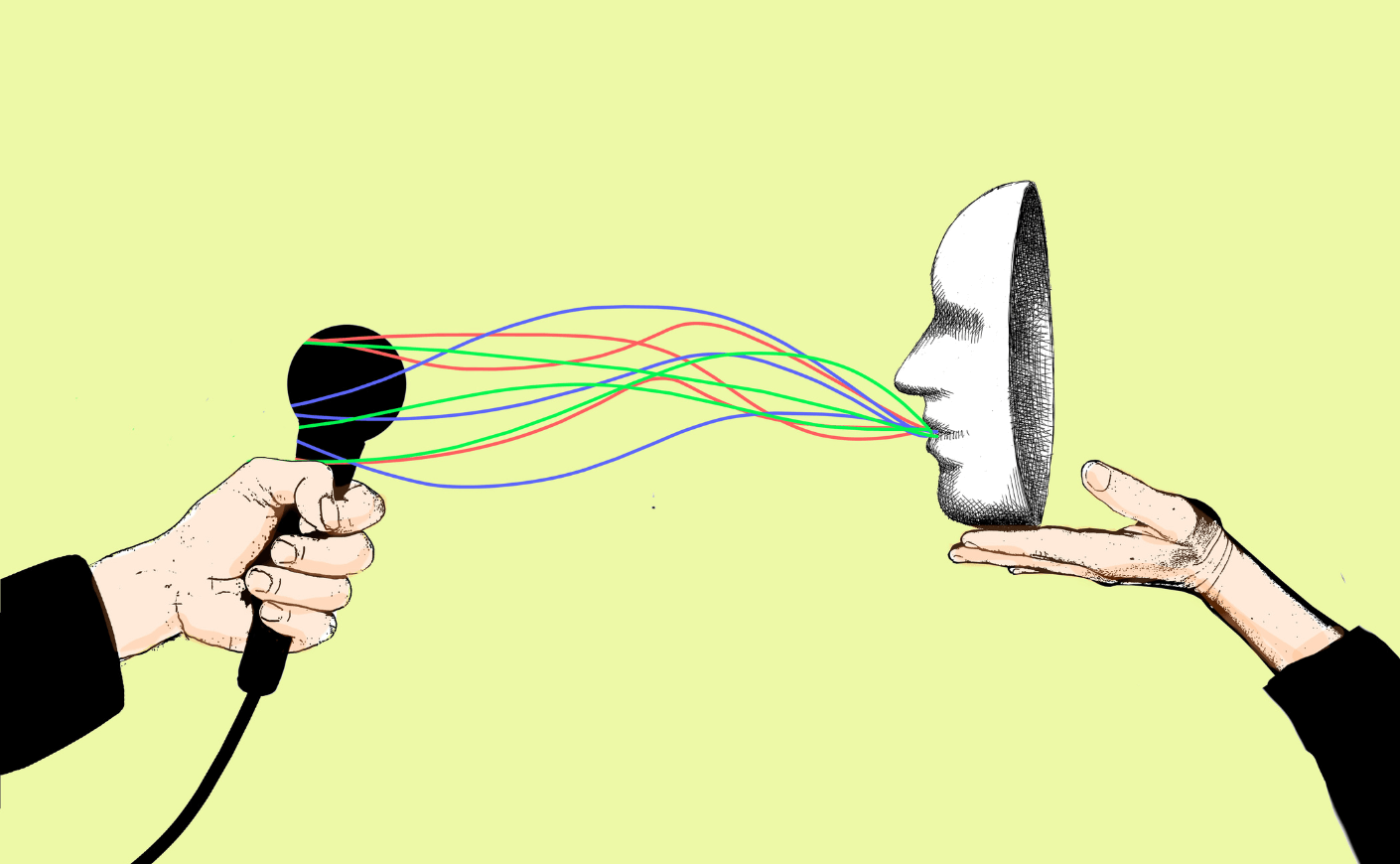
On Monday, The Heritage Foundation hosted an event celebrating one year of the Make America Healthy Again (MAHA) movement, featuring RFK Jr. and Heritage President Kevin Roberts. While on stage, RFK Jr. did what he often does and reframed a discussion about scientific evidence into a discussion about distrusting “experts.”
“Trusting the experts,” he said, “is not a feature of democracy and it's not a feature of science. It's a feature of religion and totalitarianism. Not of democracy.”
Huh?
This statement is, of course, ridiculous. But more than that, it is a deliberate attempt to confuse the public, because it only works if the audience accepts the false premise that individual experts and scientific consensus are the same thing. They are not, and RFK Jr.’s movement relies on people either not understanding that distinction or deciding it does not matter.
An individual expert is a person. A human being. Sometimes biased. Sometimes wrong.
Scientific consensus is something else entirely. It is the accumulated weight of evidence across many independent researchers, institutions, countries, and methods, tested and retested over time. It is not authority. It is process.

RFK Jr. blurs this distinction on purpose. Because once you convince people that “experts” and “scientific consensus” are interchangeable, you can attack consensus science by attacking experts. And once trust in consensus is weakened, you can elevate a small number of dissenting voices and present them as equally valid, regardless of the quality or quantity of evidence behind them.
What makes an expert trustworthy
The question is not whether a scientific or medical expert has credentials. It is whether their claims are anchored in the scientific process and the accumulated weight of evidence.
A trustworthy expert:
- Grounds claims in the broader body of evidence, not isolated findings
- Acknowledges uncertainty, complexity, and limits in the data
- Aligns with the convergence of evidence across independent research groups
- Situates claims within the broader scientific consensus rather than relying solely on personal interpretation
- Updates views when new evidence emerges
For example:
An infectious disease physician that references converging data across countries, consistent findings across studies, and agreement among major scientific organizations.
A nutrition scientist who bases conclusions on the full weight of global evidence and clearly communicates both what the research shows and where it is still uncertain.
Trustworthiness comes from adherence to process, not from title, platform size, or confidence.
What makes an expert untrustworthy
Credentials alone do not guarantee reliability. An expert becomes untrustworthy when they step outside the scientific process and replace evidence with ideology or narrative.
An untrustworthy expert:
- Dismisses scientific consensus without strong evidence
- Cherry-picks data while ignoring the full body of research
- Frames disagreement as proof of corruption rather than part of scientific inquiry
- Claims hidden or suppressed knowledge
- Relies on anecdotes, isolated studies, or sensational claims
- Promotes expensive solutions unsupported by robust evidence
For example:
A scientist who rejects the broader scientific consensus and suggests a vaccine is unsafe based on selective data, isolated studies, or anecdotal reports rather than the full body of evidence.
A medical doctor who repeatedly promotes new “miracle” supplements on a podcast or television show, making sweeping claims unsupported by rigorous, consistent scientific evidence.
Why this distinction matters
In fields like medicine and science, expertise is essential for interpreting evidence, understanding uncertainty, and translating research into real-world decisions. A functioning society depends on people who have spent years developing this kind of expertise, and credentials often signal that training. But, of course, credentials do not guarantee accuracy or reliability. And when people with those credentials step outside the scientific process and use their titles to project authority rather than ground claims in evidence, they can do some of the greatest harm, because they are no longer grounding claims in evidence but instead using perceived authority to lend credibility to ideas that are weak or unsupported.
When RFK Jr. tells the public not to trust experts, what he is actually doing is encouraging distrust of evidence-based consensus so that when he elevates his own chosen “experts” expressing contrarian, unsupported, or anti-scientific views, those claims can be treated as equally credible.
This is why the distinction between individual experts and scientific consensus matters.
Scientific consensus is not the opinion of a single expert, nor is it an expression of authority. It reflects the accumulated weight of evidence across independent researchers, methods, populations, and institutions, tested and retested over time. It is built through replication, convergence, and the self-correcting nature of science. Individual experts can and do disagree, especially as evidence is still evolving, but isolated dissent is not equivalent to the broader body of accumulated evidence.
When that distinction is blurred, the hierarchy of evidence collapses, and consensus science begins to appear interchangeable with isolated claims, regardless of how much evidence supports each. This then opens the door for opinion and ideology to be presented as equal to scientific evidence, and for conclusions to be shaped by ideology, belief, and persuasion.
A pseudoscientific grifter’s dream.
Republished with permission from Dr. Knurick's Substack — subscribe here.
Dr. Jessica Knurick is a Registered Dietitian with a PhD in nutrition science who educates on nutrition, public health, and food policy. She helps people navigate complex information with clear, evidence-based guidance.
