






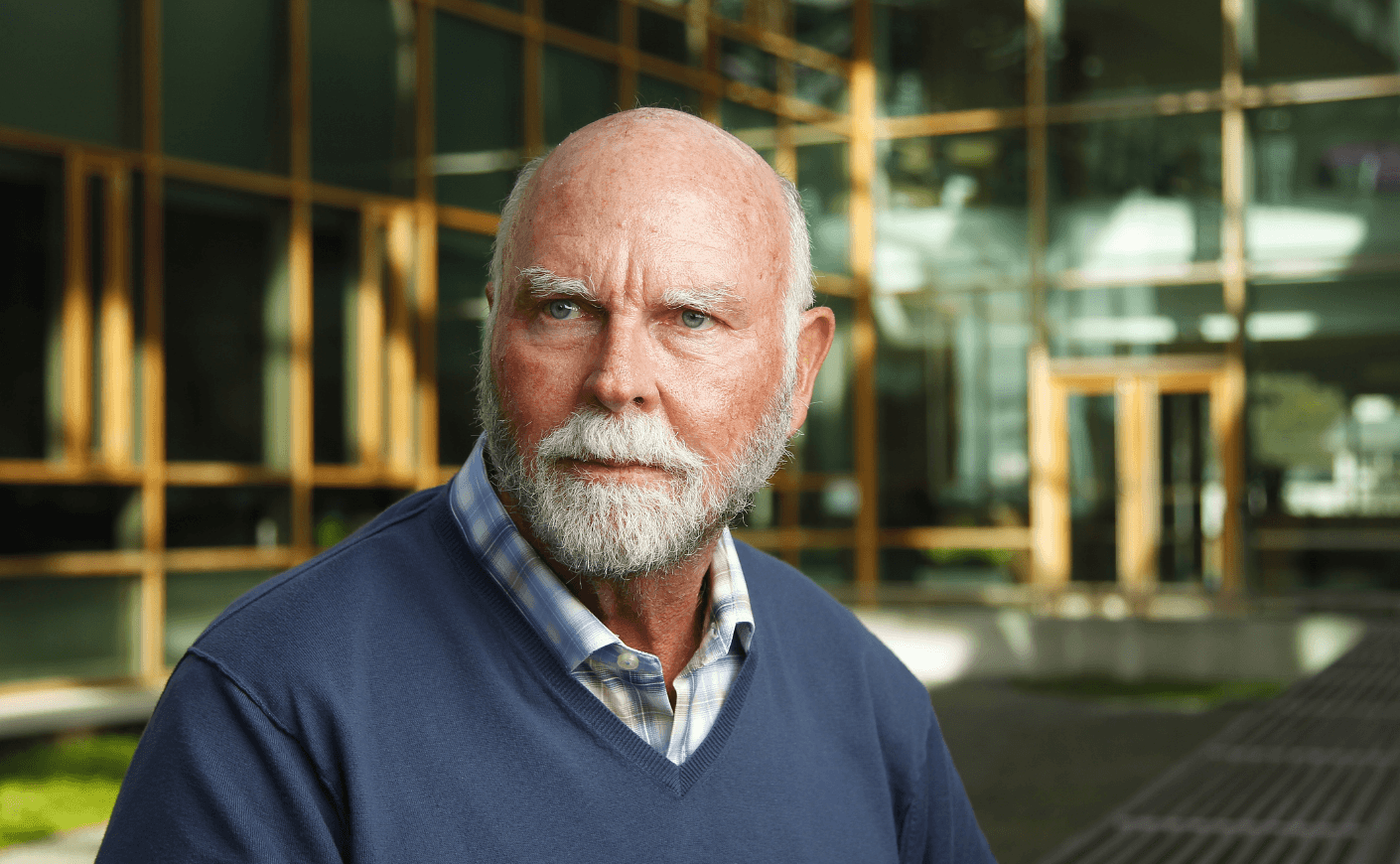
Like Godzilla, J. Craig Venter destroyed many a scientific edifice, was revered by many, and launched the rebuilding of new fields of science. He was brash, cranky, opinionated, tough, sometimes brutal, he loved blowing things up, crushing rivals. Be it top science, adventure, food, old cars, new companies, or love, too much was never enough. He never learned to slow down, to do things deliberately and sequentially. Time and again, he broke the norms of science and exploration. Those who did not know him carelessly concluded he was exaggerating and underestimated him. They thought his achievements were one-time lucky. Soon thereafter, rivals ended up eating great buffets of crow. Time and again, Craig achieved Nobel Prize-worthy breakthroughs. Underneath it all, carefully guarded, there was a caring, kind, generous, and humane side to Craig. Those of us lucky enough to spend time with him felt a great deal of love for our monster.
There was a consistent pattern to Craig’s science. It would start with, “Hmmm, that is a stupid way to do things.” He would then determine whether a new technology was available that would fundamentally change the game. Or he would invent one. Then he skipped the preliminary experiments and went straight for the crux proof. Often, by the time grant reviewers got through his proposals and wrote back why what he was proposing was impossible, he had snagged the cover of Science or Nature.
Over and over, Craig blew up entire fields of study, leaving furious pooh-bah department leaders behind. In figuring out how to tag genes through expressed sequence tags, he took work that required decades worth of doctorates and provided the world with thousands of results per week. When it was thought impossible to assemble the full code of a living thing, Craig published H. influenzae. Five years later, he published the first full plant and insect genomes. Six years later, it was the first draft of the human genome, beating a consortium that spent billions of dollars and deployed massive government resources.
As the stakes got higher, as departments, universities, and entire ministries were upended by Craig’s success, they tried to denigrate, demean, defund, and destroy him. A New Yorker profile famously opened with a review from an anonymous rival: “Craig Venter is an asshole,” which Craig naturally delighted in repeating with a deep cackle.
The Salieris of the world used their grant, review, and citation powers to try to establish that what Craig had achieved was really not that big a deal, while quietly ditching their slow, costly methods and adopting computing and shotgun sequencing. They still spin tales that it wasn't really that big a deal.
After the brutal combat for the human genome, big science figured Craig would just fade away. After all, one discovery of that scale is enough for a lifetime. Exhausted, Craig asked the two of us to go sailing with him, following Darwin’s route around the World. But of course, Craig, being Craig, turned what was supposed to be a pleasant regroup and restorative sail into a high-stakes expedition to map the biodiversity and microbial life of the World’s oceans. A few years and 32,000 miles later, the vast majority of all known genes, from all species, placed in public data banks came from his voyages on the Sorcerer II.

Over that long voyage, we always learned new things from Craig, occasionally beat him at hearts, and sometimes scared crew members, sneaking up on them as they tried to stay awake in the middle of the night by watching horror movies. We also discovered something fundamental about Craig: Underneath his swashbuckling persona was a man who thought through each detail and its consequences. This was not an adventure; it was a very carefully executed campaign, one in which, across tens of thousands of miles, no one was ever hurt, lost, or abandoned. He learned a lot about risk management while serving as a combat medic in Vietnam. He was successful because he mapped exactly what it would take to get from a crazy idea to success, be it sequencing the full human genome or, years before, taking Dave through big storms as he won a transatlantic sailing race on a boat considered too small to be a contender.
As we sailed around the world on the Global Ocean Sampling Expedition, we dreamed. What was the coolest thing we could do next? How about assembling a whole genome from scratch, figuring out how to insert it into a cell, and getting the cell to use and reproduce this new life code? We founded Synthetic Genomics and, a few years and tens of millions of dollars later, Synthia 1.0 was born. This is akin to the Intel chip inside your computer, except that instead of using 1s and 0s, our cells execute and reproduce life code. Other companies followed, producing desktop cell printers, parallel genome production, and even attempts to prolong human longevity.
One would show up at one of Craig's seaside homes and immediately be off to sail classic wooden boats, go on long hikes, admire impeccably restored classic cars, fly off to an obscure place, or visit a lab where some new discovery was about to change the world.
Craig could be willful, stubborn, and occasionally infuriating. But he developed a coterie of devoted, very smart science privateers. Primus inter pares was one of the few modest Nobel Prize winners, Hamilton Smith. Where Craig was brash, Ham quietly built bridges, developed teams, and delivered breakthroughs. They were the Heckle and Jeckle of science, finishing each other’s sentences, delighting themselves with preposterous challenges. Success begets success as Craig and Ham nurtured enormously talented folk like Dan Gibson, Michael Eisen, Steve Salzberg, Karen Nelson, John Glass and Claire Frasier at the modestly named J. Craig Venter Institute. (Did we mention that Craig had a good deal of self-confidence?) In turn, each spun off their own science empire and continued driving global genetics.
Personally, Craig was not always easy to deal with. Three marriages shaped Craig’s personal life. The first to a whip-smart patent attorney, Barbara Rae Venter. A second to a brilliant collaborator, Claire Fraser, who led the Institute for Genomic Research. And finally, to his life partner, Heather Kowalski, who understood, challenged, nurtured, and slightly mellowed our monstrous friend. Each is an independent, enormously talented person, one who could hold her own against a force of nature.
We were enormously privileged to know him as a friend and mentor. He changed our lives, as he did yours, even if you don’t know it. But the medicines you take, how you are diagnosed, and how we understand the microbial environment inside ourselves and across our biosphere can be divided into the pre- and post-Venter eras.
Juan Enriquez is a venture capitalist and author of As The Future Catches You: How Genomics and Other Forces are Changing Your Life, Work, Health, and Wealth. David Kiernan is a lawyer/MD at Williams and Connolly. For the record, both testify that Craig was only very occasionally an asshole and that Heather is a saint. Above all, he was a great friend and an extraordinary scientist.
