






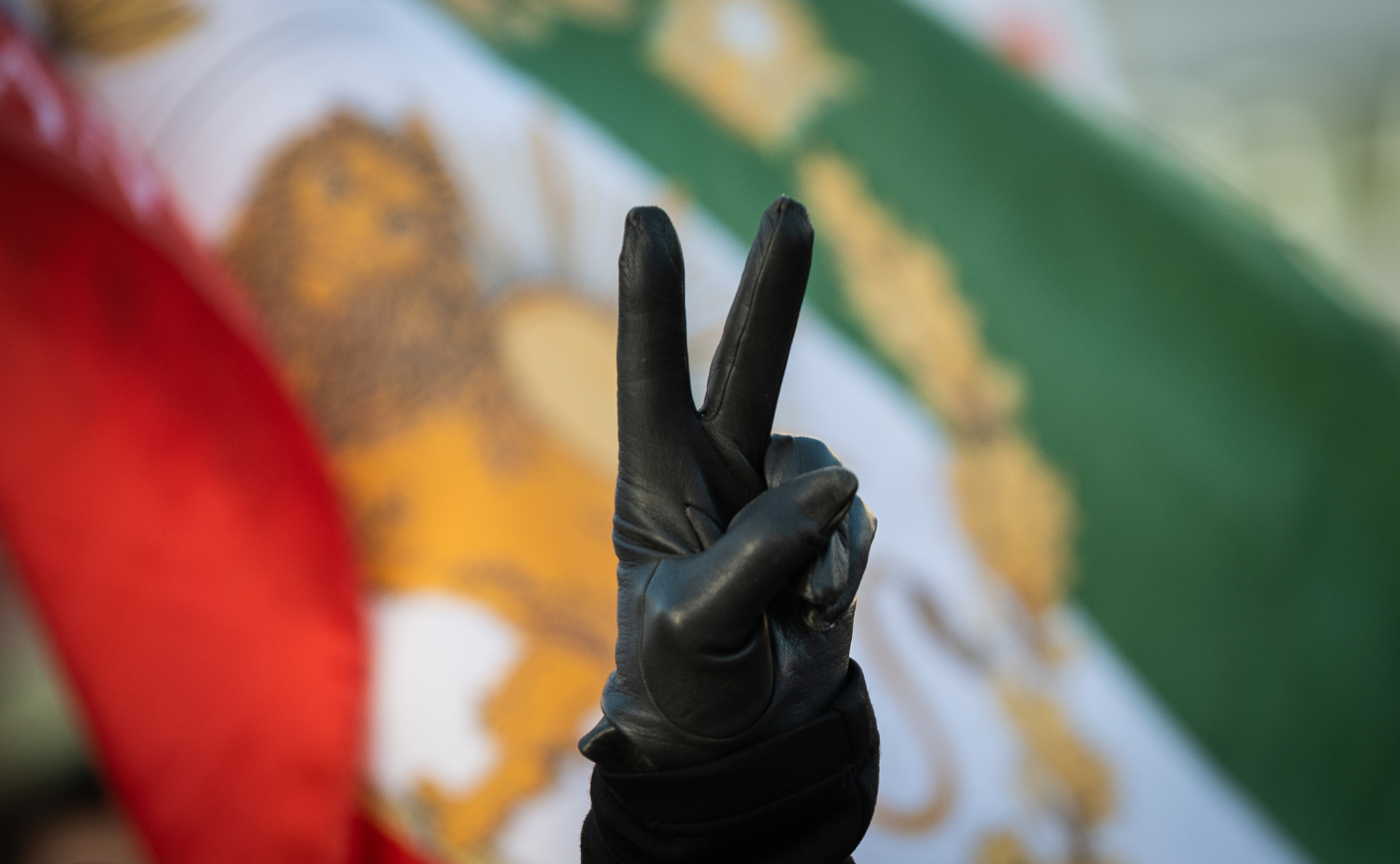
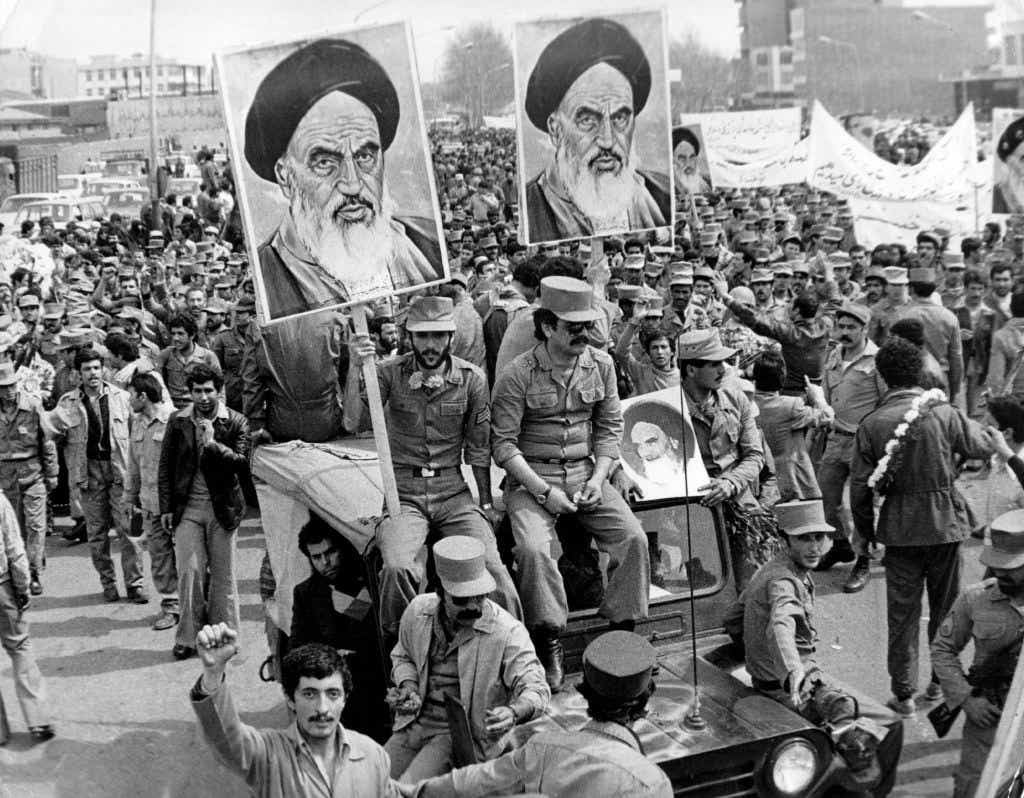
My grandmother blamed Khomeini for everything.
Burned dinner. Traffic on the freeway. A headache that wouldn’t quit. It didn’t matter. Somehow, it was his fault. We laughed at her for it when I was a kid. But she wasn’t wrong.
He stole everything from her. Her country. Her language in its proper context. The life she had built. And in a strange way I’ve never fully made peace with, he’s also the reason I exist.
My parents didn’t meet in Iran. They met in America, after both of them fled separately in the years leading up to the 1979 revolution, carried here by the same upheaval that was swallowing everything they knew. If the Islamic Republic had never happened, they never would have found each other. I never would have been born. Which means the regime that has defined my entire relationship to my own identity is also, in the most literal biological sense, responsible for my existence.
I’ve spent 33 years not knowing what to do with that.
I am American. Fully, proudly, without reservation. I was born here, trained here, built my life and my practice here in Los Angeles. I’m a board-certified plastic and reconstructive surgeon. Burns, blast injuries, complex facial reconstruction — I work on the cases that come in after violence has done its worst. I repair what destruction leaves behind.
But underneath all of that, there has always been this other thing. This absence shaped like a country.
I have never been to Iran. Not because I didn’t want to. Because I wasn’t allowed. My mother tried to bring me when I was just a few months old. In the final stages of obtaining my Iranian passport, she discovered the truth: by entering Iran with her newborn son, she would lose all parental rights. Simply because she was a woman. That trip was canceled immediately. I am now 33 years old and I still have not been.
My father’s passport was later revoked by the regime. The door was closed from both directions.
I speak fluent Farsi. I grew up hearing stories about Tehran in the 1960s, cosmopolitan and alive and full of a possibility that the revolution erased. I grew up understanding, in my bones, what had been taken.
And I grew up watching America’s complicated role in all of it. In 1953, a CIA and British intelligence-backed coup removed Iran’s democratically elected Prime Minister Mohammad Mosaddegh and consolidated the Shah’s power, planting seeds of grievance that bore bitter fruit in 1979. That history has never sat easily alongside my pride in being American. I hold both. I have to.
Persian culture shaped me as a surgeon. The obsession with beauty, with form, with the face as an expression of identity, it was in the air I breathed growing up. It drew me toward plastic surgery. But plastic surgery has two faces. One reconstructs aesthetics. The other reconstructs lives. I’ve spent my career doing both, and the reconstructive side, the trauma work, is where I’ve always felt the deepest sense of purpose.
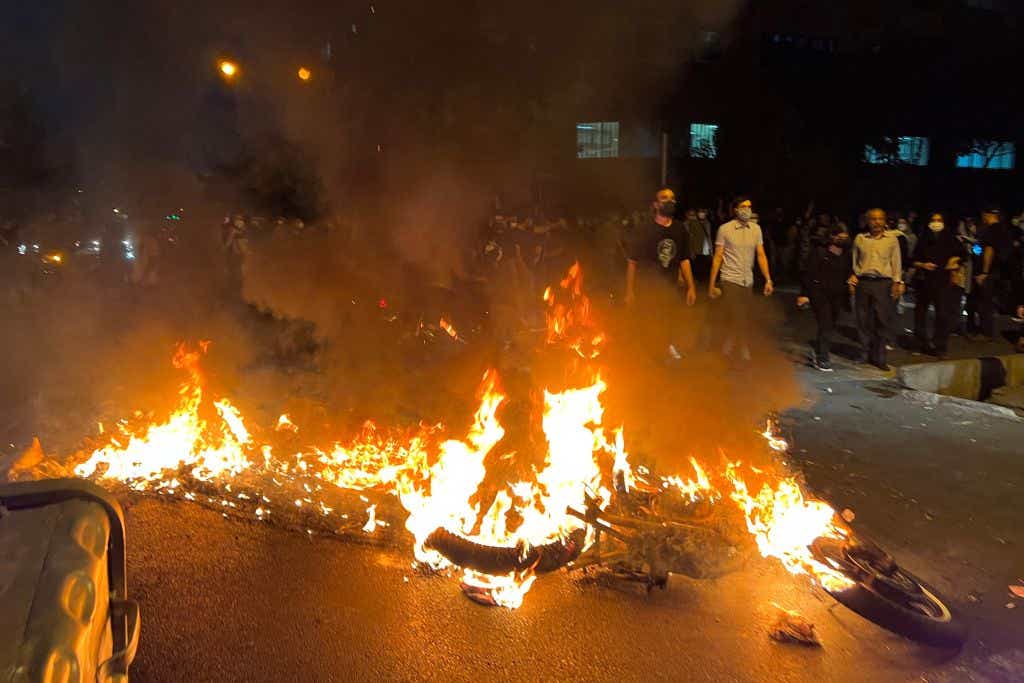
Ever since the Mahsa Amini protests in 2022, when I watched Iranians pour into the streets and get shot for it, when I received death threats from the regime for my own coverage of those events, I began letting myself think something I had kept at a distance for years.
What if I could go?
Not as a tourist. As a surgeon. To bring back what America gave me and use it on the people who stayed.
This week I watched the country that was stolen from my family get bombed into a potential transition.
I don’t know what comes next. Nobody does. What I know is what came before. In the protest crackdown of late 2025 and early 2026, the Islamic Republic killed thousands of its own people. The Iranian government officially confirmed more than 3,000 deaths. Human Rights Activists in Iran, working from a verified named list, documented over 7,000. The Guardian, Time, and Iran International, citing leaked hospital data and internal government documents, have reported figures potentially exceeding 30,000. Exact numbers may never be verified because authorities imposed a near-total internet blackout specifically to conceal the scale of the killing. The United Nations Human Rights Council convened a special session and called for an urgent investigation.
Whatever the precise number, and the truth may not be fully known for years, those were Iranians who wanted what every human being wants. To be seen. To be free. To walk outside without fear.
They could have been me.
The only thing separating my life from theirs is geography. I was born here. They were born there. I got America. They got the Islamic Republic. That’s it. That’s the whole difference. I have spent my entire career repairing bodies that trauma has destroyed, and I have never believed that an accident of birth absolved me of responsibility to the people who didn’t get the exit my parents did.
When the bombs stop, there will be survivors. Burns covering bodies. Blast injuries rewriting faces. A medical system hollowed out by decades of sanctions and mismanagement that will not be able to meet the scale of what’s coming alone. They will need surgeons who can do this work, and who can speak to patients in their own language, in their own cultural context, without a translator standing between the doctor and the wound.
I joined the Iranian American Medical Association this week. I put my name on a list. I am 33 years old and I have never set foot in the country my parents fled. But if a humanitarian corridor opens, if a transitional framework takes shape, if an international medical effort reaches the ground, I am prepared to be there. Not as a visitor. As a surgeon. To bring back everything America gave me and give it to the people who need it most.
My grandmother blamed Khomeini for everything.
She wasn’t wrong. But she also couldn’t have imagined this: that her grandson would one day be sitting in Los Angeles, not yet packed but already decided, waiting for a door to open that has been locked his entire life.
I’ve been waiting since before I knew what I was waiting for.
Sean Saadat, MD is a board-certified plastic and reconstructive surgeon in Beverly Hills, California. He is of Iranian descent and writes about medicine, culture, and the world at the intersection of both. Follow him on Instagram @drsean.
