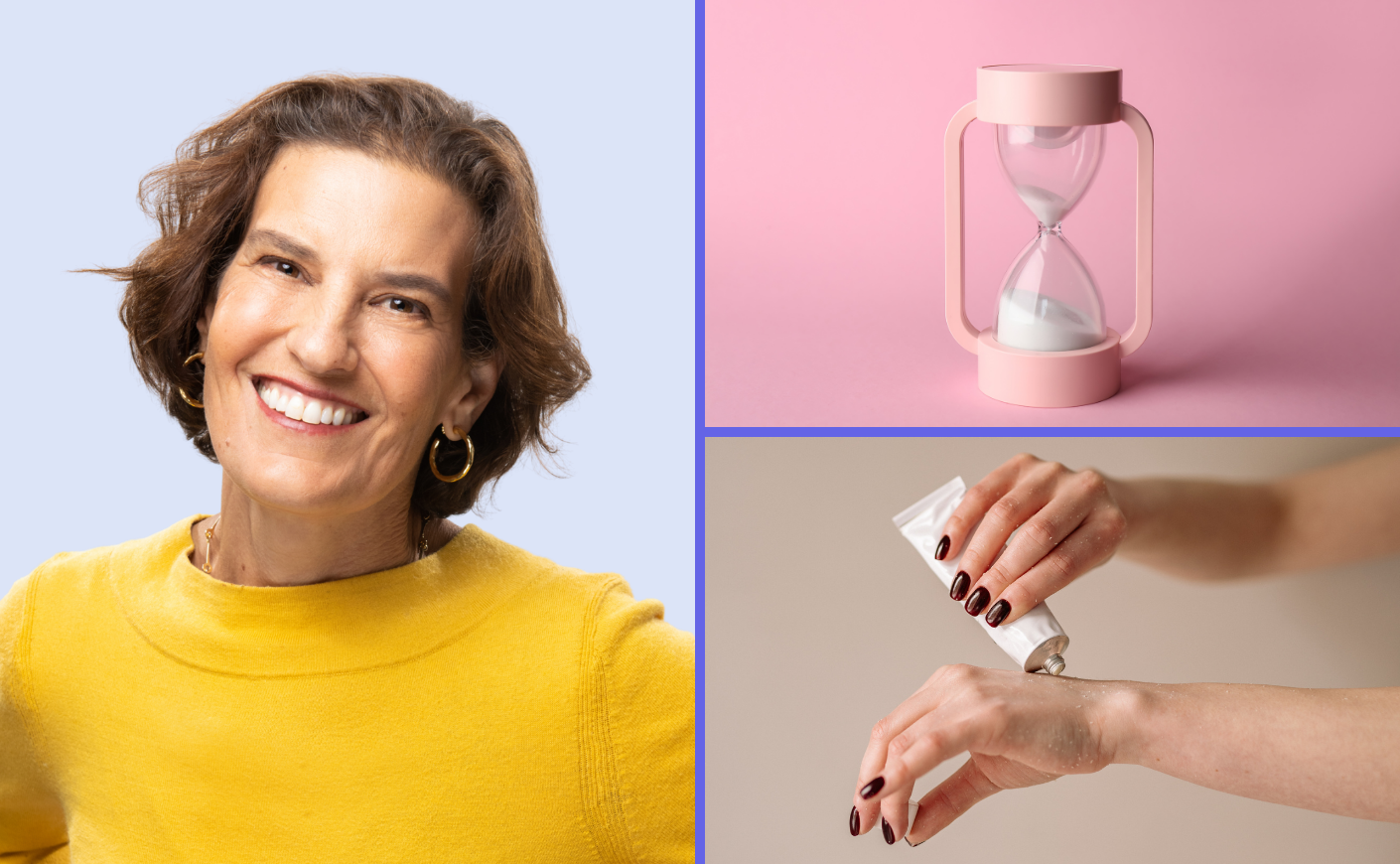
Today, the marketplace seems to be flooded with startups providing perimenopause and menopause care. But that wasn't the case back when Joanna Strober started thinking about building Midi Health.
She had gone through "the change" herself, struggling through brain fog, insomnia, and anxiety with little to no support from the healthcare system. After spending several years in venture capital, she realized there was a huge gap in the market for a company that would take the needs of midlife women seriously.
"Once you see a gap that large — where millions of women are being told to 'grin and bear it' — you can't unsee it," Strober tells us. "I didn't start Midi Health because I wanted to join a trend; I started it because I was frustrated that this care wasn’t already available, and I knew we could build the infrastructure to change that."
In 2021, Strober co-founded Midi, a virtual clinic which offers personalized, insurance-covered care plans for women navigating menopause and perimenopause. This month, after raising $100 million, the startup was valued at more than $1 billion. We spoke with Strober about how she scaled so quickly, what makes her tick as an entrepreneur and CEO, her predictions for the future of women's healthcare, and much more.
As someone who’s spent a significant portion of your career in venture capital, why do you think investors have historically overlooked this space?
The business case has always been there, but for a long time, the people making the investment decisions weren't the ones experiencing the night sweats. If you haven't lived through the hormonal chaos of midlife, it’s easy to dismiss it as a niche lifestyle issue rather than a massive clinical need.
There was also a persistent myth that women wouldn't pay for this or that the market was too small. But women in midlife are actually the highest healthcare spenders in the country. Investors are finally waking up to the fact that supporting women’s health isn't charity — it’s a smart strategy.

What does good menopause care actually look like in 2026? And what do you think it’ll look like 10 years from now?
In 2026, good care means you aren't being dismissed with a "you're just getting older" or handed an antidepressant for a hormonal problem. It looks like specialist-led care that is actually covered by insurance, so it’s accessible to everyone, not just people in big cities. It means treating the whole woman — her bones, her brain, and her heart — not just a checklist of symptoms.
In 10 years, I think we’ll look back and find it bizarre that we ever siloed menopause off. It will be a standard pillar of longevity. We’ll be using proactive data, like at-home testing and personalized protocols, to manage the transition before the “crash” even happens.
What’s one trend in women’s health you think is overhyped — and one that’s underappreciated?
Overhyped: The "quick fix" that promises to completely change your health in seven days. Hormonal health is complex and highly individual. When you treat it transactionally, you miss the deeper medical investigation that women deserve.
Underappreciated: Hormone therapy as a legitimate, evidence-based tool for long-term health. For 20 years, women were scared away by outdated data, and they suffered unnecessarily. The shift back toward science is the most important thing happening in this space right now.
What does success look like for Midi a decade from now?
Success is Midi becoming the front door for women’s health as they age. I want every woman in this country, regardless of her ZIP code or her income, to have access to a provider who actually understands her biology. We’re building the infrastructure so that "I don't feel like myself" is met with a clinical solution, not a shrug. If we can keep women in their careers and feeling vibrant through their fifties and sixties, we’ve won.
What’s the best piece of advice you’ve ever received?
Don’t wait to be ready. In the startup world, and especially in healthcare, if you wait for the data to be perfect or the timing to be flawless, you’ve already missed the window. The problems women are facing are too urgent for perfectionism. You have to get moving and iterate as you go.
When have you doubted yourself most as a founder — and what pulled you through?
Early on, when we were trying to convince massive insurance payers and health systems that menopause was a "real" medical category worth covering, there were moments when it felt like we were shouting into a void. What pulled me through was the patients. Every morning our team reads patient reviews. Hearing a woman say, "I thought my life was over, and now I have myself back" is the ultimate fuel. You can't doubt the mission when the impact is that visceral.
How do you unplug — or do you?
I’m a work in progress on this one. I try to be very protective of family time, and I’m a big believer in walking — usually in a weighted vest to keep my bone density up. I don’t think I’ve "cracked the code" on balance, but I’ve learned that I’m a better CEO when I’ve actually had a full night’s sleep. (Thank you, HRT!)
Do you have a favorite book that’s helped shape your approach to leadership or entrepreneurship?
I co-authored a book called Getting to 50/50, because I’ve always been interested in how we create equity for working parents. It taught me that the most important career decision you make is who you marry and the "deals" you make at home.
Lately, I also recommend Come as You Are by Emily Nagoski. It’s not a "business" book, but it’s essential. If women are white-knuckling through physical pain or a loss of intimacy because of menopause, they can't show up fully in their careers. I always tell women: Read the book, then come to Midi and let’s fix the pain.